
By Jim Nieman
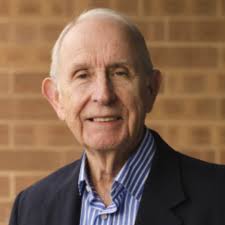
Andrew J. Hairston has harnessed an inner drive his entire life. A drive to learn. A drive to serve his community and others. A drive to serve God.
And an unwillingness to passively accept injustice. Instead, he has stood up and identified wrongs while working to change them.
Hairston’s efforts, and the efforts of many others in the African-American churches of Christ, have helped bring about changes that most everyone would agree are a better reflection of God’s ideal for unity within his church.
A Life of Accomplishment
Hairston, 86, was born the 13th of 15 children near Winston-Salem, North Carolina. His father was a tenant farmer (who died when Andrew was 6) and his mother was a “day worker” for white families. He became the first in his family to go to college. And, before finished with schooling, he had earned almost as many degrees—when including honorary doctorates—as he has siblings.
“God always put me in a college town and I took advantage of it,” Hairston said.
Hairston has lived a life packed with accomplishments: more than 55 years as senior minister with Simpson Street Church of Christ in Atlanta (from 1961 until “retirement” August 27, 2017); several years as an attorney, and then assistant solicitor general in Fulton County, city solicitor of Atlanta, and 23 years as a judge of Atlanta City Court (several as chief judge); and decades as a student who earned degrees from Southwestern Christian College, Paul Quinn College, Brite Seminary at Texas Christian University, John Marshall Law School, Woodrow Wilson College of Law, Emory University, and the University of Nevada at Reno.
Oh, and you can throw in more than 20 years as a chaplain in the U.S. Army Reserve, serving on the board of trustees of Southwestern Christian College, and working for change—racial and otherwise—within Atlanta, the nation, and churches of Christ.
“I always took advantage of opportunities,” Hairston said. As a youth, he liked hearing people describe him as a “go-getter” and “someone who is always busy.” He worked multiple jobs—even driving a bus for the local school system when he turned 16. “Mother never suggested I slow down.” Plus, the money Hairston earned helped with family finances.
From North Carolina to Texas to Atlanta
His decision to attend college came about at the suggestion of his oldest sister, Anna (see sidebar at end of this article). Hairston’s choices among church of Christ institutions were limited by his race. The first college he attended, Southwestern Christian College in Terrell, Texas, was established as an institution for African-Americans in 1948. Later, he entered Brite Seminary shortly after TCU was integrated. He served in ministry with two churches in Texas while attending college there, met and married his wife, Jeanne, and then he heard about a vacancy at Simpson Street in Atlanta.
Working toward social change was something that attracted him to Simpson Street—a church on the western edge of downtown Atlanta that formed shortly after traveling evangelist Marshall Keeble preached there in what was then known as the “mud hole.” It is Atlanta’s oldest African-American church of Christ.
“I wanted to get involved with civil rights,” Hairston said of his specific interest in Atlanta, which was more central to that struggle. “I got rather deeply involved.” (Hairston made sure folks at the church were aware of his interest in civil rights before accepting the position.)
Fighting for Civil Rights
He told the Christian Chronicle in 2012: “I never did a lot of preaching on civil rights as such. I would deal with the subject, and deal with righteousness, and get my folk involved in the action. It’s kind of a Church of Christ ethos—that that’s beyond, that’s not what we’re here for. We’re here to baptize and save people.”
It was a crucial time in the nation’s history, and Atlanta proved pivotal. Hairston worked with many of the civil rights movement’s leaders (Martin Luther King Jr., Fred C. Bennette Jr., and Fred Gray, among them) and served with several key organizations (such as the Southern Christian Leadership Conference and its Operation Breadbasket, and the Concerned Black Clergy of Metropolitan Atlanta).
Some civil rights leaders were surprised to learn Hairston served a church of Christ. He recounted them saying, “They don’t want much to do with us.”
Operation Breadbasket worked toward fair hiring practices among stores and companies that did business in African-American neighborhoods. Many of these businesses hired only white employees. As a local chairman, Hairston helped secure a Simpson Street member’s hiring as a secretary by Gulf Oil. (At that time, he said, the only African-Americans working at Gulf Oil performed cleaning duties.) The woman, now retired, is still a member at Simpson Street.
He said studying Scripture and earning academic degrees gave him confidence in preaching and speaking out. “I saw them as tools to help me know what I am talking about.” In fact, when he started law school in the 1960s, a legal career wasn’t his intention. He said he believes he has followed God’s will by taking advantage of the many opportunities that came his way. He points to Jesus Christ as someone who “wanted so much to do God’s will that he gave up his will.”
Hairston helped start the Concerned Black Clergy in response to the murders of at least 23 children in Atlanta from 1979 to 1981. He said a unified response to these killings was something people of all faiths could agree on. “We didn’t discuss religion at all.” The organization still meets and works to help resolve social issues affecting African-Americans.
Working for Change within the Churches of Christ
Hairston is best-known in churches of Christ, however, as a leader who highlighted the marginalization of African-American Christians and African-American churches of Christ.
In 1963 in the Christian Echo—an African-American church of Christ publication—Hairston lamented that, on the issue of racial justice, the white press had been “for the most part . . . as silent as the grave” (quoted in Reviving the Ancient Faith by Richard T. Hughes).
In 1964, Hairston wrote: “There is with rare exception in every town a ‘White’ Church of Christ and a ‘Colored’ Church of Christ” (Christian Echo/Reviving the Ancient Faith). In a 1968 article, the Christian Chronicle described “two separate brotherhoods” that existed.
Still, Hairston has always been ready and willing to talk about differences and work toward equality and unity with the predominantly white churches of Christ.
In a 2002 article in the Christian Chronicle, Ted Parks called Hairston “a one-man mirror of the slow, painful journey of churches of Christ from their once undeniably segregationist stance to the dawning awareness that the gospel they preached so long demands respect for all, regardless of race.”
“He is one of the unsung heroes of the civil rights movement,” said Dr. Jerry Taylor, assistant professor of Bible at Abilene (Texas) Christian University, who has known Hairston since Taylor was a student at Southwestern Christian College in the early 1980s.
Taylor said a predominantly white board of trustees’ decision in 1967 to close the African-American Nashville Christian Institute (started by Marshall Keeble) and give the remaining assets—almost $500,000—to nearby David Lipscomb College (now Lipscomb University, which has since apologized for its past racist policies) is “what drove a wedge between the black and white churches.” Fred Gray filed a lawsuit but lost.
In June 1968, Simpson Street hosted a race relations workshop to discuss the unequal situation among churches of Christ. It was attended by about 50 influential leaders, both black and white. Hairston opened the gathering by addressing the topic, “Spiritual Equality in Christ.”
At the workshop’s conclusion, most delegates signed a statement confessing “the sin of racial prejudice which has existed in Churches of Christ and church-related institutions and businesses” (according to Mission; quoted in Reviving the Ancient Faith). The statement recommended measures to promote racial healing.
Despite this, a long period of separation followed when there was very little progress toward unity in the churches of Christ.
A Breakthrough after 31 Years
The next national conference to discuss race in the churches of Christ occurred 31 years later at Abilene Christian University. Hairston—then serving as chairman of the board of Southwestern Christian College (located about 60 miles east of ACU)—attended that conference, as well, again as a keynote speaker. At that 1999 conference, ACU’s then-President Royce Money pledged to formally apologize for ACU’s past discrimination in admissions—ACU did not admit African-Americans to all of its programs until 1965—and Money followed through on that promise a few months later, in person, at Southwestern.
A Religion News Service story described the conference:
[Keynote speaker Don] Williams, a white Abilene Christian trustee, addressed other tensions in the church’s educational community, describing relations between Southwestern Christian and Abilene Christian as a “porcupine dance.” Hairston spoke frankly about the pain of racial discrimination in the Churches of Christ. Though he had listened devotedly to the church’s nationally broadcast “Herald of Truth” programs earlier in his career, Hairston knew his voice would not be heard on the show at that time. The speakers were white. Whatever his skills or reputation as a preacher, he was black.
Since that time, there have been more discussions and the situation has improved, Hairston said.
“I think there is hope for us now and that we can talk about it now without embarrassment, and without the anger,” Hairston said at a 2001 Lectureship Forum discussion on “Racial Harmony” at ACU. “You need to continue talking even if you disagree. A commitment to each other is very important. . . . It’s not going to happen overnight.”
“People who have been the oppressors . . . want to forgive and forget. And yet the person who’s hurting needs to deal with it some,” Hairston continued. An oppressor may apologize, but when he stifles further dialogue and doesn’t want to deal with hurt that has been caused on a deeper level, it suggests, “I don’t care.” (He agreed with this fractured marriage analogy: The cheating spouse says, “I cheated, it’s over, let’s move on.” It’s not that easy.)
‘Unity Amid Diversity’
Hairston recalled a former professor at Brite always spoke of “unity amid diversity.” First Corinthians 12 indicates diversity is built into the church, he told those gathered at ACU, and to try to eliminate it through segregation is “just going against the purpose of God. . . . It’s really the question of, ‘What do you do with [diversity]?’”
“I think wherever there is a commitment to the will of God, you have unity.” And of the efforts toward racial reconciliation and integration within the church, Hairston said, “I think we’re doing a noble thing.”
When Jerry Taylor, an African-American who was a student when he met Hairston, accepted an invitation to join the faculty of ACU in 2003, he saw it as another step toward unity. In 2014, after a one-year sabbatical, he started the Racial Unity Leadership Summit, which meets a few times each year for “spiritual, contemplative” gatherings across the country. “We’re attempting to address both white privilege (or fear) and black rage,” Taylor said. “Everybody has some healing to do.”
Taylor speaks of Hairston in glowing terms, describing him as part of a generation of African-American church of Christ leaders who “felt they had to be more vocal.”
“He has remained, in my opinion, one of the most consistent, well regarded, and Christ-centered leaders in the church of Christ, black or white. He has maintained his integrity,” Taylor said. “He has not only taught racial unity, he has modeled it. He comes from a good place.”
Signs of Change
Hairston said a variety of factors helped bring about the civil rights movement in the 1950s and ’60s. “We didn’t simply decide to do it on our own.” And, he said, multiple factors continue to impact matters related to race.
These “forces of culture and diversity,” he said, have helped to bring about changes in churches of Christ. “Those things will continue to be there, and continue to have an impact, and we [the church] will survive.”
Two signs representative of change are located just outside Simpson Street Church of Christ in Atlanta. A municipal history sign commemorates Hairston’s long ministry with the church and his service to Atlanta and the cause of civil rights. And then there’s the corner street sign that, since 2014, reads “Andrew J. Hairston Boulevard.” The boulevard runs north-south in that part of Atlanta.
As for what has changed in Hairston’s life since his retirement . . . not much. He continues to go to work at the church just about every day.
Jim Nieman serves as managing editor of Christian Standard.
________
WEB EXTRA: Fifty Dollars (and Change)
If not for a Sunday school class’s practice of presenting college scholarships to qualified students, Andrew J. Hairston’s life likely would have followed a much different path.
“I never thought about college,” Hairston said. “I didn’t have the money.”
Hairston’s oldest sister, Anna, was part of that Sunday school class at a Detroit church. She encouraged Andrew, who was much younger, to apply for the scholarship and to pursue a college degree.
“She convinced me to go,” he said, quickly adding, “It wasn’t hard!”
Hairston was awarded a $50 scholarship. On the eve of classes, he traveled via Trailways and Greyhound buses across the country to Southwestern Christian College in Terrell, Texas. He arrived at midnight, somehow got a ride to the campus, and walked into the dorm—“It wasn’t locked”—to sleep the rest of the night.
It was an unlikely beginning to years of serious study that earned him many degrees and led to a legal, judicial, and ministry career that has helped break down barriers to civil rights.
–J.N.

Author: Christian Standard
Contact us at **@********************ia.com






Hello. What is the title of the book Dr Hairston wrote about “women’s role”?