Dr. Mark Scott wrote this treatment of the International Sunday School Lesson. Scott teaches preaching and New Testament at Ozark Christian College, Joplin, Missouri. This lesson treatment is published in the October 2020 issue of Christian Standard + The Lookout. (Subscribe to our print edition.)
________
COMPANION RESOURCES
“Are We Making Progress?” by David Faust (Lesson Application)
Discovery Questions for Oct. 4, 2020
________
Lesson Aim: Teach, by example and word, to save people.
________
By Mark Scott
When public ministry and private life are out of sync, we call that hypocrisy. Paul called Timothy to make sure these two things were perfectly integrated. For a Christian leader, ability should not go beyond one’s character. Teaching oneself is the prerequisite to teaching others (cf. Ezra 7:10).
The Navigators have accomplished much for the kingdom in helping disciple new believers. They believe that after trusting Christ, a person needs assurance of salvation. That assurance does not come by singing endless verses of “Kumbaya.” It comes from receiving Christian teaching. One final way we “build God’s church” is by teaching.
Point Out These Things
1 Timothy 4:6-10
Following several congregational directives (1 Timothy 2:1–4:5), Paul returned to speak more directly to Timothy about his ministry. These three paragraphs are filled with 12 imperatives. Timothy had much to model and much to teach. First, he was to point these things out to (place upon) the church. These things could refer to the previous verses (1-5) but more likely it is the substance of what follows (i.e., godliness, hope, and salvation). Timothy would be able to consistently point things out to the church provided he continued to nourish (train or bring up) himself on the truths (word) of the faith and the good teaching that he had followed.
Timothy would also succeed in pointing these things out to the church by eliminating distractions (e.g., godless—meaning impious—myths and old wives’ tales). The way Timothy would remain undistracted was by training (as in working out in the gym) himself to be godly. Paul then made a parenthetical comment about godliness; he said it is more valuable than physical training because it has eternity written all over it. Paul ended this section with one of the five “faithful sayings” (1 Timothy 1:15; 3:1; 4:8-9; 2 Timothy 2:11; Titus 3:7-8). Paul had placed his hope in the living God, who is a Savior—potentially of all people and of course to those who chose to believe. Paul’s example of laboring (working to the point of sweating) and striving would encourage Timothy.
Teach These Things
1 Timothy 4:11-14
While there is no substitute for Christian orthodoxy (correct beliefs), it is best undergirded with Christian orthopraxy (correct conduct or practices). Timothy’s teaching would be more readily accepted by him living an exemplary life, i.e., a life not looked down upon (held in contempt). Timothy’s example (from a verb meaning “to strike with a blow and to leave an impression”) was to be evident in five characteristics (or two broad sweeps and three virtues): speech (word), conduct, love, faith, and purity (holiness).
Living above reproach would embolden Timothy’s preaching (announcing the king’s message) and teaching (giving formal instruction). These disciplines would come from Timothy’s public reading of Scripture (cf. Nehemiah 8:1-10). This gave objectivity to Timothy’s content. Every preacher knows which words in the sermon are the preacher’s and which words are God’s. But the preacher’s prayer is that through all “the words” will come the Word.
We are not told of Timothy’s specific spiritual gift or gifts, but he was told to not neglect it, but to fan it into flame (2 Timothy 1:6). Contextually we would assume his gifts were in the areas of preaching and teaching. Evidently these gifts came to Timothy when the elders laid their hands on him. This occasion might have taken place during the missionary journeys (Acts 14:19-23; 16:2-3), and it was rather typical when leaders were being set aside for some ministry tasks (Numbers 27:18-23; Deuteronomy 34:9; Acts 6:6; 8:18; 13:3; Hebrews 6:2). Living the right kind of life and being vetted by the right people credentialed Timothy to teach.
Watch These Things
1 Timothy 4:15-16
Socrates said, “The unexamined life is not worth living.” Proper critiquing of one’s self provides a good sanity check (Psalm 139:23-24; 2 Corinthians 13:5). So, as Timothy pointed things out to the church and taught the church, he needed occasionally to look in the mirror. Being diligent (immersing) in these matters and giving oneself wholly to them was appropriate and good. People would notice Timothy’s progress as a result.
Giving 110 percent in ministry can be noble, but it can also mask insecurity and pride. The only cure is to watch your life and doctrine closely. Life and doctrine sum up our lives. How we live and what we believe define us. Mapping one’s spiritual progress and paying attention to one’s doctrine will ensure salvation for ministers and their churches. The best sermons are still caught and taught.
________
Lesson study ©2019, Christian Standard Media. Print and digital subscribers are permitted to make one print copy per week of lesson material for personal use. Lesson based on the scope and sequence, ©2019 by Christian Standard Media. Scripture quotations are from the New International Version, ©2011, unless otherwise indicated.

Author: Mark Scott
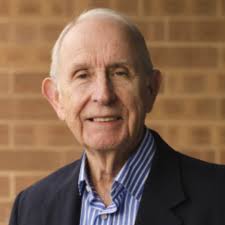
Dr. Mark Scott wrote this treatment of the International Sunday School Lesson. Scott teaches preaching and New Testament at Ozark Christian College, Joplin, Missouri. He also serves as minister with Park Plaza Christian Church in Joplin.






Well thought out and well written. This article would make the basis of a good “men’s Bible study.” About once a year would be OK even with the same members in the class to check on progress.