A Church Changing Its Metabolism
Catalyst Christian Church of Nicholasville, Kentucky, is a small congregation with a big vision to plant churches.

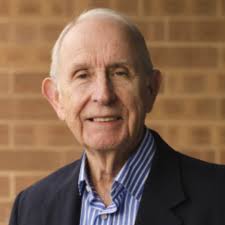
“We want to be a church that has children, grandchildren, and great-grandchildren,” said senior pastor David Kibler.
Inspired by the church-planting legacy of congregations like East 91st Street Christian Church in Indianapolis, Kibler started Catalyst in 2008 with a goal of being a church that plants churches. Catalyst was a “ground zero plant” with no formal support or backing from an evangelistic association or other organization.
Kibler worked multiple jobs to support himself and his family during Catalyst’s early years. It was difficult work, but Kibler was committed to the calling. More recently, the church has been “extremely healthy” and has grown by 10 to 12 percent annually.
Kibler has been pleased with the congregation’s growth, but from the beginning his goal was to do more than start and lead a single church.
“Young things grow fast,” he said, “but one of the signs of maturity is reproduction.” Kibler believes God intends a church to function the same way—to reproduce as it reaches maturity.
As a result, Catalyst has been “changing its metabolism” as a church in recent years from an emphasis on growth to an emphasis on multiplication.
“We have a culture of church planting here on staff,” Kibler said. To that end, Catalyst established a new role called church planter in residence. The first person to hold the position is Catalyst’s youth pastor Robert Harlamert, who plans to launch Elevate Christian Church in nearby Lexington this month (May 2021).
Catalyst Christian’s culture of church planting extends to the entire congregation. Since last year, Kibler has encouraged attendees who live in Lexington to make plans to attend the new congregation when it begins meeting rather than continuing to make the roughly 10-mile drive to Catalyst. He even suggested they begin tithing to the new church in 2020, while Elevate was still in the prelaunch phase.
Though Catalyst Christian Church is still relatively small, Kibler expects it to have a major impact through a long-term commitment to planting as many churches as possible.
“We may never grow beyond 250 or 300 in attendance at Catalyst, but this church could have 20 or 30 ‘children,’” he said. The reason, of course, is simple: “Lost people in general are far more likely to attend church plants than established churches.”
Catalyst’s first “daughter” church chose a nearby location, but future church plants could be located anywhere—perhaps even the Pacific Northwest or New England. Kibler isn’t limiting the church’s plans for reproduction.
“We’re not going to let anything dictate our vision or our work. It’s our job to be faithful to his calling.”

Author: Justin Horey
Justin Horey is a writer, musician, and the founder of Livingstone Marketing. He lives in Southern California.