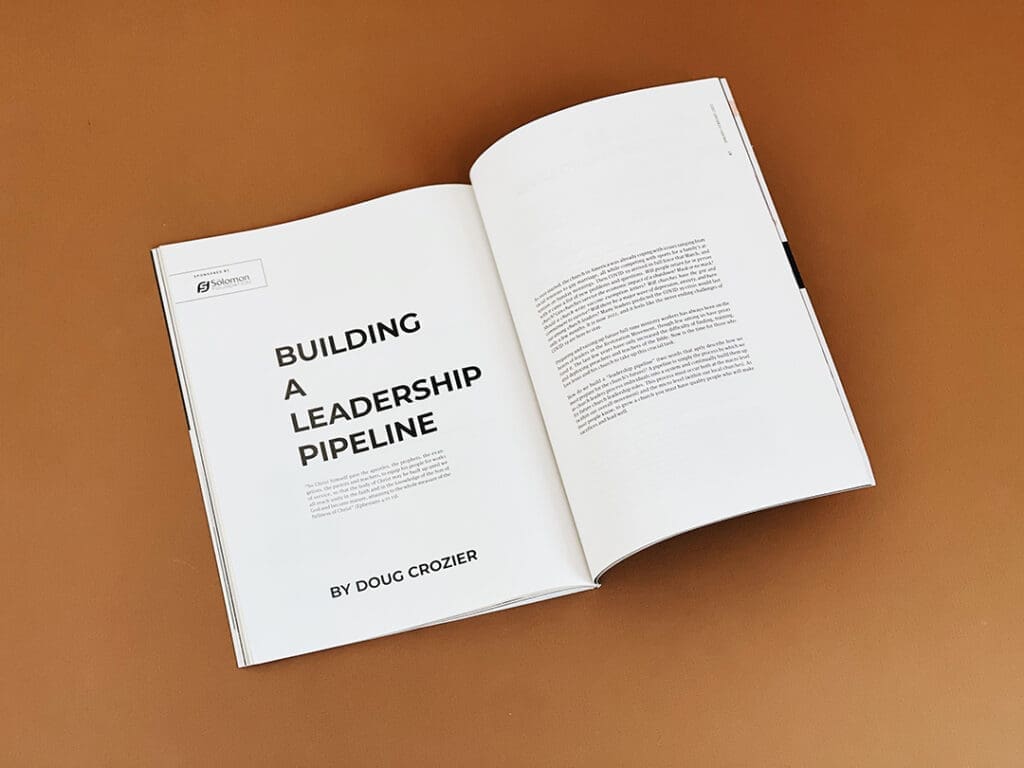
So Christ himself gave the apostles, the prophets, the evangelists, the pastors and teachers, to equip his people for works of service, so that the body of Christ may be built up until we all reach unity in the faith and in the knowledge of the Son of God and become mature, attaining to the whole measure of the fullness of Christ (Ephesians 4:11-13).
As 2020 started, the church in America was already coping with issues ranging from racial tensions to gay marriage, all while competing with sports for a family’s attention on Sunday mornings. Then COVID-19 arrived in full force that March, and with it came a list of new problems and questions. Will people return for in-person church? Can churches survive the economic impact of a shutdown? Mask or no mask? Should a church write vaccine exemption letters? Will churches have the grit and commitment to survive? Will there be a major wave of depression, anxiety, and burnout among church leaders? Many leaders predicted the COVID-19 crisis would last only a few months. It is now 2022, and it feels like the never-ending challenges of COVID-19 are here to stay.
Preparing and raising up future full-time ministry workers has always been on the hearts of leaders in the Restoration Movement, though few among us have prioritized it. The last few years have only increased the difficulty of finding, training, and deploying preachers and teachers of the Bible. Now is the time for those who love Jesus and his church to take up this crucial task.
How do we build a “leadership pipeline” (two words that aptly describe how we must prepare for the church’s future)? A pipeline is simply the process by which we as church leaders process individuals into a system and continually build them up for future church leadership roles. This process must occur both at the macro level (within our overall movement) and the micro level (within our local churches). As most people know, to grow a church you must have quality people who will make sacrifices and lead well.
AT THE MACRO LEVEL
Nationally, leaders of our movement must work to ensure that we have effective means for educating and training young and dynamic leaders for full-time ministry. The number of young people going into full-time ministry is at an all-time low. Several of our Christian colleges graduate fewer than 20 people each year for this task. (Just 25 years ago those numbers were much higher.) Reversing this trend will require creative new strategies, but it can be done, for we know it is God’s will.
Colossians 3:23 says, “Whatever you do, work at it with all your heart, as working for the Lord, not for human masters.”
What course should we plot as we deal with this growing problem?
- Consolidate our colleges into stronger institutions: We have seen some of our colleges close recently, and we probably will see more closing over the next few years. We need to work to ensure students enrolled in those closing colleges receive help in transferring to another Bible college so they can complete their education.
A proactive step would be to consolidate some of our colleges before the situation turns dire. Trouble is, consolidation can lead to wars over territory. (I have seen firsthand evidence of this.) The focus can turn to assets, money, and buildings. I know those things are necessary, but they should not be the priorities. Consolidation is not bad, and our focus needs to be on the students. We must address this issue head-on. We need to develop a plan for stronger, more vibrant institutions. Alumni, students, parents, teachers, administrators, and supporters need to be unified in the mission of raising up the next generation of leaders in the church.
- Develop options to expensive Christian colleges
- One of our leading churches, Christ’s Church of the Valley in the Greater Phoenix area, launched their Leadership Institute several years ago to help Bible college students obtain more hands-on experience. Their mission statement explains their purpose: “The CCV Leadership Institute Residency Program is designed to equip ministry leaders with the skills and experience they need for maximum impact. Through a combination of role readiness training, practical experience, and career coaching, graduates will be prepared to be leaders in the local church.” What a great tool for developing future leaders!
- Online curriculum is one channel that needs to be developed further. So much time and effort are focused on accreditation rather than educating. Just think how many more full-time secular workers could earn a certificate by completing online classes that would help prepare them for full-time ministry.
- Create endowments to fund scholarships, programs, and facilities. More capital is needed to pay for expansion of our Bible colleges to help recruit more young people. Money is not the answer to everything, of course, but it is a very important part in helping develop a plan to resource specific needs in recruitment and training. We have the people who can make this happen, but financial resources are always a challenge. The Solomon Foundation is launching an Education Endowment Program to help provide scholarships to young people who want to go to Bible college but cannot afford it. I could write a book on how many leaders have been helped by scholarships in the past. Suffice it to say, scholarship funding today is at a critically low point.
AT THE MICRO LEVEL
Attention also is needed for developing a leadership pipeline within the local church. Are individual congregations intentionally cultivating leaders of all ages? They should be . . . from student leaders to Bible college students to ministry leaders, deacons, elders, and ministry staff—churches should encourage and support leadership development.
- Support youth ministry: Youth pastors and leaders should encourage high schoolers to consider Bible college and possible full-time ministry.
- Keep our church camps alive and well. Most pastors can point to an experience at church camp that advanced them along the path to ministry. But many camps are struggling today. The local church needs to step up more to help revitalize these camps, which continue to be a major entry point for young people making decisions to go into ministry.
- Train people who already have college degrees or vocational degrees: Churches should help young families that have an interest in ministry to access the necessary training to make their transition into full-time ministry possible.
Our challenges are not insurmountable. As we move into the post COVID-19 era, I challenge you to participate in the solution.
God’s will is clear on this issue. No need to wait for a sign. He wants you to invest your time, talent, and money into identifying new leaders who will teach and preach his Word. Encourage people in your flock to study the Bible—all of it. Challenge them to share what they learn with all who will listen. Launch them into the world. Support them financially and with prayer. And never forget to endlessly encourage them with grace and truth.
Doug Crozier serves as CEO of The Solomon Foundation.

Author: Doug Crozier
Doug Crozier serves as chief executive officer of The Solomon Foundation in Parker, Colorado.






Wow so good and insightful.