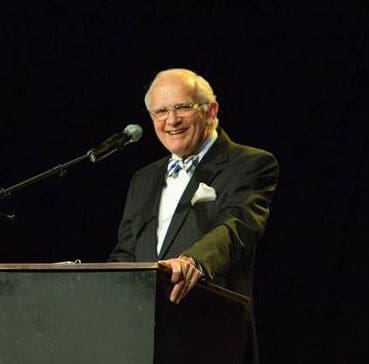
For 45 years, Christian Standard regularly published a feature called “An Epistle from Thistle.” In introducing the feature in 1952, editor Burris Butler described Thistle as “our lighthearted and lightheaded friend [who] corresponds with his unweighty friend, Down, on both light and heavy subjects, generally dealing directly or indirectly with religion.” The writer of the feature, ultimately revealed as Christian minister and educator James G. Van Buren, died in 1997. Here’s a column from 1990.
_ _ _
Seven Multisyllabic Mistakes in Preaching
(An Epistle from Thistle)
May 27, 1990; p. 10
Dear Down:
Probably you are familiar with the proclivity people have exhibited across the years for listing various items in “sevens.” That is, we seem to enjoy considering what are the “seven wonders of the world,” the “seven longest rivers,” the “seven highest mountains,” etc.
The Greeks had a list of their “seven wisest men,” and the medieval church said a great deal about the “seven deadly sins.”
Even the Book of Proverbs has lists, not of sevens, as it happens, but of “four things,” such as four things “that are never satisfied” (30:15-17); four things “that are too amazing” (30:18- 20); four things the “earth trembles under” (30:21-23); “four things (that are) small (but) extremely wise” (30:24-27); and four things “that move with stately bearing” (30:29-31)—all as the New International Version translates this material.
Some people (and I confess I’m one of them) sometimes enjoy the sound and satisfaction which long words seem to bring. There is a story about one minister who simply loved the sound of “Mesopotamia” and who said it on every possible occasion. Our King James Version has several lovely, many splendored, many syllabled words such as foreordination, predestination and lasciviousness—to mention just a few.
I thought it might be not only amusing but seriously instructive if we could combine both these habits of mind and come up with a survey of seven multisyllabic-stated mistakes, or “speaking faults,” preachers or, I suppose, any public speaker can make.
The number with finality
None know in actuality,
Or complete factuality,
But, with some eccentricity
Though quite without duplicity,
Or any dark complicity,
We name them with insistency.
First on our list, which you should flee,
Is soft inaudibility;
A second horror one can see
Unintelligibility;
While third in terror, there would be,
All inapplicability.
Shun fourth, as you’d a poison tree,
Lank interminalibility;
Reject, fifth, is our earnest plea,
Inconsequentiality.
And sixth, quit “I” and “my” and “me,”
All proud egocentricity;
The seventh, almost all agree,
Is stiff inflexibility.
Watch out for these, dear preacher mine, And you can be my valentine!
* * *
Oh, well, Down, I’m sure you and I prefer words that are brief, short, curt, terse, and small. However, quite early in the history of Christian discussion larger words did appear.
A man named Theophilus, who lived in Antioch from 115–181 A.D., wrote about how hard it is to picture God in these words: “In glory He is incomprehensible, in greatness unfathomable, in height inconceivable, in power incomparable, in wisdom unrivalled, in goodness inimitable, in kindness unutterable.”
With no ostentatious volubility, I’m simply,
Yours, Thistle
_ _ _
READ MORE: ‘Revisiting Two ‘Epistles from Thistle’’ (March 14, 2019)

Author: Christian Standard
Contact us at **@********************ia.com