Communion Meditations Sponsored by …

He Made It to the End, and So Can We
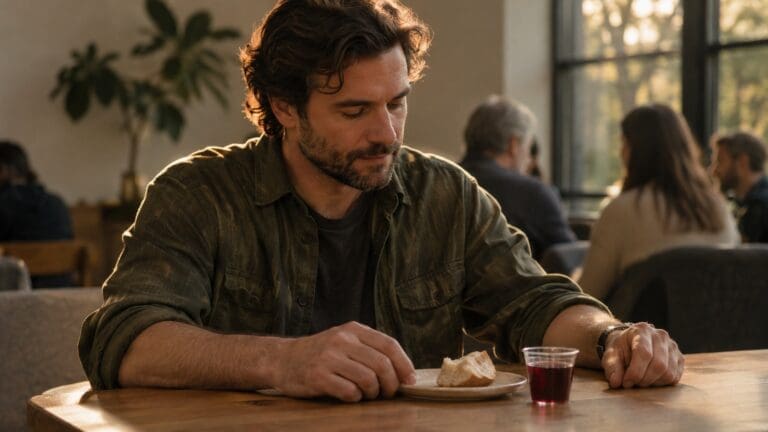
What can the Tour de France teach us about Christian endurance? David Ray draws from Hebrews 12 to reflect on Jesus' sacrifice, the meaning of Communion, and the importance of finishing faithfully.

Christian Endurance in Church Planting: Lessons from Ken Henes
Christian endurance is a recurring theme in Paul Boatman’s interview with Ken Henes, director of Wisconsin Christian Mission Association. Henes discusses the challenges of planting churches in Wisconsin, the importance of partnerships, Christian endurance through leadership development, and the lessons learned from difficult ministry experiences. He also reflects on preaching, personal growth, and the relationships that sustain his work through Christian endurance.
- Church planting in Wisconsin depends on strong partnerships, shared financial support, and developing new congregations that can plant additional churches with a focus on Christian endurance.
- Effective church planting requires careful leadership assessment, training, coaching, and fostering Christian endurance within the team.
- Henes describes how ministry setbacks, personal reflection, and continued engagement with Scripture have shaped his perseverance and Christian endurance.

By Paul Boatman
Ken Henes is in his 18th year as director of Wisconsin Christian Mission Association (WCMA)—a church planting organization for the state. Since 2008 he has also served as preaching minister of Westwood Christian Church in Madison, Wisconsin, demonstrating his commitment to Christian endurance.
Church Planting Challenges and Partnerships in Wisconsin
What are the challenges to church planting in the northland?
We start with a small support base—about 40 Christian churches in Wisconsin, two-thirds of them with average attendance of less than 100. Only one church, Central Christian in Beloit, ranks as a megachurch. Historically, we followed the old style of church planting—a small nucleus that was typically many years from being a self-sustaining congregation. Only recently have we been able to implement the networking partnerships model that emphasizes Christian endurance and is used in much of the country.
Say more about networking partnerships.
Developing a network involves putting together a group of organizations and/or churches that put up front-end money, typically with a commitment to three years of support for fostering Christian endurance. Each of those agencies is invested in the new church, usually providing oversight for the church staff. The churches in such a network are likely to encourage their church members to pray for the new church and support its Christian endurance. The sense of shared ownership is a great asset for the church plant.
Who are the partners?
WCMA may be one partner, but our financial resources are so limited that we must have other partners to ensure Christian endurance. Partner congregations for Wisconsin church plants have included East 91st Street Christian Church of Indianapolis, Indiana, and the Owensboro (Kentucky) Christian Church. River Glen Christian Church in Waukesha, Wisconsin, planted through a partnership with those two churches in 1997, is now the lead partner in the most recent church plants in Wisconsin, emphasizing Christian endurance.
So you are planting churches that are church-planting churches?
Some of the most significant giving for church planting comes from churches that are less than 10 years old, showcasing their Christian endurance. A sense of mission like that is both good theology and good practice. The Waukesha church is in the midst of its third church plant. The last two are part of its goal of planting five churches in 10 years, a true testament to Christian endurance.
Developing Effective Church Planting Leaders
What goes into an effective church plant?
The new church needs grounding that will enable long-term success. Finding the right leadership is the first challenge. Two larger church planting agencies, Stadia and Orchard Group, have pioneered the use and development of assessment tools that help us put together a leadership team with the right gifts and personality, fostering Christian endurance. There are some great pastors who would not make good church planters. In recent years, we’ve seen the development of training for church planting, sometimes including a “boot camp” for the leaders of a specific church plant to teach Christian endurance. We are also seeing more intentional coaching of church planters. One Wisconsin church planter had regular consultations with his experienced coach in Texas. Electronic communication makes that feasible. Of course, selection of an appropriate target area for the church is also critical.
Why are there so few Christian churches in Wisconsin, while Illinois, a neighboring state, has 500 churches?
Actually, the problem starts in Illinois. The big concentration of Christian churches is in the southern two-thirds of that state. Whatever movement went on in the past two centuries to plant Christian churches in the lower Midwest greatly thinned out as it moved north.
But now we have evidence that Wisconsin, like much of our country, is a viable place for church planting. The increasing population of unchurched and dechurched people suggests that the Great Commission overrides any old concern about denominational competition. The need for Christian endurance is greater than ever.
What brought you into church planting?
I’ve always believed that church planting makes sense. Bruce Burdick, the person who baptized me, was one of the early directors of WCMA. Wherever I’ve ministered, whether as a preacher or a Bible college professor, I have supported and, in some way, participated in church planting and the concept of Christian endurance. When this opportunity opened 18 years ago, it seemed like a good fit. God uses my gifts to empower the church planting process while nurturing Christian endurance.
How does your dual role work?
I was a member in the Westwood church, when people in the church suggested that I be considered for the ministry role. It provides a ministry outlet that fits my gifts and greatly reduces the overhead for the church-planting agency, freeing more money for direct church planting work. This dual role is essential for maintaining Christian endurance.
The only downside is that it inhibits my visiting the supporting churches and the church plants in action. The upside is that I love to preach, probably more at this stage of life than when I was younger, reinforcing my Christian endurance. I keep reconnecting with the story of Jesus, and the Word of God stays fresh and invigorates me.
Christian Endurance Through Ministry Challenges and Personal Growth
Rumor has it that you are rather tall.
I admit to that. I am 5 feet, 21 inches tall. (Most think of that as 6 feet 9 inches.)
Has that impacted your ministry development?
Perhaps. Basketball has been my sport. I owe much of my development during college to playing basketball. Being overly competitive can become a problem, but playing for a Christian college under Coach Lynn Laughlin [of Lincoln Christian University] helped me set boundaries and clarify real priorities, teaching me important lessons about Christian endurance.
How has your wife’s ministry developed?
Christine’s ministry focuses on her fine experience and education as a musician. She has readily played a role in worship leadership, but she also operates her own music therapy business. Her wide variety of clients includes developmentally disabled persons, brain-injury patients, and people with mental health issues. Her giftedness enables ministry both in the church and in the secular arena, embodying the principles of Christian endurance.
Have there been down times in your ministry?
I don’t dwell on it, but you know they are there. There was a time when we had invested time, money, and energy into a church plant that failed. There was nothing I could do to make it work. It taught me about myself, ministry, and other people, but it was draining. Another low point occurred when I stayed too long in a ministry where my effectiveness had diminished. It was not until I finally moved on that I realized how dry I had been, emphasizing the need for Christian endurance.
What keeps you “up” now?
I think the biggest factor in maintaining spiritual and mental health is what goes on when I am preparing to preach. Every sermon series gets me in personal contact with a section of Scripture or with a biblical personality. They become my friends, people with whom I share the love of Jesus. That is my passion now, and it is closely tied to my understanding of Christian endurance.
Paul Boatman serves as chaplain at Safe Haven Hospice in Lincoln, Illinois.

Author: David Ray
Sponsored
For 160 years Christian Standard has served the churches of the Restoration Movement. Your gift keeps articles like this one free for every church leader.
Keep reading
More in Theology & Bible


From the archive
Christian Standard has covered this since 1866.





