Leading in a Divided Culture
How can church leaders navigate political polarization without losing sight of the gospel? The LEAD approach offers a path marked by curiosity, resilience, gospel-centered conviction, and faithful Christian practice.
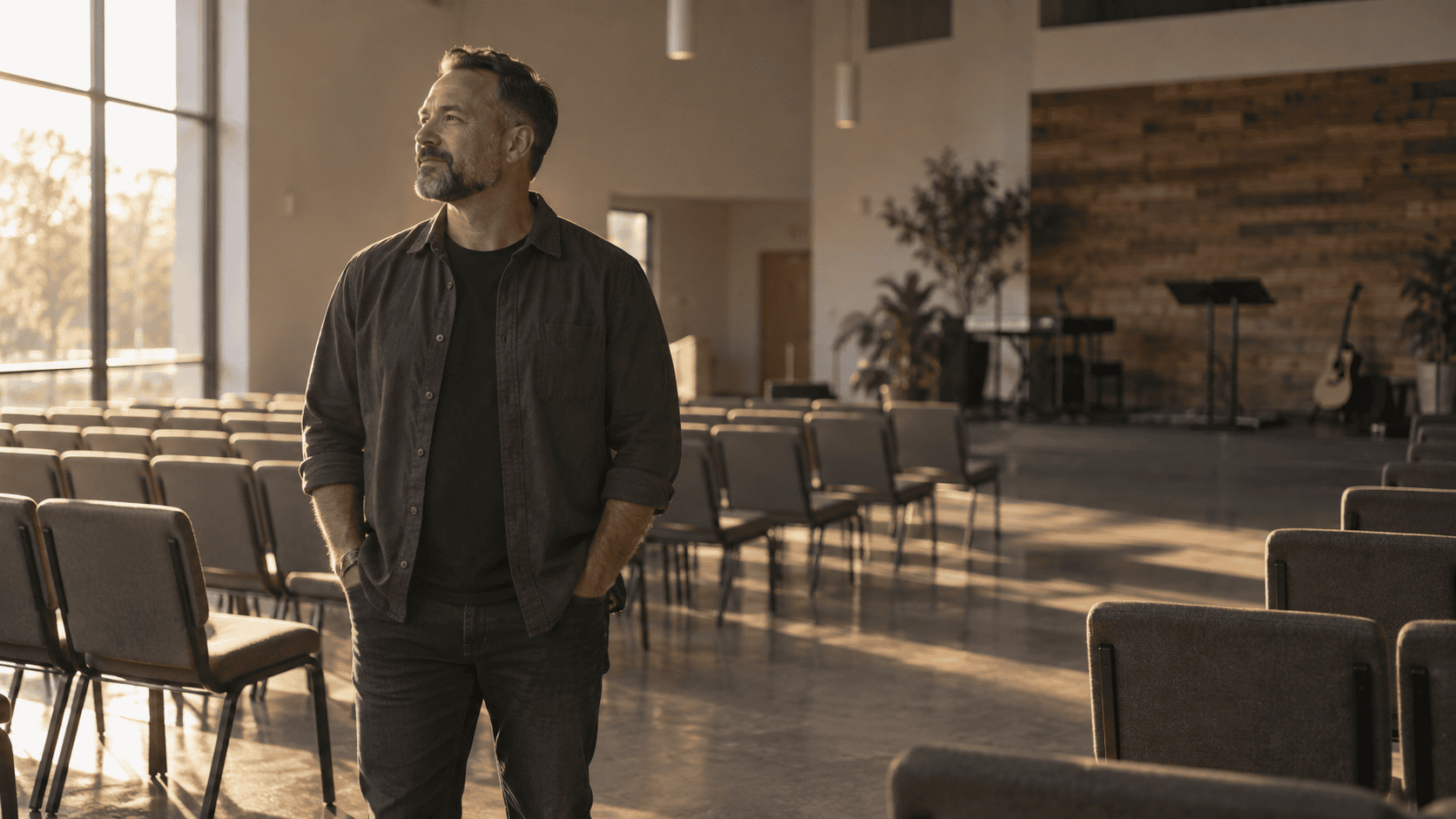
Leading with Grace in a Polarized Culture
Political division can place enormous pressure on pastors and church leaders, but faithful leadership does not require joining the culture’s hostility. The LEAD approach emphasizes curiosity, resilience, the centrality of the gospel, and the enduring practices that form Christlike leaders.
- Lead political conversations with curiosity rather than caricature or hostility.
- Expect criticism and pressure without allowing every controversy to dictate the church’s message.
- Keep the gospel central while practicing the faithful rhythms that have shaped the church from the beginning.
On November 2, 1980, I started my first official preaching ministry at Claysville Christian Church, a very small church in Harrison County, Kentucky. Two days later, Ronald Reagan defeated Jimmy Carter for President. Since then, I have pastored churches through 10 additional presidential elections, not to mention the midterms that follow every two years.
By the time I stepped aside from the local church pastorate at the end of 2022, I had witnessed a dramatic shift in political tone, civility, and partisanship. What once felt like spirited disagreement has, in many places, hardened into suspicion, hostility, and, at times, outright hatred and contempt. The tension surrounding all things political has reached a point of grave concern, not just for our country, but for the churches within it.
I have no new paradigms to offer for navigating these turbulent times. But I do believe we can lead in a way that is gospel-centered, neighbor-friendly, and evangelistically winsome, regardless of what our neighbors believe, how they vote, or who or what they endorse. I’ve found it helpful to think about this through a simple acronym: LEAD.
Lead with Curiosity
Pastor and author Steve Cuss says curiosity may be the superpower for spiritual growth. “Without it, we assume we know something. With it, we’re unlocked from our rigid assumptions.” In a polarized culture, curiosity is an act of humility. It slows us down, creating space for connection instead of caricature.
Leading with curiosity doesn’t mean abandoning biblical convictions. It does mean we refuse to reduce the humanity of our opponents to the extremity of their positions. Curiosity says, “Help me understand how you came to see it that way,” instead of immediately preparing a rebuttal. It understands the difference between making an honest observation and demeaning someone in a hurtful accusation. It focuses on listening to learn, not listening to win. In a world fueled by outrage, curiosity is quietly subversive and quickly disarming. It reminds people they are heard and seen before they are debated and dismissed.
Expect Pushback
Jesus was clear: “In this world you will have trouble” (John 16:33, New International Version). The apostle Peter adds, “Do not be surprised at the fiery ordeal that has come on you” (1 Peter 4:12). Leading in a polarized culture will certainly invite misunderstanding, criticism, and at times, misrepresentation. We are naïve to expect anything different.
People will question your motives. Some will assume that if you don’t fully align with their political perspective, you are unfaithful to the gospel—at least as they see it through their nationalistic lenses. Others may try to recruit you into their ideological camp or pressure you to speak with certainty on issues where wisdom calls for nuance.
Faithful leadership requires the maturity to absorb that pressure without becoming reactive or defensive. Not every national event warrants your interpretation in a Sunday service. Not every criticism deserves a response. Not every argument needs to be won. Sometimes the most Christlike posture is a steady, non-anxious presence—anchored in truth but not agitated by every wave of opinion.
Always Keep the Gospel the Main Thing
The good news of God’s kingdom, revealed through Jesus, reimagines humanity, realigns power, and reconciles people from every nation, culture, and background under his lordship. The gospel is not tied to a political platform, national identity, or cultural preference. It is far bigger and better than that.
I frequently asked some of my staff and friends who strongly associated faith with national identity, “If you were uprooted from America and placed in a completely different country and culture, what would you say to explain the grace of Jesus to people with no American framework?” That is closer to the heart of the gospel Jesus preached, and that, above all, is what we should be about. The main thing is to always keep the gospel our main thing.
When we tether the faith too tightly to any one political expression, we risk shrinking something God intended to be global, eternal, and transformative. Our calling is not to make the gospel fit our world, but to allow the gospel to reshape how we see the world.
Do What the Faithful Have Always Done
In complicated times, the temptation is to search for novel strategies or louder voices. But the way forward is often found in the ancient paths. The first church changed their culture, not by lobbying for faith-friendly policy changes or endorsing their preferred political candidates. They did it by “devoting themselves to the apostles’ teaching, fellowship, the breaking of bread and prayer” (Acts 2:42).
These practices form something deeper than opinions. They form our souls. They anchor us in a reality that is not dictated by news cycles or social media trends. They remind us that, before we are citizens of any nation, we are citizens of God’s kingdom.
Faithful leadership in a polarized culture is not primarily about mastering the right arguments. It is about becoming the right kind of person: grounded in Christ, shaped by grace, and committed to loving others, even when agreement feels out of reach.
The current cultural moment is challenging and sometimes scary. But it is also an opportunity for the church to model a different way. A way marked, not by fear or hostility, but by conviction and compassion. Not by withdrawal or domination, but by faithful witness and civil engagement.
We may not be able to change the tone of the entire culture, but we can change the tone of our leadership. And that, over time, may be one of the most powerful testimonies we have to offer.


Author: John Hampton
Sponsored

For 160 years Christian Standard has served the churches of the Restoration Movement. Your gift keeps articles like this one free for every church leader.
Sponsored

Keep reading
More in Culture & Public Square



From the archive
Christian Standard has covered this since 1866.