Communion Meditations Sponsored by …

Empty
What do our empty hands after Communion reveal? Stuart Powell connects the Lord's Supper with Jesus' empty tomb, reminding believers that Christ's resurrection promises victory over death.
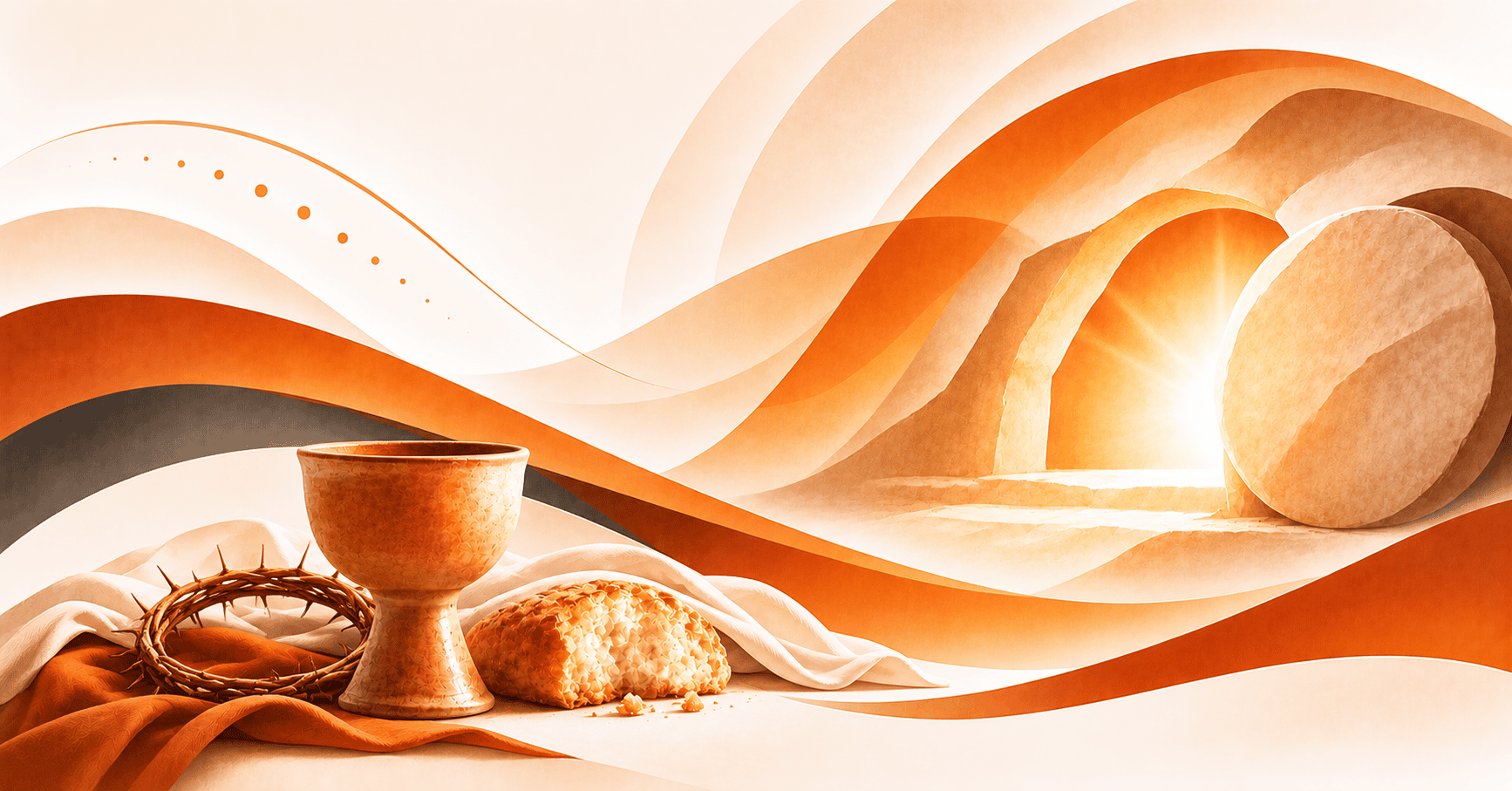
Empty Tomb Communion Meditation: The Promise of Empty Hands
This Empty Tomb Communion Meditation by Stuart Powell connects the resurrection of Jesus with the bread and cup of the Lord’s Supper. Reflecting on Mark 16:1-6, Powell reminds readers that the gospel does not end with Christ’s death. The empty hands left after Communion become a powerful reminder of the empty tomb and the promise of resurrection.
- The women who visited Jesus’ tomb discovered that he had risen from the dead.
- Communion remembers Christ’s sacrificial death while also pointing believers toward his resurrection.
- Empty hands after receiving the bread and cup symbolize the empty tomb and the future resurrection promised to believers.
The focus of Jesus’ ministry was to open the floodgates of God’s grace in order to fill the lives of all who seek him. He fills his disciples with the joy of his presence. Jesus seeks to fill our lives with the hope that comes from his victory over sin when he died on the cross.
Yet, none of the Gospel writers ended their stories with Jesus in the grave. Let’s recall the story of Resurrection morning.
The Empty Tomb in Mark 16:1-6
Mark 16:1-6 (New English Translation): “When the Sabbath was over, Mary Magdalene, Mary the mother of James, and Salome bought aromatic spices so that they might go and anoint him. And very early on the first day of the week, at sunrise, they went to the tomb. They had been asking each other, ‘Who will roll away the stone for us from the entrance to the tomb?’ But when they looked up, they saw that the stone, which was very large, had been rolled back. Then as they went into the tomb, they saw a young man dressed in a white robe sitting on the right side; and they were alarmed. But he said to them, ‘Do not be alarmed. You are looking for Jesus the Nazarene, who was crucified. He has been raised! He is not here. Look, there is the place where they laid him.’”
The women went to the tomb with sorrowful hearts because of their grief. They expected to find a tomb filled with the decaying body of their rabbi. What did they find instead? Emptiness. No dead man wrapped in burial clothes. The open tomb alarmed them. The emptiness alarmed them. The angel alarmed them. Jesus had indeed conquered death.
Empty Tomb Communion Meditation: What Our Empty Hands Declare
There’s one last thing to think about. Right now your hands hold the bread and the cup. We never want to forget that the power of God’s salvation is fully realized in Jesus’ sacrificial death on the cross. That is a key message we need to share with each other whenever we gather together. However, the Good News doesn’t end when we finish partaking. After you eat the bread that speaks of Jesus’ body and you drink the cup that testifies to the power to forgive in his blood, what will you hold? Your hands will be empty. That is another message of Communion. Your hands become a declaration of the emptiness to Jesus’ tomb. On the third day after he suffered and died, Jesus vacated that place of death and he will never return. We continue our worship with a picture of the promise God has in store for every believer. Throughout this week, think about this promise of emptiness God has made to we who follow Christ. Our vacant hands after Communion declare that one day every grave will look just like Jesus’ tomb: empty.
Stuart Powell lives outside of Terre Haute, Indiana, where he serves with the North Side Christian Church.

Author: Stuart Powell
Stuart Powell lives outside of Terre Haute, Indiana, where he serves with the North Side Christian Church.
Sponsored
For 160 years Christian Standard has served the churches of the Restoration Movement. Your gift keeps articles like this one free for every church leader.
Keep reading
More in Theology & Bible


From the archive
Christian Standard has covered this since 1866.





