Respectful Christian Conversation in a Culture of Confrontation
Respectful Christian conversation is difficult in a culture that often rewards labels, outrage, and partisan reflexes. Robert F. Hull Jr. reflects on the Christian need for humility, listening, and honest engagement with those who think, believe, and live differently.
- Public discourse often rewards confrontation more than careful conversation.
- Labels can become weapons that keep people from listening seriously to one another.
- Christians can practice humility by listening, learning, and spending time with people unlike themselves.
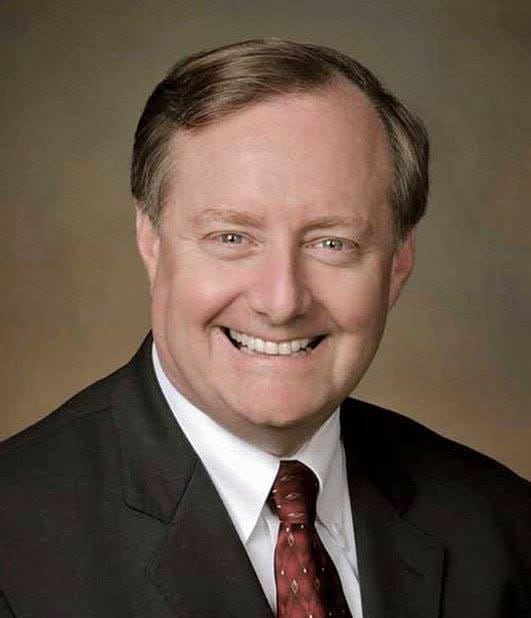
By Robert F. Hull Jr.
Can we really talk? Not rant, emote, condemn, accuse, dismiss, but actually talk to each other?
If you’re thinking “talk shows,” you have found me out. I used to be a confirmed nonlistener to talk shows; then I began idly dialing them in while driving, just to see (I told myself) what all the fuss was about. I came to see that, while not all talk shows are created equal, their premise is pretty much the same: I’m going to tell you what “the media” won’t talk about, because “the media” is too liberal, or too sold out to corporate interests, or too cowardly, or too something-or-other. The set-up piece for each session is roughly, “Here is what I’m incensed about today and why you should be incensed about it too.”
A Culture of Confrontation
A college introduction to economics will give us Gresham’s law, which says bad money drives good money out of circulation (i.e., an old coin with high silver content may be worth more than its face value, so it will be saved, not circulated; only cheap, “base metal” coins will be spent).
A kind of Gresham’s law now seems to dominate public discourse, which operates more by confrontation than conversation. Even the major television networks practice “gotcha” journalism: Six words snatched from a speech made 20 years earlier can be used to paint a person as “soft on crime” or “anti-immigration.” The so-called “debates” among candidates for political office allow no time for serious and detailed discussion of policy. Barbed one-liners and snappy comebacks (carefully memorized in predebate preparations) are the stock-in-trade.
This kind of debased discourse has almost driven from the marketplace thoughtful, respectful conversation about political, religious, and social differences.
The Tyranny of Adjectives
There’s nothing more useful than just the right adjective. What would The Iliad and The Odyssey be without their “rosy-fingered dawn” and “wine-dark sea”? Even the more pedestrian adjectives “short,” “old,” “enthusiastic,” and “lazy” enrich our language. But adjectives can also be used to tyrannize, to put down opponents, and to mark the boundaries of inclusion and exclusion.
Once you have tagged a person with the right label, you don’t have to deal seriously with that person’s beliefs or arguments. After all, why should anyone listen to a “pinheaded liberal”? Who cares what a “femi-Nazi” has to say about health insurance for poor people? What will happen to the country if a “right-wing religious zealot” gets elected to high public office? Who poses the greatest danger to the country: the “anti-immigration bigot” or the “Islamo-fascist sympathizer”?
It is distressingly easy even for Christians to substitute labels for measured speech and genuine conversation with opponents. There is nothing new about this, of course. Bishops hurled blistering invective against each other in their debates about the human/divine nature of Christ in the third and fourth centuries. Some Protestant reformers characterized the pope as “the antichrist” or “the great whore of Babylon,” just as the notes in Catholic Bibles of the time referred to Protestant churches as “heretical conventicals.”
Tired of the sectarian wrangling that resulted in such titles as “Old Light Anti-Burgher Seceder Presbyterians,” the reformers who gave birth to the so-called “Stone-Campbell Movement” advocated the use of the simple names “Christian” or “Disciple.” They used these terms to refer to participants in a movement, not members of a “church.”
These days there seems to be little appetite for such simplicity. We read of “Bible Christians,” “Bible-believing Christians,” “conservative Evangelical Christians” (and “liberals,” but not “liberal Christians,” because that’s an oxymoron to many).
To be sure, many church-related adjectives have become nouns, useful as self-descriptions for various denominations (Southern Baptist, United Methodist, Evangelical Free Church). But many other adjectives are used more as weapons, fences, or guardians of orthodoxy than as simple descriptors.
A Modest Proposal
Can we learn to talk to each other, even when we have deep and important disagreements? I admit this is a great challenge to me. I like consensus; I am uncomfortable talking with people whose politics, theology, and behaviors are radically different from mine. And I am suspicious—rightly, I believe—of the easy inclusionism that treats all beliefs, commitments, and behaviors as equally acceptable and valid. Talking with each other doesn’t mean agreeing that “anything goes.”
At the same time, I know from my own history that I am not always right. If I should write one of those “How My Mind Has Changed” articles such as The Christian Century used to run, I would be paying a debt to a whole succession of college and seminary teachers, not to mention my wife, children, and countless authors of books and articles who have been my correctors over the years.
So I need to pay attention to other voices than those that confirm my own opinions about everything from public health care to the authorship and dating of Isaiah. But how can we get past the barriers of partisan politics and the predictable rhetoric of talk show hosts?
Take time to listen. This means paying attention to what the other person is saying (in person, on the air, in print), rather than rushing ahead to correct or counter the argument. It also means being willing to read the editorial writers “on the other side” from where you are and trying on a book or two that sets your teeth on edge. If you want your opinions to be taken seriously, give that courtesy to the other side.
Cultivate a spirit of humility. Perhaps I should have called this section “a proposal for modesty,” rather than “a modest proposal.” The only people who know in detail what’s wrong with the world and how to fix it are talk show hosts, and every one I have ever listened to has an ego the size of Mount Everest. I have a big ego, too, but I don’t regard that as a virtue, but as a fault. If the drive to win the argument (or prevail in the discussion) outweighs the desire to learn, to understand, to grow in grace and knowledge, I will never acquire the spiritual fruit of humility.
Put yourselves in circumstances where you have to be with people very different from you. Sometimes our jobs put us in connection with such people; at other times they do just the opposite.
One of the most valuable learning experiences of my life was taking a sabbatical leave at The Institute for Ecumenical and Cultural Research in Collegeville, Minnesota. Being in residence on the grounds of a university owned and operated by the monks of a Benedictine monastery forced me way out of my comfort zone. Most of the resident scholars (as we were known) were Roman Catholics, but my closest neighbor was a Quaker. There was also a United Methodist, a Presbyterian (PCUSA), and an Episcopalian. Although we did not get into hot and heavy theological debate, the intellectual and religious climate of the place was, in many ways, very alien to my habits of thinking, believing, and practicing. Even so, within a half hour of my meeting one of the monks, we were happily talking about a mutual acquaintance from the Church of God, Cleveland Assembly.
I found much to disagree with during my year at the institute, but I also found I could worship with, eat with, and learn from every one of my colleagues. And I had the happy privilege of preaching in chapel with the students and faculty of St. John’s School of Theology and Seminary. One of my last breakfast meetings there was with a monk who wanted me to talk with him about how it was possible to have a recognizable body of churches without a top-down hierarchy—so I believe the learning was reciprocal, at least I hope so.
Robert F. Hull Jr. teaches Greek and New Testament, and also serves as dean, at Emmanuel School of Religion in Johnson City, Tennessee.