March 13, 2026

Debating Differently: In a Time When People Can’t Talk About Hard Things Anymore, How Can Christians Be Different?
In a time when people can’t talk about hard things anymore, how can Christians be different?
Technology helps Christians think wisely about digital life and the tools shaping modern culture. Explore biblically grounded articles on social media, AI, online ethics, privacy, attention, and the opportunities and risks technology brings to faith, family, and ministry. You’ll find guidance for using technology with discernment, forming healthy habits, and engaging innovation without losing what matters most—truth, community, and spiritual formation. Whether you’re leading in the church or navigating daily life, these resources equip you to make thoughtful choices and use technology in ways that honor Christ.
March 13, 2026
In a time when people can’t talk about hard things anymore, how can Christians be different?
February 23, 2026

Tyler McKenzie weighs the promises and pitfalls of social media activism, arguing it often fuels rage, harms mental health, and encourages slacktivism. He urges sparing, strategic use—and a stronger focus on local, relationship-based church action.
July 3, 2025
Spiritual warfare impacts teen today through psychological manipulation of social media where culture, politics, fluidity of truth, pornography, misinformation, greed, and so much more collide.
January 26, 2024
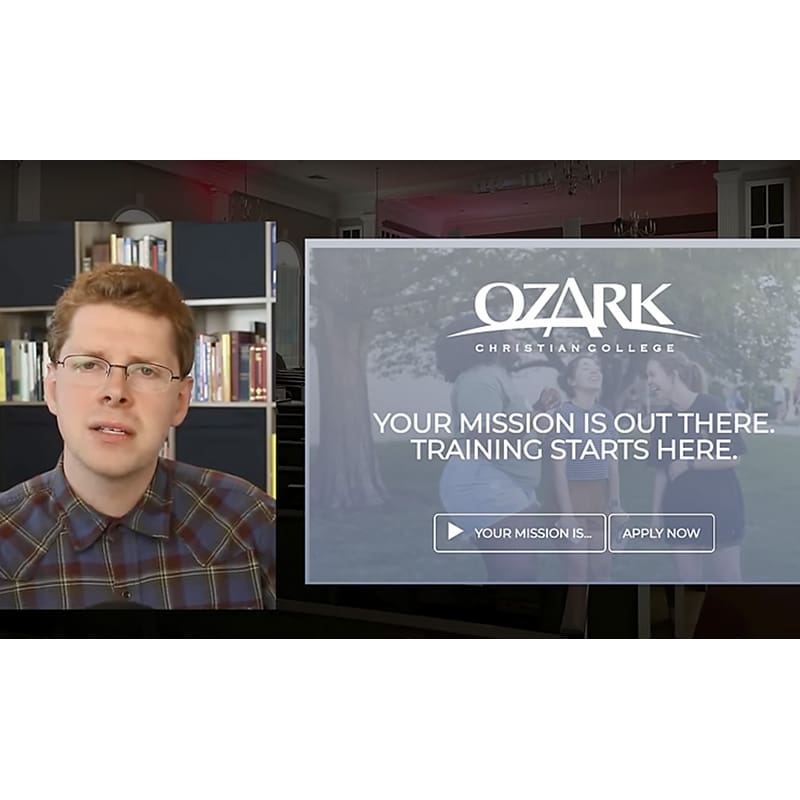
Ready to Harvest, which conducts denominational research, has released a 27-minute video via YouTube profiling and explaining Independent Christian Churches and Churches of Christ. “What Are Independent Christian Churches?” was posted early this week and is being generally well received. . . .
July 25, 2023

Some laud the potential of artificial intelligence to make life easier for everyone. Some fear how AI could be misused. But like it or not, it’s here—and one company is looking to bring it to the church. Michael Whittle, a California entrepreneur and lay pastor, is the founder of Pulpit AI, a soon-to-be-released platform designed to help pastors make the most of their weekly sermons. . . .
January 1, 2023
By Kent E. Fillinger A January 2021 Lifeway Research survey found 49 percent of U.S. Protestant pastors say they frequently hear members of their congregation repeating conspiracy theories about something happening in our country. Around 1 in 8 pastors (13 percent) strongly agree their congregants are sharing conspiracy theories. WHAT THE RESEARCH SHOWS An October 2020 research report found that Facebook users engage with misinformation 70 million times per month on average. Though far fewer than the 2016 peak of 200 million monthly fake news engagements, it still is no small figure. On Twitter, people share false content 4 million
November 4, 2022

Among the 15,000 Ozark Christian College alumni, Meredith Williams is a legend. During his 46 years at OCC, Meredith wore many hats, including admissions director, alumni director, and many others. Nicknamed “Mr. OCC,” he’s been the college’s single best cheerleader, and when he retired in 2013 at age 73, his ministry didn’t stop. He just moved it to Facebook. . . .
September 1, 2022

Help Your Children Use Tech Wisely and Limit the Dangers
July 1, 2022

How to Break the Chains and Build a Tech-Wise Life for You and Your Children By Tyler McKenzie I believe history will remember 2007 as a defining year. Why? In 2007, a nuclear-sized tech explosion occurred. Facebook transitioned from a college to global phenomenon. Twitter went global. “The cloud” took off. Hadoop began expanding the ability of any company to store and analyze enormous amounts of unstructured data (which enabled big data and cloud computing). Amazon released its first Kindle. Google introduced Android. And (drumroll please) Steve Jobs introduced the first-generation iPhone. As I mentioned in my May/June Engage column
July 1, 2022
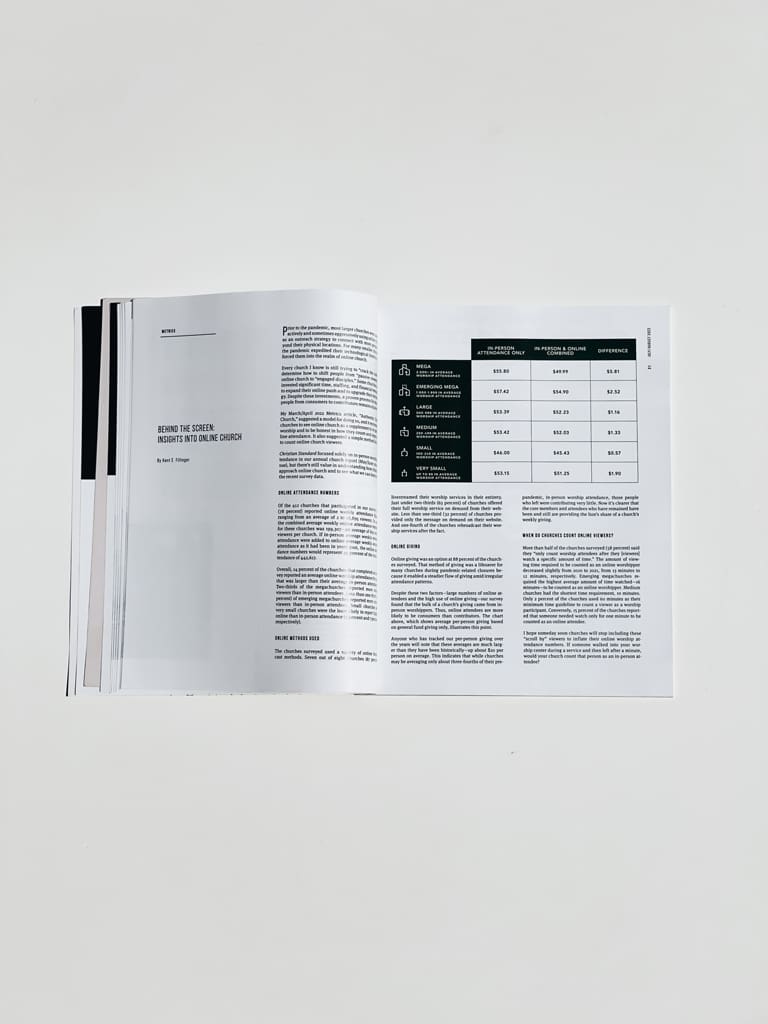
By Kent E. Fillinger Prior to the pandemic, most larger churches were already actively and sometimes aggressively using online church as an outreach strategy to connect with more people beyond their physical locations. For many smaller churches, the pandemic expedited their technological timeline and forced them into the realm of online church. Every church I know is still trying to “crack the code” to determine how to shift people from “passive viewers” of online church to “engaged disciples.” Some churches have invested significant time, staffing, and financial resources to expand their online push and to upgrade their technology. Despite these
May 1, 2022

By Tyler McKenzie In a punchy scene from Gulliver’s Travels, the Lilliputians (the little people) think Gulliver’s clock is his god because he keeps checking it. After interrogating him, the Lilliputians conclude the following: “And we conjecture it is either some unknown animal, or the god that he worships; but we are more inclined to the latter opinion, because he assured us . . . that he seldom did any thing without consulting it. He called it his oracle, and said, it pointed out the time for every action of his life.” Already, in 1727, author and Irish clergyman Jonathan
July 1, 2021

The most frequently asked question from church leaders in our annual survey was, “How should we count our online attendance?”
March 1, 2021

I received an email from Jonathan, a person I’d never met, last June. He explained that he’d hit a point in his life where he had questions about life, faith, his purpose, and how to respond to everything that was happening in the world. We were in the midst of a pandemic; people were losing their jobs, and there was political turmoil and racial injustice. Jonathan said he didn’t know how to process all the chaos we all were witnessing. Jonathan had found our church through Google and Instagram. Unbeknownst to me, he had been listening to our sermons and
November 22, 2020

I’m not a doomsayer. I do not believe social media is inherently evil. Instead, I believe it’s morally neutral. Like most technology, its capacity for good or evil lies in the hands of those who wield it. However, to pretend that you and I are the hands that truly wield it is naïve at best and irresponsible at worst. You may have good intentions when you sign in, but once you tap on that app you are entering a space that lauds your ability to shape the world by what you share, but in actuality, social media tends to shape
February 26, 2020
How We Developed, Launched, and Continue to Improve Our Mobile Application In the fall of 2018, the Midwestern church I serve, The Crossing, started a new website design process and began to overhaul our web presence analytics. In doing so, we learned 54 percent of the traffic to our main website originated from mobile devices that is, cell phones. (Tablets accounted for only about 6 percent of traffic, while desktop/laptop devices made up the remaining 40 percent.) It wasn’t all that surprising. In 2017, media measurement and analytics company Comscore reported, Mobile apps account for 57 percent of all digital
February 22, 2020

By Michael C. Mack Most of us know the value of using modern technology for both personal and church use, but some of us—especially those of us over a certain age (and I’m uncertain what that certain age is anymore)—simply don’t have the expertise to use it well. Truth is, we’re afraid we’ll bumble the technological language well before we bumble the technology itself. I’ve experienced this while trying to talk to a 20-something wisenheimer at Best Buy. I stand there with a blank look on my face as he lays down some impressive technobabble. Just tell me which watch
February 22, 2020

By Jon Weatherly Would the apostle Paul use today’s social media? After all, it is filled with triviality, gossip, cruelty, divisiveness, indecency, blasphemy, and “fake news.” When videos of cats wearing shark suits and riding Roombas may be the least evil thing on social media, how can we imagine Christ’s apostle engaging in such an environment? When a person uses social media for what they consider a noble purpose, still it can backfire. Consider the case of Adam Smith in 2012 in Tucson, Arizona. One particular day, Smith filmed his interaction with a fast-food employee. Smith wanted to make a
February 22, 2020
By Tina Wilson If your church isn’t using social media—and using it well—you’re likely missing a great opportunity. Social media is the widest form of advertising available—and it costs little to nothing. Early on, social media may have been used mostly by younger people, but these platforms have expanded so much that most people across generations now get their information from them. The reach of social media is broad with regard to age and target audience. Social media speaks to church members and seekers alike, while most communication from the church—bulletins, email blasts, billboards—target one or the other. Beyond the
February 22, 2020

Laura McKillip Wood Terry pounded the steering wheel and cried. It took her last ounce of restraint not to throw open the car door and march right back into the boarding school to collect her son’s things and take him home. Who cared if the mission organization she and her husband, Kevin, worked with required them to send their child to boarding school? Was it even worth it? “Please, God, just give me my son back!” she cried. In the stillness that followed, the assurance that God was working through them in their ministry settled her heart. “I loved Jesus,
February 22, 2020
By David Dummitt IBM created the first smartphone in the early 1990s, but it was Apple’s release of the first iPhone in 2007 that effectively changed the world at large. Fast-forward to today and approximately 81 percent of people in America own a smartphone. The world has literally moved into the palms of people’s hands. The advent of smartphones over the past quarter century has revolutionized the way people prefer to learn, shop, and, yes, give. While many churches are embracing financial technology in new ways and are experiencing the positive impact on congregational generosity, many churches in America continue
March 27, 2026
Rick Cherok

March 27, 2026
David Empson

March 27, 2026
David Faust