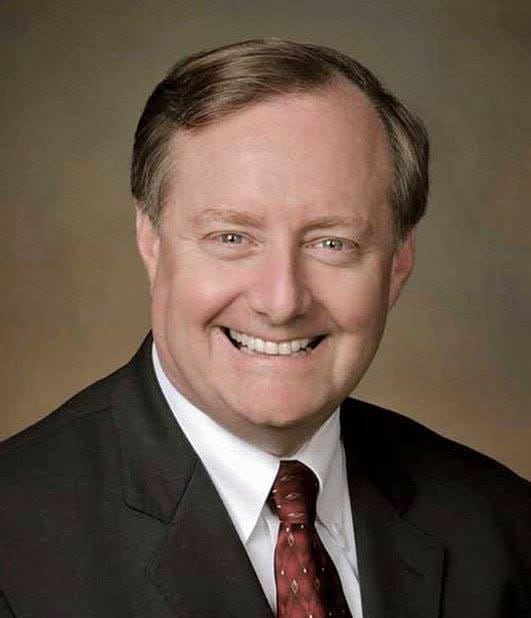
Alexander Christian Foundation

By Tom Scott The Alexander Christian Foundation seeks to partner with the churches of Indiana to provide scholarships for those preparing for ministry. “Now is the time of God”s favor, now is the day of salvation.” Paul wrote those words to spur on the Corinthians. He wanted them to realize it was their moment to reach people for Christ. There is a real sense of passion in these words from the great evangelist in 2 Corinthians 6:2. He believed at any moment Christ was going to return. That same message applies to our generation today. With all the unrest around

The Brush Run Church

By Calvin Warpula In 1809 when Thomas Campbell wrote the Declaration and Address of the Christian Association of Washington [Pennsylvania], he had no plan to start a separate church. He strongly opposed sectarianism and all human creeds and promoted unity among all believers in Christ on the basis of the Scriptures only. His son, Alexander, who arrived from Ireland later that year, agreed with and supported his father”s views. On Saturday, May 4, 1811, at its semiannual meeting, the Christian Association decided to transform itself into a local church because its calls for unity based on Scripture had been rejected

Reggie Thomas: A “˜Fisher of Men” for 65 Years

By Victor Knowles Reggie Thomas is one of the national treasures of the Christian churches and churches of Christ. Few men in this fellowship have preached as long or enjoyed such results to their preaching as Reggie Thomas. December 5, 2010, marked the 65th anniversary of his first sermon. Only a select few have ever reached this milestone. Early Influences Reggie was born to A. R. and Florence Thomas on January 8, 1929, in Joplin, Missouri. When he was 8, he made the Good Confession and was baptized into Christ at South Joplin Christian Church. In 1943, during the middle

Interview with Douglas Foster

By Brad Dupray Douglas Foster is director of The Center for Restoration Studies at Abilene (Texas) Christian University, where he also serves as professor of church history. ACU is primarily affiliated with the a cappella churches of Christ, but Foster brings a broad knowledge of the Restoration Movement as a co-editor of The Encyclopedia of the Stone-Campbell Movement and of the forthcoming World History of the Stone-Campbell Movement (due from Chalice Press in 2012). He completed an undergraduate degree at David Lipscomb University and earned a PhD in church history at Vanderbilt University, both in Nashville, Tennessee. Foster has taught

Worth Discussing

By Mark A. Taylor One quote stands out among several in a news release posted some time ago on our Web site*. An impassioned member of the Stone-Campbell Dialogue reflected on the words of Christ whose prayer for unity is recorded in John 17: Apparently Christ thought the unity of his followers was the single most important evidence that he truly came from the Father, that he was divine. And this makes unity compelling””an absolutely compelling thing””not a backburner issue. Unity is at the heart of what the whole gospel is about. Unity is at the heart of the annual

Family Resemblance

Teresa Schantz Williams At first, joining an a cappella church of Christ was like attending a family reunion of second cousins on your father”s side. Sure, we had kin in common; we definitely shared ancestral roots. The potluck spreads were every bit as good””that lovely “table” where everyone can find a seat. Still, we were enough different to feel awkward around our rediscovered family. Raised in independent Christian churches that do use musical instruments, I”d nevertheless been taught that churches of Christ shared the same vision of the Stone-Campbell Restoration Movement. In college, and in the years before marriage, I

“Nondenominational” Wins the Day!

By Mark A. Taylor “We in the Christian churches are radicals,” Marshall Leggett told a group gathered for the daylong Congress of Elders hosted at Central Christian Church, Carmel, Indiana, October 2. “We are radically congregationally governed.” In his closing session message, he expounded on a long list of answers to the question, “What”s RIGHT with us?” The freedom enjoyed by independent congregations in our nondenominational family was one of them. Leggett said, “I don”t know anyone who wants to change that.” Indeed, it would seem that churches from many different backgrounds are walking away from denominational labels, if not

Myth Busting

By Terry O”Casey I have a pedigree. It”s not quite as good as our yellow Lab”s. Still, it”s a great starting point for this article prior to my stoning. My greatest mentor, my father, John Casey, was mentored in the 1940s by Cincinnati (Ohio) Bible Seminary”s R.C. Foster, who was mentored by Robert Milligan, who was mentored by Alexander Campbell. Therefore, I am “AKC-certified” with near apostolic succession. (Of course, Paul had something to say about my boasting in 2 Corinthians 11:17.) Near my home sits a congregation and her forlorn building beside a bustling interstate. The church advertises its

Two Views About the Future of the Restoration Movement: Dissolve or Thrive?

By Dick Alexander This January, Standard Publishing”s Publishing Committee, CHRISTIAN STANDARD”s contributing editors, and a few other key leaders met in a retreat to discuss the future. Key questions included, “Why does the Restoration Movement exist? What do we contribute? What is our vision for what Christian churches and churches of Christ should be and accomplish in the next decades? What do we want to look like 50 years from now . . . and what can we do today to begin painting that picture?” Although much time was given to freewheeling dialogue, two speakers set the tone with their

Two Views About the Future of the Restoration Movement: Let”s Keep Moving!

By Leroy Lawson This January, Standard Publishing”s Publishing Committee, CHRISTIAN STANDARD”s contributing editors, and a few other key leaders met in a retreat to discuss the future. Key questions included, “Why does the Restoration Movement exist? What do we contribute? What is our vision for what Christian churches and churches of Christ should be and accomplish in the next decades? What do we want to look like 50 years from now . . . and what can we do today to begin painting that picture?” Although much time was given to freewheeling dialogue, two speakers set the tone with their

Never More Movement, Never More Questions

By Mark A. Taylor I don”t remember the author of the essay or the year it appeared in CHRISTIAN STANDARD. I know it was decades ago, probably in the late “60s or early “70s. And I remember the question the writer raised: “When will the Restoration Movement start moving again?” The essay was a plea for our churches and leaders and institutions to step out of their lethargy and isolation and to actually make something happen in our world for Christ”s sake. Maybe someone listened, because no one in Christian churches and churches of Christ today is pleading for something to move.

The Case for Staying Connected

By Mark A. Taylor After hearing Scot McKnight speak at the Stone-Campbell Journal Conference in Cincinnati this spring, I was pleased to see what he wrote about the Restoration Movement at his popular blog (http://blog.beliefnet.com/jesuscreed/)*. McKnight is a sought-after speaker and writer who teaches atNorth Park University in Chicago. His winsome and incisive commentary in Cincinnati on spirituality in our postmodern age showed why so many follow what he has to say. What he said in his blog post is especially encouraging: I contend that the Restoration Movement, or the Stone-Campbell movement, made up of the Christian Church and the Churches of Christ, is American

Stone-Campbell Dialogue Launches New Phase

By Staff Marking a decade of discussion, prayer, and fellowship centering on Christian unity, the Stone-Campbell Dialogue agreed at its recent meeting to shift its emphasis to a new phase of cultivating unity through mission and service among the three religious streams that trace their origins back to Barton W. Stone and Thomas and Alexander Campbell. The 21-person dialogue team met November 1-3 in Lexington, Kentucky. Among topics discussed were: the Great Communion Celebration of October 4, 2009; the possibility and potential of common mission/service projects as a focus for the next phase of conversation and engagement; getting youth and

Restoration Revolution

  by Russell Johnson More people are coming to Christ today than at any time since the resurrection. A sense of urgency has gripped the hearts of many leaders praying, “God give us your vision for this mission . . . “. Many astute observers of Christian history are convinced the Restoration Movement is on the threshold of a worldwide impact. National Missionary Convention Director Dave Empson and key leaders across America recently began a collaboration to share Jesus with all peoples. Beginning in 2010, “Restoration Revolution” is a 10-year kingdom venture that will focus on four arteries of mission

A Life that Matters

By Mark A. Taylor After Lewis Foster died several years ago, David Faust spoke of his last visit with him in the hospital. “I read John 14 to him from the New International Version and then said, “˜It”s a little humbling to share this with you, because, after all, you translated these words.”” Then Dave told Dr. Foster all his scholarship had meant to him and how much he had learned as his student. The professor looked up at Dave from his hospital bed and said, “You make it all seem worthwhile.” Think of it. The great New Testament scholar,

It”s Simple!

  by Terry O’Casey We simply don”t get it! If we did, more people would get Jesus. Thomas Campbell wrote his Declaration and Address in 1809 in part because he had witnessed the fractured and frightened denominations destroying a simple faith. Campbell himself was a member of the fractured Old Light, Anti-Burgher, Seceder Presbyterian Church. Ah, nothing like simple biblical names to attract the unchurched! Repeatedly in his Declaration, Campbell uses a word that transcends 200 years, simple. All he wanted was a simple Christianity that works. Look on as Campbell lifts his ink-dipped quill and scribes the same word

Still “˜Declaring” and “˜Addressing”: Thinking About Thomas Campbell 200 Years Later

  by Paul M. Blowers There are not a lot of ghost stories (that I know of) connected with the Stone-Campbell Movement. I am fairly certain, at any rate, that Thomas Campbell”s ghost won”t be attending the Great Communion on October 4 to celebrate the bicentennial of the movement and the legacies of its history and mission. Were we superstitious folks we might expect to see a “peeping Thomas” mysteriously haunting the numerous Communion services that are bringing together Stone-Campbell Christians in various locales across the world. Even so, we can be assured Campbell is one prominent spectator in the

A Document for Today

  by Joni Sullivan Baker A lot can happen in 200 years. That”s plenty of time for a family to launch, prosper, and stretch out around the world. But it”s also plenty of time for punches to be thrown, hearts to break, and feuds to start and then to fester through many generations. And although most are too polite to say it, those outside the family puzzle or scoff at cousins who share the same name and same family mottoes but still can”t figure out a way to get along. It”s especially strange when a lot of those mottoes are

Interview with Terry Erwin

By Brad Dupray One hundred years ago, 25,000 Christians from around the United States gathered in Pittsburgh, Pennsylvania, for a convention celebrating the 100th anniversary of Thomas Campbell”s Declaration and Address, a formative document in Restoration Movement history. In this bicentennial year, as Christians gather around the world to celebrate a “Great Communion” today, another gathering will take place in Pittsburgh. Terry Erwin, minister with Norwin Christian Church, has worked with his associate, Ed Gratton, to plan festivities honoring the memory of Thomas Campbell, but most importantly, to serve as a remembrance of the Lord Jesus Christ as those gathered

Ideally

  by David Faust Great enterprises are not built on deals; they are built on ideals. And it”s hard to think of more noble ideals than these: “¢ “No book but the Bible, no creed but Christ.” “¢ “In essentials, unity; in opinions, liberty; and in all things, love.” “¢ “Where the Scriptures speak, we speak; where the Scriptures are silent, we are silent.” “¢ “We are not the only Christians, but we are Christians only.” I heard these slogans when I was a child. I”ve analyzed and admired their truth as an adult, and I”ve found them useful over

Help Keep Christian Standard Free & Accessible with a Tax Deductible Donation

We can do more together!

Every gift makes a difference!

No, thank you.
100% secure transactions - receipts provided.
Does Your Church Want to Support Christian Standard?

Would your church consider including support for Christian Standard in its annual missions budget? Your support would help us not only continue the 160-year legacy of this unifying ministry, but also expand the free resources, cooperative opportunities, and practical guidance we provide to strengthen churches in the U.S. and around the world.

We can do more together!

Every gift makes a difference!

No, thank you.
100% secure transactions - receipts provided.
Secret Link