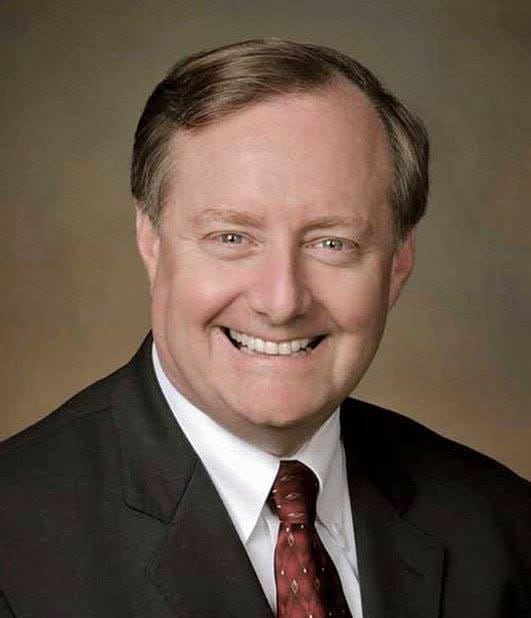
A Publication for Scholars: A Review of Stone-Campbell Journal

By Paul E. Boatman The gathering crowd had a distinctive appearance. Many were young (20-something) and “non-chic”; not slovenly, but lacking the affected “coolness” offered by the latest fashions. This group reminded me of high school meetings of the National Honor Society””often not the most popular kids on campus, but the ones we knew to watch through the coming years. Several of the older members of the crowd were people I knew through academic collegiality or through their writing. My first venture into a conference sponsored by the Stone-Campbell Journal (SCJ) both stimulated and defied stereotyping. In collective IQ, the

Restoration Scholars and Their Evangelical Counterparts (a book review)

By Gary Weedman A review of Evangelicalism and the Stone-Campbell Movement: Engaging Basic Christian Doctrine, Volume 2, William R. Baker, editor With this second volume, William Baker continues to make a notable contribution to the interaction between the scholarship of the current Stone-Campbell (SC) Movement and a significant segment of the general evangelical world. Baker was one of the early participants from the SC fellowship in the Evangelical Theological Society (ETS), and along with Paul Pollard of Harding University, established an ongoing program unit, called the Stone-Campbell Adherents Group, within the ETS. This effort has spawned the Stone-Campbell Journal, edited

December 16, 2007

Christian Standard

Messy Christmas!

By Jeff Walling One of the delights of the Christmas season is receiving cards from friends across the country. My wife displays the prettiest ones and leaves the rest in a basket on our kitchen table so we can cruise the photos and say, “Oh! Look how BIG he”s gotten!” about our newest nephew or my largest brother-in-law. Many have the classic nativity scenes, with adoring shepherds, a smiling Mary, and a glowing baby Jesus. It is these that I used to love the most until I came across an uncomfortable truth: Those Christmas cards are completely unbiblical. And what”s

Seeing God”s Work (Southeast Christian Church, Louisville, KY)

A book review by Bill Search “Why do you hate me and everything I stand for?” Those were my first words to Joe Myers, author of Organic Community. I admit it wasn”t the best way to make a new friend. However, I had just finished reading his first book, The Search to Belong, and I was certain he didn”t like small groups. And since I was a small groups minister, I took his criticism a bit personally. Joe”s gracious response and sly grin helped me realize he was initiating a conversation, not attacking groups. In fact, he gave voice to

Leadership in the Church

By Doyle Roth In churches across America we hear the appeal for more people to accept the challenge of becoming leaders. There seems to be a continual need. I teach a class on leadership at St. Louis Christian College. My preacher, Ben Merold, travels across the country teaching leaders how to be more effective. It is amazing the number of books, seminars, and conferences on the subject of leadership. The need for leaders in the church covers a wide spectrum. In addition to the qualified and godly men needed as elders, churches are also looking for adult Bible study teachers,

Organic Community

From the new book by Joseph R. Myers It is not true that an artist is someone who manufactures art. An artist is someone who enables art to emerge from a canvas””someone who has the strengths, competencies, and patience to bring that miracle into being. An artist is someone who enables art to emerge from a canvas. Art is not formulaic, like a paint by numbers kit. It has life. It is viewed and appreciated. It moves and inspires. It invites participation, intermingling its own story with those of its observers. When it comes to our own lives, we want

Creating Environments (Southland Christian Church, Lexington, KY)

A book review by Myron Williams When Jon Weece became senior minister of Southland Christian Church, Lexington, Kentucky, he convened the leadership team to help determine Southland”s future direction. The mission, “Love God, love people,” was in place, but the strategy to accomplish these mandates was nonexistent. Over a two-year period the team developed six core values. This article tells the story of value four: “Life happens best in community.” A strategy grew out of many discussions and much prayer about how to create environments for moving “weekend-only” adults into smaller community settings where they could know and be known

Discussing and Discovering Community (Parkview Christian Church, Orland Park, IL)

A book review by Jon Zabrocki I”ve heard it said the motivation to do something in life can be traced to one of two things: either the desire to avoid pain or the desire for personal gain. For example, we pay our taxes, not because we enjoy doing it, but because the thought of the IRS agent camping out in our living room brings a certain amount of discomfort. But these competing motivations are not equally balanced in most areas of our lives; more often the avoidance of pain outweighs the desire for gain. Paying bills will always get done

Training Second-Career Ministers: An Introduction

By Staff Our October 7, 2007, cover article asked, “Should We Hire From Within?” This week we”re offering solutions for Christian leaders who decide to change careers and enter professional ministry. We asked six schools with graduate divisions or offering graduate degrees how they”re helping the nontraditional student who believes God is calling him or her away from a chosen field to full-time church service. Here’s how they responded: — Hope International University, Fullerton, California — Johnson Bible College, Knoxville, Tennessee — Cincinnati (Ohio) Christian University — Kentucky Christian University, Grayson, Kentucky — Emmanuel School of Religion, Johnson City, Tennessee

How Hope International University Is Training Second-Career Ministers

By John Derry Hope International University (www.hiu.edu) Among the many challenges faced by growing and active churches is, “How do we find enough qualified servant-leaders to meet the needs of our congregation?” Demands on the pastoral staff make it difficult to devote the kind of time required to prepare comprehensive training sessions that address critical issues. At the same time, emerging leaders with outstanding potential are assuming more responsibility and desire to refine their ministry skills. They recognize the importance of doing their jobs well, are eager to put new ideas into practice, and want to be sure they have

How Johnson Bible College Is Training Second-Career Ministers

By Gary Weedman Johnson Bible College, Knoxville, Tennessee (www.jbc.edu) Johnson Bible College offers a Master of Arts in New Testament by distance learning that targets both first-career and second-career ministry staff. The program focuses primarily on preachers who want to deepen their study of the New Testament and refine their preaching skills, but it also offers tracks for individuals who may want to change careers and who have earned degrees from accredited colleges without undergraduate Bible majors. The programs provide students with several options. First, the Master of Arts in New Testament and Preaching allows first-career ministers to pursue graduate-level

How Cincinnati Bible Seminary Is Training Second-Career Ministers

By J. Michael Shannon Cincinnati (Ohio) Bible Seminary (www.ccuniversity.edu) Cincinnati Bible Seminary, the graduate division of Cincinnati Christian University, has been a pioneer for 25 years in nontraditional scheduling. CBS offers an array of options that make it possible for virtually anyone to receive the benefit of ministerial education from a well-qualified, experienced faculty at a regionally and professionally accredited institution. The seminary offers Monday-only classes, Tuesday-only classes and Thursday-night-only classes. The school also offers weeklong intensive classes in the summer and winter. One of the most popular formats is a 2-2-2 class; these are classes that meet two days

How Kentucky Christian University Is Training Second-Career Ministers

By David Fiensy Kentucky Christian University, Grayson, Kentucky (www.kcu.edu) The Graduate School of Kentucky Christian University offers two 36-hour Master of Arts degrees with several concentrations. The MA in New Testament requires both biblical languages, a core of foundational classes, and 15 hours of exegetical courses. The MA in Christian Leadership requires an 18-hour core of foundational classes plus a concentration of 18 hours. The concentrations granted in the MA in Christian Leadership degree include Theological Studies, Leadership Studies, Pastoral Care, and Christian Ministry. Students may choose either the thesis or the comprehensive exams option as the capstone of their

How Emmanuel School of Religion Is Training Second-Career Ministers

By Robert F. Hull Jr. Emmanuel School of Religion, Johnson City, Tennessee (www.esr.edu) Like most seminaries, Emmanuel annually welcomes older students transitioning into vocational ministry from other careers. Most of these students are interested in traditional degree programs, including three who entered in the fall. ESR is also eager to serve those who can come to campus for only short periods of time or can benefit from the educational opportunities the school exports to churches. Campus-based programs will increasingly be centered in three new institutes that have already begun to sponsor some programs ideal for second-career ministry staff: The Institute

How Lincoln Christian Seminary Is Training Second-Career Ministers

By Paul E. Boatman Lincoln (Illinois) Christian Seminary (www.lccs.edu) Seminary students are an increasingly diverse lot. The 88 students entering Lincoln Christian Seminary (LCS) in the fall of 2007 all hold at least a bachelor”s degree from one of 37 colleges or universities. Of those students: 32 (36 percent) are female; 37 (42 percent) are between 30 and 57 years of age; just 33 (38 percent) are age 25 or younger””the traditional age for beginning graduate school; 60 (68 percent) are Bible college graduates; and the other 28 (32 percent) come from universities. The reasons for entering seminary vary widely,

Older and Wiser: Strutting or Striving7

By Gary Weedman Let”s face it. We live in a culture that exalts youth. Just look at the ads on TV. The only time you see an old person is when he or she is advertising another colored pill that will actually help you “feel young again.” Or, if you use this product, you”ll “look years younger.” Yet, there”s a certain irony, because the population in our nation is aging. The number of Americans 65 and older will double in the next 25 years. By the year 2030 there will be 71 million of us “senior citizens.” That”s one out

Praying with Tears

By Jan Johnson A frequent cause of traffic jams on highways in my area is the “Looky Lou” habit of drivers who slow down to examine accidents on the side of the road. Usually an ambulance has already arrived so it”s not as if people want to help. They just to want to look. Similarly, when public tragedies occur, we find ourselves hooked on monitoring news coverage. At first, this helps us move through the shock phase of grief, but then it comes to resemble that morbid “Looky Lou” phenomenon. Perhaps we do this because we don”t know what else

November 25, 2007

Christian Standard

He Makes Me Lie Down

By Charlie Curran He makes me lie down. . . .” Those are words I have read aloud at dozens of funerals. The 23rd Psalm seems perfect for those occasions. I never knew those words would come to mean so much to me. On a busy Monday in April 2006, I found myself placed under the weight of those words. It had been a busy day at the office. Meetings, phone calls, the usual “Monday stuff” for a preacher. I had noticed during the day I was a bit agitated. So did my secretary. But I pressed on. That”s what

Faith”s Fallowness

By Ben Cachiaras Some of the letters Mother Teresa wrote to spiritual confidants were made public earlier this year, and they caused quite a stir. There is probably no greater modern icon of Christian spirituality than Teresa of Calcutta. So when some of her heartfelt prayers and confessions were published, lots of folk took notice. In 1979, the woman from Bulgaria formerly known as Agnes Bojaxhiu, traveled to Oslo, Norway, to receive the Nobel Peace Prize. Working in Calcutta among the poorest of the poor since 1948, Teresa and her Missionaries of Charity taught us to see Jesus in places

Why I Am an Amillennialist

By Robert Lowery Years ago when I began my study of Revelation, I attempted to do so with no preconceived theories. I tried to let John say what I think he means to say. I came to the conclusion that John did not teach Jesus was going to return to earth and set up an earthly kingdom for a thousand years. Furthermore, nowhere else in the Bible do I find such a teaching. Many may differ, but we can agree upon the following: We believe God, in his own time and in his own way, will bring all things to

Help Keep Christian Standard Free & Accessible with a Tax Deductible Donation

We can do more together!

Every gift makes a difference!

No, thank you.
100% secure transactions - receipts provided.
Does Your Church Want to Support Christian Standard?

Would your church consider including support for Christian Standard in its annual missions budget? Your support would help us not only continue the 160-year legacy of this unifying ministry, but also expand the free resources, cooperative opportunities, and practical guidance we provide to strengthen churches in the U.S. and around the world.

We can do more together!

Every gift makes a difference!

No, thank you.
100% secure transactions - receipts provided.
Secret Link