Articles for tag: Church Websites

2023 Church Stats and Charts

Each year, Christian Standard collects data from hundreds of churches about their average worship attendance, number of baptisms, minister’s name, website, etc., and compiles this into charts based on church size. Columnist Kent Fillinger uses this information as the basis for several articles during the year. This data in this link, collected in early 2024, is based on statistics from 2023. DOWNLOAD THE 2023 CS CHURCH ATTENDANCE CHARTS

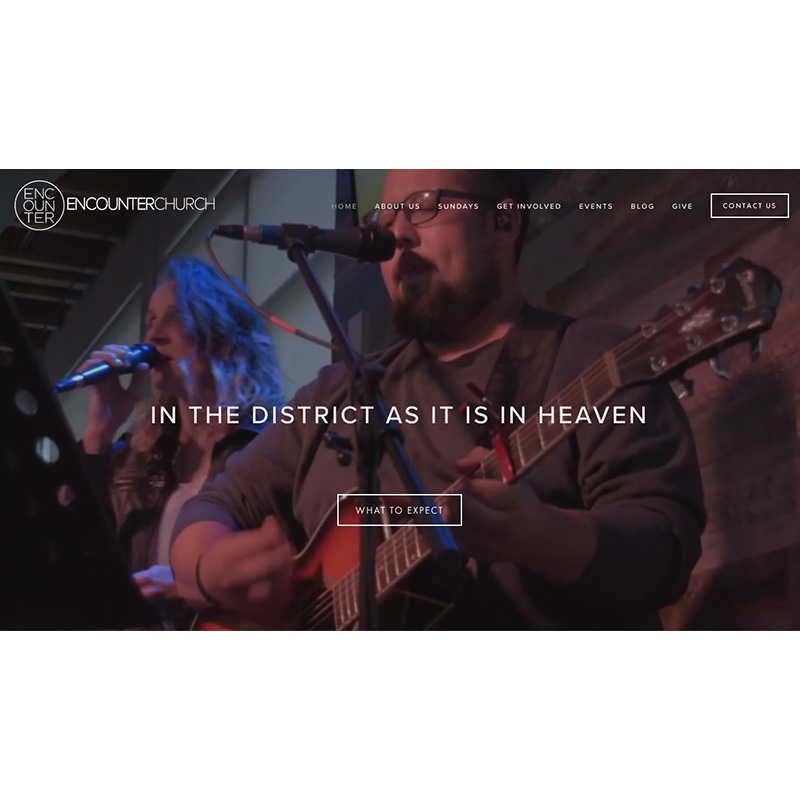
Your Digital Screen Door: 6 Common Church Website Mistakes and How to Fix Them

By Tim Cole The Internet is the most disruptive force in church communication since the invention of Gutenberg’s printing press in 1439. Your church’s front door may be located on your property, but in many ways the church’s website serves as the new digital screen door through which your potential guests will decide beforehand if they will venture to and through the physical front door. Recently I consulted with an older church overseas about why they weren’t attracting and keeping enough visitors to spur consistent growth. My onsite visit revealed several potential problems, but one stood out. The urban church

Connecting the ‘Vast Areas’: 5 Tips for Effectively Using Social Media in Rural Ministry

By Rob O’Lynn America is becoming more urbanized, but roughly 60 million people still live in “vast areas” classified as rural. How can Christian churches effectively connect with people who are relatively few and far between? Social media should be a primary method. Unfortunately, it’s a method country and small-town churches have been slow to embrace. Here are five thoughts on how to harness the Internet and use it to make your church an influential voice for God in your rural region. 1. Structure Your Engagement All social media is relational. I’m not speaking just of Facebook, Twitter, Snapchat, or

Your Privacy Policy

By Chris Jefferson Almost every church and parachurch ministry has a website, and many collect data from those who visit their site.  To manage this information well, the first step””too often overlooked””is a privacy policy. At no time since the Pax Romana have ministries been better equipped to share the gospel and fulfill their mission than in this digital age. Back in the first and second centuries, the intricate road systems of the Romans allowed missionaries””gifted with common Greek and ease of worldwide travel””to connect with cultures far and wide to spread the gospel. Today, digital connectivity provides a new

October 28, 2012

Christian Standard

Welcoming the Newcomers

By Melissa Brandes Too late we realized our failure. Communion was being served, and we hadn”t adequately prepped our unchurched, international guests. The Communion plate came around, and our guests stared at the two circles of unleavened bread. Bewildered, but trying to honor us the best they could, they picked up the circles and took a big bite, as if they were eating a sandwich. My mother and I and those in the pew behind us looked on in shock. Our guests, aware that something was wrong but not sure what, looked around, uncomfortable and embarrassed. We motioned for them

What Our Websites Say about Baptism

By Daniel Overdorf I baptized my younger son on New Year”s Day. On a day of new beginnings, we celebrated his new birth. My voice cracked when I asked him to confess what he believes about Jesus. He responded, “I believe that Jesus is the Christ, the Son of the living God.” These words rang sweeter in my ears than the first words he spoke as a toddler. My tears mixed with the baptismal water when I lowered him into the burial of his old self, and raised him as a new creation in Jesus. I experienced the same joy

The Rules Are Changing

By Mary Manz Simon Do mousers play in your church nursery? Is mompetition undermining efforts to build community through small groups? How many weblebrities are in the fourth-grade Sunday school class? Those words might be new to you, but they reflect real-world issues faced by those serving children and families. As we gear up for another year of Christian education, volunteers and professional church staff members will communicate the same biblical truths that have been shared for centuries. But in 2011, the rules of engagement have changed. These shifts are so significant that we must deep-dive to pinpoint the implications

The World Is Flat and Fat

By Rick Chromey Columbus was wrong. Well, sort of. The world really is flat. Flat and fat. Since the late 1980s, globalization and technological innovations have created a radical new paradigm for life, work, and ministry. We”ve moved from vertical “control and command” structures to horizontal “connect and collaborate” systems. The world has become one family. Thomas L. Friedman, in his best-selling book The World is Flat: A Brief History of the 21st Century, proposes three great historical globalizations:1 “¢ 1492″“1800 (Columbus and countries) “¢ 1800″“2000 (industrial revolution and companies) “¢ 2000 (cyberspace and consumers) In the first globalization, sparked

Secret Link