July 14, 2025
CLOTHING AND COMMUNION
Jesus left us with a means of remembrance through Communion to look at weekly and remind ourselves of our King who left heaven to come to earth and give his life at the cross for our sins.
July 14, 2025
Jesus left us with a means of remembrance through Communion to look at weekly and remind ourselves of our King who left heaven to come to earth and give his life at the cross for our sins.
May 3, 2020

(These Discovery questions go with the Bible lesson for May 10, 2020: “His Treasured Possession.” For a detailed explanation of how to use Discovery Bible Study, click here.) By Leigh Mackenzie 1. What challenges did you face this past week? 2. Over the last seven days, what impact on people around you did you make simply by living a holy life? Ask three people—two readers and one reteller—to help. Ask the two readers to each read Deuteronomy 4:29-40 in turn (possibly from different Bible versions) and then ask the group what they observe in the passage. What captured their attention?
April 27, 2020
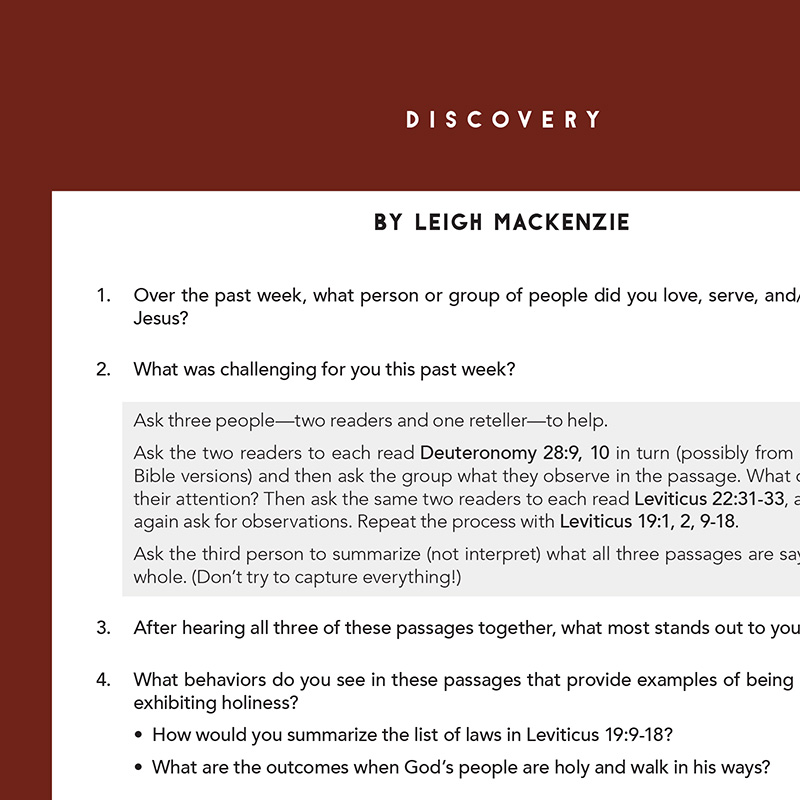
(These Discovery questions go with the Bible lesson for May 3, 2020: “His Holy Nation.” For a detailed explanation of how to use Discovery Bible Study, click here.) By Leigh Mackenzie 1. Over the past week, what person or group of people did you love, serve, and/or tell about Jesus? 2. What was challenging for you this past week? Ask three people—two readers and one reteller—to help. Ask the two readers to each read Deuteronomy 28:9, 10 in turn (possibly from different Bible versions) and then ask the group what they observe in the passage. What captured their attention?
May 1, 2014
By Paul E. Boatman “The Bible says. . . .” With that authoritative claim, many a sermon has articulated what sounds like a clear, scriptural doctrine. But the thoughtful Christian may observe that such assertions are often no more than opinions empowered by uncritical adoption of traditional, nonbiblical dogma. Several beliefs related to divorce are rooted in this blurring of mythology and doctrine. Myth 1: Divorce is a sin. This assertion seems self-evident. After all, Malachi quotes the Lord saying, “I hate divorce” (Malachi 2:16*). Further, Jesus takes his audience to task for their cavalier divorce practices (Matthew 5:31,
June 7, 2009
 By Nancy Karpenske “Pure and undefiled religion in the sight of our God and Father is this: to visit orphans and widows in their distress” (James 1:27)*. In today”s society, homes led by single mothers are one significant expression of “orphans and widows.” In Acts 6, one of the first problems in the early church centered around neglect or unfair treatment of widows in a basic necessity: daily food. The apostles” response shows it was important to respond to the need and care for these individuals and families. The apostles invited the church to select seven of their best

April 7, 2026
John B. Penrose Jr

April 7, 2026
David Faust

March 27, 2026
Rick Cherok