Kingdom Synergy Partnerships and Church Planting in Ohio
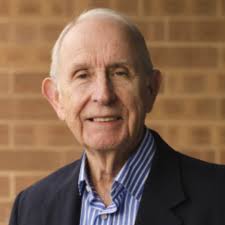
Greg Nettle, senior pastor of RiverTree Christian Church in Massillon, Ohio, describes how Kingdom Synergy Partnerships brings churches, universities, and church planting organizations together. The partnership aims to help healthy churches collaborate to plant new churches and reach more people across Ohio and beyond.
- Kingdom Synergy Partnerships began with a vision for larger and smaller healthy churches to work together.
- The initiative’s values are authenticity, collaboration, generosity, and urgency.
- KSP’s stated goal in Ohio is to start 50 churches in 10 years.
 By Brad Dupray
Greg Nettle is celebrating his 20th anniversary as senior pastor of RiverTree Christian Church, Massillon, Ohio, this year, and he is also celebrating a collaboration of churches from throughout Ohio. About 30 churches have joined in Kingdom Synergy Partnerships (KSP) with a goal of starting 50 churches in a 10-year period. Although RiverTree is running about 3,000 in weekend attendance, Greg sees the value of every church, large and small, as an important link in the partnership model. Greg and his wife, Julie, have been married 16 years and are the proud parents of two children, Tabitha and Elijah.
How did you come up with the concept of Kingdom Synergy Partnerships?
About seven years ago I was at a conference in Florida with Julie. It was the middle of the night and from about two to four in the morning I just sat down in the hotel room alcove and wrote what I believed God was telling me. “What if we could synergistically work together where we had healthy larger churches partnering with healthy smaller churches? What if those same churches and Christian universities partnered together to help young students see healthy churches in action? And what if our church planting organizations could work together with those churches and students and bring their expertise to the table?”
Where did you take it from there?
I started running the idea by some key influencers and, much to my very pleasant surprise, they said, “We believe in this. We believe this would work!” So we had our first gathering to see what would happen.
What was the purpose you landed on?
The “sticky” phrase we used was, “Make it hard to go to Hell in Ohio.” The ultimate vision is to help healthy churches partner with other healthy churches to reach people—to plant churches to reach people—to start a movement of people with the DNA of Jesus who invade every nook and cranny of society and culture.
How are you achieving this purpose?
A group of Christian leaders in Ohio gathers every other month in Columbus for peer learning, encouragement, and to move the church planting part of it forward. Our gatherings are a blast to be at. We’re talking about how to reach people and help them to become full disciples of Jesus. RiverTree is a church of 3,000, but I pick up gems from churches of 400 and the things they are doing.
Scott Pugh’s church, Velocity Christian Church, is just one year old. The city of Euclid just came to him and asked him to run all of the youth programs for the city. I’m thinking, Man, how did that happen? How did those doors open? How did you gain that kind of influence in the city? It would be arrogant of me to think the megachurch can’t learn from a church that’s only a year old. They’re doing some things better than we’re doing!
How do you keep the big churches from overwhelming the smaller churches?
It’s our values. The four values of Kingdom Synergy Partnerships are:
- Authenticity. There’s no image management. We’re very candid about our struggles. If you think people are putting on an act, call them out on it. We deal with our struggles and joys in the church setting and help people move forward.
- Collaboration. This is just so vital. The phrase we use is, “We believe it’s amazing what God can do in us and through us when we don’t care who gets the credit.” When it comes to church plants or schools or big churches, this is not about us, it’s about God’s kingdom moving forward. If you’re a church of 200 or 400 or 4,000, it doesn’t matter. It’s collaboration.
- Generosity. We try to set the precedent that we’re going to be generous with everything we have—our time, our finances, our giftedness—in the local church setting. There’s no charge for anything. If our elders can help your elders, great! If yours can help us, we expect that. If you have something going great guns in your church, we expect you to share that with every other church in KSP. It’s really vital to share generously. It’s all God’s stuff.
- Urgency. In our lifetimes the population of the world is tripling. In our lifetimes it grew from 2 to 7 billion people. We have a responsibility to those people. We have technology that is unprecedented. At some point we’re going to stand before God and he’ll say, “I gave you those tools to use, and you weren’t urgent about it!”
We talk about those at every single gathering, in our lives and in our churches.
How many churches do you want to see started?
In Ohio it’s 50 churches in 10 years. What we’re seeing is it’s multiplying exponentially. You start a new church and they reinvest. It’s gaining momentum. Churches see this isn’t some pipe dream—it’s working!
How many churches are participating in the partnership?
There are about 30 churches and four church planting organizations partnering with KSP in Ohio. That doesn’t count our other partners like Stadia, Passion for Planting, and Church Coaching Solutions.
How are participant churches recruited?
It’s mostly word of mouth. In the initial stages it was getting on the phone. I gathered 10 key influencers in Ohio and I cast the vision, but now it’s pretty much word of mouth.
How many churches has KSP planted so far?
Currently we have 10 church plants going in Ohio. Our first was Momentum Christian Church in Cleveland. They’re just three years old and are running 300 in attendance. We have five plants in Cleveland now. Forbes magazine listed the 10 fastest-dying cities in America and four of them are in Ohio. We believe out of the deepest darkness the brightest light of Jesus is going to shine. It’s going to take an effort to plant new churches in those areas.
Aren’t there plenty of churches in Ohio?
Only 18 percent of people in Ohio are actively involved in a church. There’s a whole lot of people going to Hell in Ohio and God’s not OK with that.
Weren’t there other church planting efforts taking place already?
Yes, but the problem was that churches weren’t planting churches. I started looking around at healthy churches that were now poised to work with one another. I was watching those walls come down.
Have you had detractors?
There are still some of the old political games out there. It really is from an older mind-set that “this is our area.” I think a lot of it stems from protection of assets. I hate to say that, but I think it’s true. “We’ve got to protect our financial engine, our turf.” There is still some territorialism.
The partnerships appear to be generating that synergy you were looking for.
Yes. On the flip side, NOAH (Northeastern Ohio Association of Helpers) hadn’t recently planted many healthy churches and now they’re partnering with KSP and they’re getting these massive wins. They’ve planted five churches in the last five years—they’re thriving churches. There’s huge upside for these organizations that will collaborate together, because they’re going to see healthy churches planted and a lot more health in the local church when we work together.
How is all of this different from other church planting efforts in the past?
Marc Bigelow of Stadia says the difference is collaboration. Local churches working together, saying, “How can we do this together?” What happens is that people are reached much more rapidly and effectively.
How is the collaboration worked out in practical terms—dollars and cents?
Stadia can say, “We’ll invest $50,000, because we have two megachurches who will invest $50,000 each, and a church planting organization that will invest $50,000, and two smaller churches that will invest $25,000 each.” That sounds like a lot, but it’s spread out over three years. We can multiply that out a dozen times versus an individual trying to do it one time. How naïve would I be to think I could do all that out of RiverTree?
At those levels virtually any church could get involved.
That new church Momentum just invested $50,000—$25,000 in our Cincinnati plant, which is an African-American plant, and $25,000 in Cleveland. At RiverTree we weren’t doing any spending toward church planting. Recently we did a capital stewardship campaign that was totally for external purposes, and $500,000 of that was designated for church planting.
Could this model work in other parts of the country?
I’d like to see this method of growing God’s kingdom spread all over the country. I believe with all my heart it is God’s plan for us to work together to help people become like his Son.
Two weeks ago I met with 15 pastors in Indiana: KSP is hoping to work with Kentucky church leaders next year. Our vision is more than just getting people saved. It’s about how do we eradicate poverty? How do we drop the prison population? How does the divorce rate drop? When that happens people will say, that’s Jesus through his local church.
Brad Dupray is senior vice president, ministry development, with Church Development Fund, Irvine, California.