Communion Meditations Sponsored by …

Refreshed by Repentance
Repentance opens the way to forgiveness and spiritual renewal. Mark S. Krause reflects on the damage of sin and how the Lord's Supper invites believers to examine their hearts and receive God's mercy.
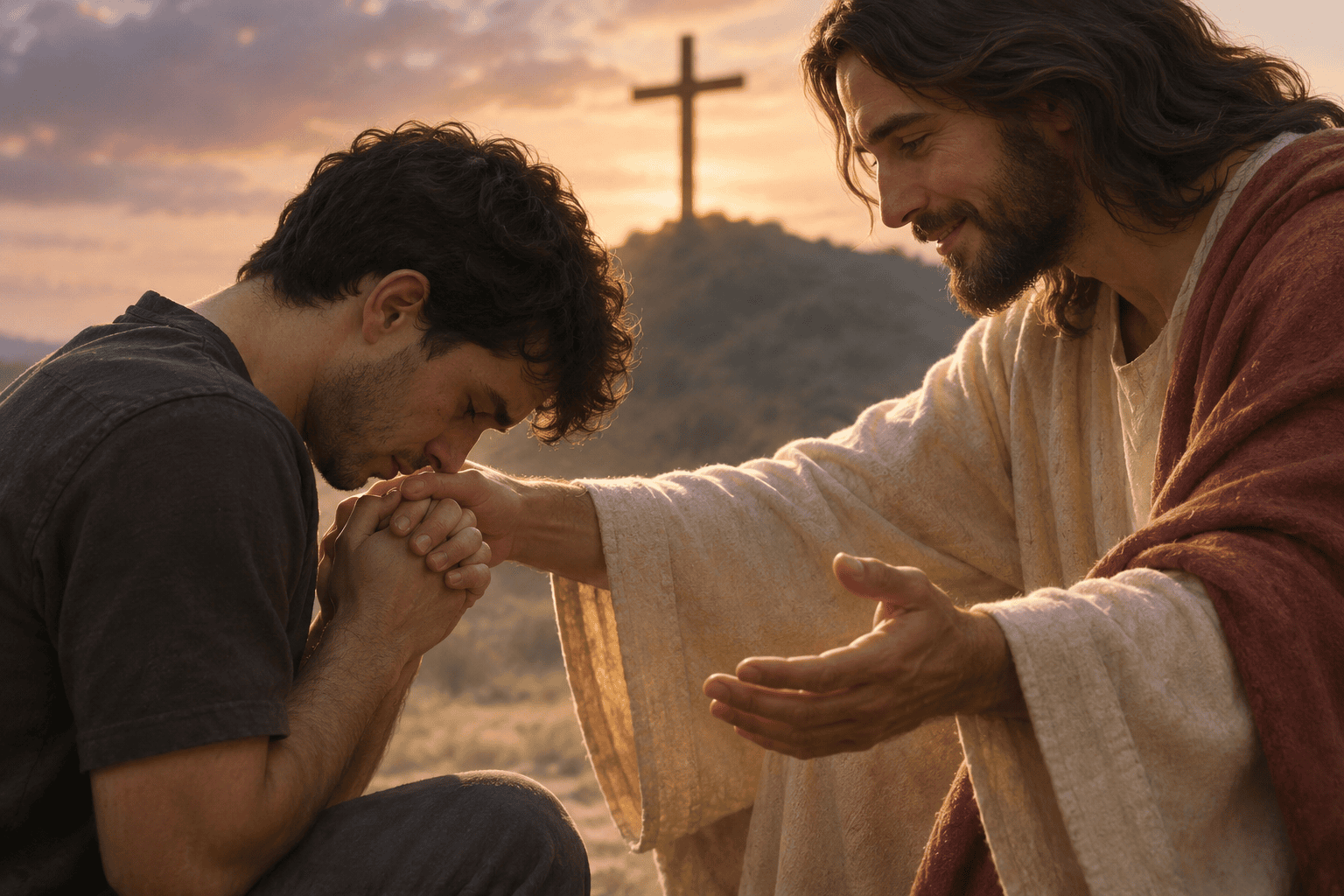
Repentance and Forgiveness at the Lord’s Supper
Repentance requires us to confront the sin that damages our relationship with God rather than continually returning to it. Through repentance, we receive God’s mercy, spiritual strength, and the freedom of forgiveness. The Lord’s Supper invites believers to examine their lives, lay aside excuses, and approach the table with repentant hearts.
- Sin leaves spiritual scars, but repentance calls us to confront it and turn away.
- God responds to repentance with mercy, strength to resist sin, and forgiveness.
- The Lord’s Supper is an opportunity for self-examination, repentance, and renewed freedom through Christ.
Repentance is not popular today. One Internet blogger called repentance “the most unpopular message in the history of mankind.” Why is this? What is it about calling people to repent that rubs us the wrong way?
Recognizing the Damage of Sin
When he was about 4 years old, my son learned a painful lesson when he burned the tip of his finger on the cigarette lighter in my car. I was sorry, but knew his finger would heal (although he still bears a scar). He taught me a lesson about repentance a few days later. As I was washing the car in the driveway, he came out to help. Instead of grabbing a hose or sponge, he went to the car and kicked it, saying, “Bad car! You should sell it!” He had been burned, and his 4-year-old thinking believed the car was at fault. He wanted that car to be gone from his life.
We are always burned and damaged by sin. It warps our character. It causes spiritual pain. It ruins our relationship with God, leaving us scarred, alone, and helpless. But we return to our sins again and again. Even though our intellects may recognize the danger of sin, we are driven to enjoy its fleeting pleasures.
When we repent, we address the sin in our life head-on. We give it a kick, saying, “Bad car!” and resolve to remove it from our lives. We pray the prayer of the repentant tax collector who cried, “O God, I am such a horrible sinner! Even though I do not deserve mercy, have mercy on me!” (Luke 18:13).
When we do this, two things happen. First, God gives us spiritual power to have victory over sin. We are no longer alone in our battle. God will have mercy upon us. Second, we claim the promise of forgiveness for our sin. Repentance leads to the freedom of forgiveness. How can we feel forgiveness if we have not repented? If we are in denial about our guilt before God, how can we feel forgiven? How can we be free from the power of sin?
Repentance and Forgiveness at the Lord’s Supper
Paul advises that all who come to the Lord’s Supper should “examine” themselves (1 Corinthians 11:28). What can he mean but that we must look at our lives to identify the sin for which we should repent? Repentance is the heart of the Lord’s Supper. Forgiveness is the eternal throbbing of that heart, the covenant given through the blood of Christ shed for the forgiveness of our sins.
As we come to the table this morning, may we lay down all of our defenses and excuses when it comes to sin. May we have hearts of repentance. May we go from the table refreshed and forgiven.
Mark S. Krause is writing the Communion Meditations for August. Krause recently accepted the call to serve as vice president of academics at Nebraska Christian College, Papillion, Nebraska.

Author: Mark S. Krause
Sponsored
For 160 years Christian Standard has served the churches of the Restoration Movement. Your gift keeps articles like this one free for every church leader.
Keep reading
More in Theology & Bible



From the archive
Christian Standard has covered this since 1866.