Communion Meditations Sponsored by …

Sunday, Bloody Sunday
Rick Chromey reflects on the life-giving blood of Christ, drawing from Hebrews 9 to explore redemption, forgiveness, and the meaning of the Lord's Supper in this thoughtful Communion meditation.
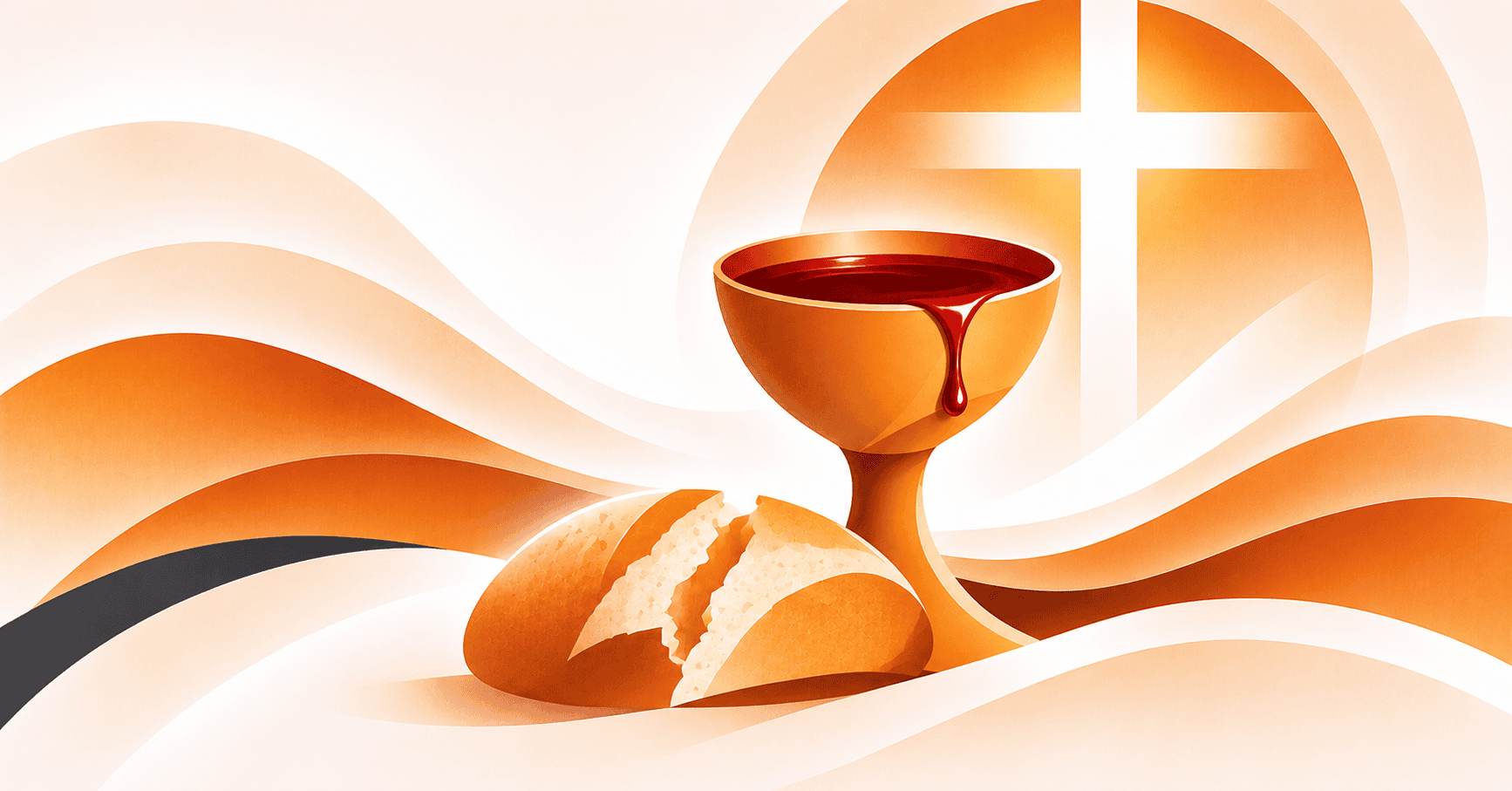
Blood of Christ Communion Meditation: Remembering His Life-Giving Sacrifice
This blood of Christ Communion meditation by Rick Chromey reflects on the importance of blood in human life and its significance in Scripture. Drawing on Hebrews 9:11–14, Chromey contrasts the sacrifices of the old covenant with the redemption offered through Jesus’ blood. He invites believers to remember Christ’s sacrifice with gratitude as they share the Lord’s Supper.
- Blood sustains human life and carries powerful meaning throughout history and Scripture.
- Hebrews describes Christ’s blood as the means of eternal redemption and cleansing.
- The Lord’s Supper provides an opportunity to remember Jesus’ sacrifice and express gratitude for the life he gives.
Blood of Christ Communion Meditation: The Meaning of Blood
Blood is indispensable to life. The average human holds 10 pints of blood, which transports oxygen to our body, battles disease, and removes harmful toxins. Blood coagulates and helps form scabs to heal wounds. Recently, science has attempted to create synthetic blood, but there’s simply no substitute for this uniquely divine liquid.

Blood is part of our cultural vernacular. It’s in the blood. We’re blood brothers. Blood is thicker than water. Bad blood. Hot-blooded. Sunday, bloody Sunday. Historically, blood sealed contracts, confirmed friendships, and solidified treaties. Today, blood is often the clue that solves crimes through DNA forensics.
Mel Gibson’s The Passion of the Christ was the first Jesus-oriented film to receive an R-rating due to its mature content. Gibson’s film portrayed a bloodied Jesus, viciously beaten and gruesomely executed. The gory drama caused many viewers to wince, squirm, and shut their eyes. Blood shocks and even sickens.
Christ’s Blood, Eternal Redemption, and the Lord’s Supper
But when Christ came as high priest . . . he went through the greater and more perfect tabernacle that is not made with human hands. . . . He did not enter by means of the blood of goats and calves; but he entered the Most Holy Place once for all by his own blood, thus obtaining eternal redemption. . . . How much more, then, will the blood of Christ, who through the eternal Spirit offered himself unblemished to God, cleanse our consciences from acts that lead to death, so that we may serve the living God! (Hebrews 9:11-14).
It’s hard to imagine in our sanitized 21st-century world, but first-century Jews were used to blood-soaked worship. Blood was the entrance fee. Blood was a blessing. The temple was a blood-stained place to sacrifice beast and bird. The priests were baptized in blood. In fact, a specially designed shaft channeled sacrificial blood into the Kidron Valley, creating a blood river during Passover.
The Hebrew writer argues Jesus’ blood proves wonderfully different. It’s both divine and human, a distinctive cocktail of DNA able to forgive, cleanse, and empower. As the old hymn states, “There’s pow’r in the blood . . . wonder-working pow’r!” It’s why Jesus commanded his disciples to regularly reminisce on his sacrifice. The Lord’s Supper is bloody. The cup of the new covenant is blood. The bread represents his bloody, broken body.
But without Jesus’ blood there isn’t LIFE. His blood offers forgiveness, power, and hope. In our baptism we were transfused with his life-giving blood, and in this weekly celebration we now remember and express gratitude.
Rick Chromey is a motivational speaker, writer, and online professor with Hope International University, Fullerton, California.

Author: Rick Chromey
Dr. Rick Chromey is the founder and president of MANNA! Educational Services International. and the author of GenTech: An American Story of Technology, Change and Who We Really Are (Morgan James, 2020).
Sponsored
For 160 years Christian Standard has served the churches of the Restoration Movement. Your gift keeps articles like this one free for every church leader.
Keep reading
More in Theology & Bible



From the archive
Christian Standard has covered this since 1866.





