Communion Meditations Sponsored by …

Suffering, Then Glory
Reflecting on the sorrow of 9-11 and the disciples’ grief at the cross, this communion meditation reminds believers that suffering is not the end. In Christ, glory is sure to come.

Suffering, Glory, and the Hope We Remember in Communion
The sorrow associated with 9-11 offers a poignant point of reflection on the suffering of Jesus and the despair his followers experienced at the cross. Communion reminds believers that suffering does not have the final word: in Christ, glory follows.
- The disciples’ grief at Jesus’ death was transformed when they discovered that he was alive.
- Jesus’ suffering was not an accident but part of God’s plan to rescue lost humanity.
- Communion calls believers to remember both Christ’s suffering and his glory as they face their own hardships.
Friday, September 11, will mark 25 years since the attacks that we now refer to as 9-11. Each of us probably remembers where we were that Tuesday morning in 2001 when we first heard the news or turned on our televisions to see what was happening. We remember how terribly saddened we were and the sickening feeling that came over us: a stunned disbelief that such attacks had been carried out on our soil.
Suffering Before Glory
The way we felt 25 years ago is likely not that different from how the followers of Jesus felt some 2,000 years ago when they watched, not two towers coming down, but one cross going up, and watched the man whom they believed was the Messiah dying a shameful death there. The two men on the road to Emmaus spoke for many when they said of Jesus, “But we had hoped that he was the one who was going to redeem Israel” (Luke 24:21, New International Version).
Eventually these two men came to realize that the man walking with them that day was in fact the very man whose death they had been mourning. He was alive. And then he told them, “Did not the Messiah have to suffer these things and then enter his glory?” (Luke 24:26). What appeared to be a heartbreaking tragedy was in fact a heavenly triumph. The cross was no accident, no unfortunate turn of events; it was a plan designed by the grand Designer “before the creation of the world” (1 Peter 1:20) to rescue lost humanity.
Columnist Peggy Noonan once wrote a piece for the Wall Street Journal reflecting on the events of 9-11. She concluded it with the statement, “You’ve got to be loyal to pain sometimes to be loyal to the glory that came out of it.” Consider again Jesus’ words: “Did not the Messiah have to suffer these things and then enter his glory?” Yes, he did. Followers of Jesus often find themselves in the throes of intense suffering and devastating heartache as they wrestle with life in a broken world. But suffering is the comma, the pause; glory is coming.
Communion Remembers Suffering and Glory
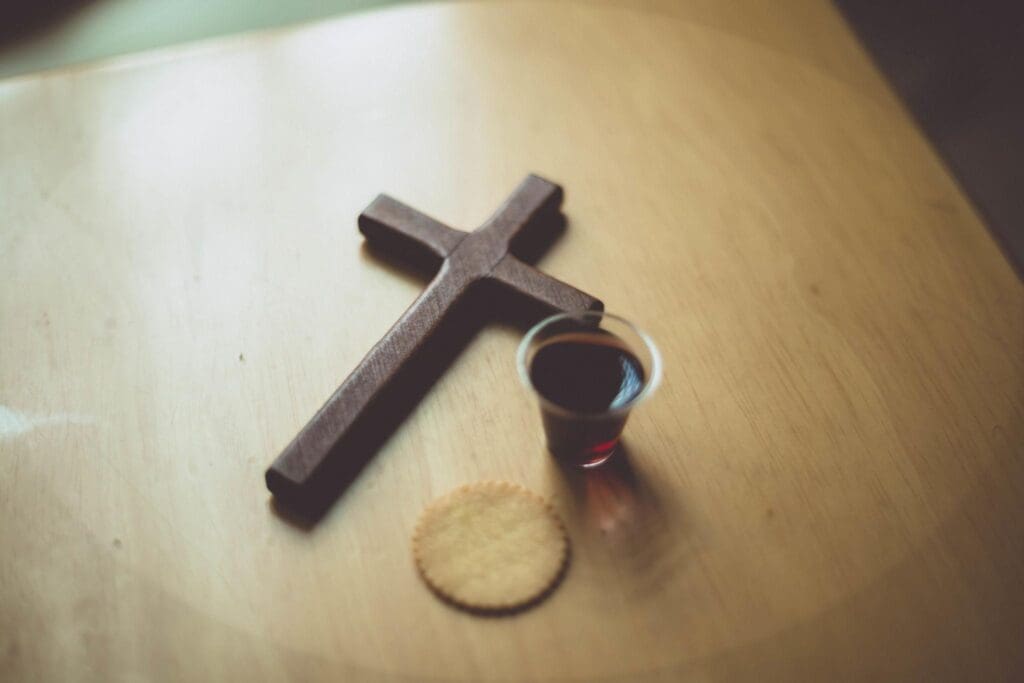
Communion is a time of worship devoted on the first day of each week to remembering our Savior’s suffering and glory and also remembering that this is the path our lives are to take as well. We cannot know what suffering the week ahead may bring, but we know that whatever the suffering, glory is sure to come.

Author: Doug Redford
Doug Redford has served in the preaching ministry, as an editor of adult Sunday school curriculum, and as a Bible college professor. Now retired, he continues to write and speak as opportunities arise.
Sponsored
For 160 years Christian Standard has served the churches of the Restoration Movement. Your gift keeps articles like this one free for every church leader.
Keep reading
More in Theology & Bible


From the archive
Christian Standard has covered this since 1866.