Elder Shepherding and the Role of Small Groups
Mark A. Taylor reflects on the gap between elders’ stated priority of shepherding and the limited time many spend doing it. He suggests small group leaders can help extend meaningful shepherding throughout the congregation while remaining under the oversight of elders.
- Most surveyed elders identified shepherding as their most important responsibility.
- Many elders spend only a small portion of their weekly elder duties actually shepherding.
- Small group leaders and adult Sunday school leaders may help churches provide broader pastoral care.
By Mark A. Taylor
What is the elder’s most important job? Almost 300 elders answered that question for Arron Chambers (read his article), and more than three-fourths of them said shepherding.
But in the two hours or so per week most of these elders give to elder duties, they spend less than half that time actually shepherding. In fact, almost a third of those surveyed say they spend less than one-quarter of their time (that’s 30 minutes for most of them) doing the task they’ve agreed is most important.
The Shepherding Gap
Yet Knofel Staton concluded, in the Bible study he wrote for last week’s issue, that “shepherd” is the best designation for the local church’s elders. In a phrase every elder should remember, he suggested that elders look over members and activities of a church in order to look after people in need.
He asks a troubling question: If our congregation’s shepherds are not demonstrating loving care for their members, how will a watching world believe the church is where they’ll find compassion, grace, and truth?
Brother Staton implies that a church should recruit as many elders as necessary to provide one for each flock of several church families. For some churches, this would require dozens of elders. Even many smaller churches won’t find enough qualified candidates to enlist one elder for every four-to-eight families.
Small Group Leaders as Shepherds
What’s the solution? Maybe it’s in the small group. Two weeks ago (June 8), Michael Mack said every small group leader should be a shepherd.
His biblical examples and descriptions of the shepherd’s role would make a great training session for elders, but that wasn’t his purpose. Instead, he encouraged each small group leader carefully to look over and look after the members of his or her group.
His article helps us realize that, while elders must be shepherds, not every shepherd must be an elder. Elders must oversee, but need not personally accomplish, all the shepherding their congregation needs.
So here’s a simple proposition: Elders could fulfill their biblical mandate by making sure every small group (and adult Sunday school class) has a leader who is a shepherd. These shepherds could be divided into “flocks” themselves, to be shepherded by the elders. Not only would this offer elder-influenced shepherding for a wide swath of church members, it would also provide excellent training for future elders and other leaders.
Every group leader a shepherd, shepherded by the lead shepherds: it’s a model many churches could follow successfully.

Author: Mark A. Taylor
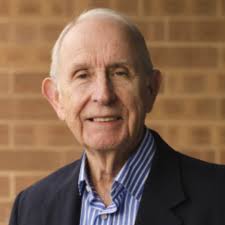
Mark A. Taylor, who served as Christian Standard editor from 2003 to 2017, retired in June 2017 after almost 41 years with Standard Publishing (Christian Standard Media).