January 24, 2022

Jan. 30 | Discovery
In Romans 14:1-5, 13-23, what surface-level issues were people in the church having with one another . . . and what deeper issues may have been behind those problems?
Church & Ministry equips leaders and everyday believers to build healthy, gospel-centered congregations. Explore biblically grounded articles on church leadership, preaching and teaching, eldership, staff and volunteer development, discipleship systems, small groups, church planting, church growth, and ministry strategy. You’ll also find practical guidance for navigating transitions, cultivating congregational health, and serving your community with wisdom and compassion. Whether you’re a pastor, elder, ministry staff member, volunteer leader, or church member who wants to help your church thrive, this hub brings together resources to strengthen the local church and advance Christ’s mission.
January 24, 2022
In Romans 14:1-5, 13-23, what surface-level issues were people in the church having with one another . . . and what deeper issues may have been behind those problems?
January 19, 2022

When Bryan Sands answered the call to serve with Kaimuki Christian Church in Hawaii, he was following two ministers who served a combined 57 years. Sands hasn't regretted the move . . .
January 17, 2022

How did Jesus cause some people to stumble and fall and others to “never be put to shame”?
January 11, 2022
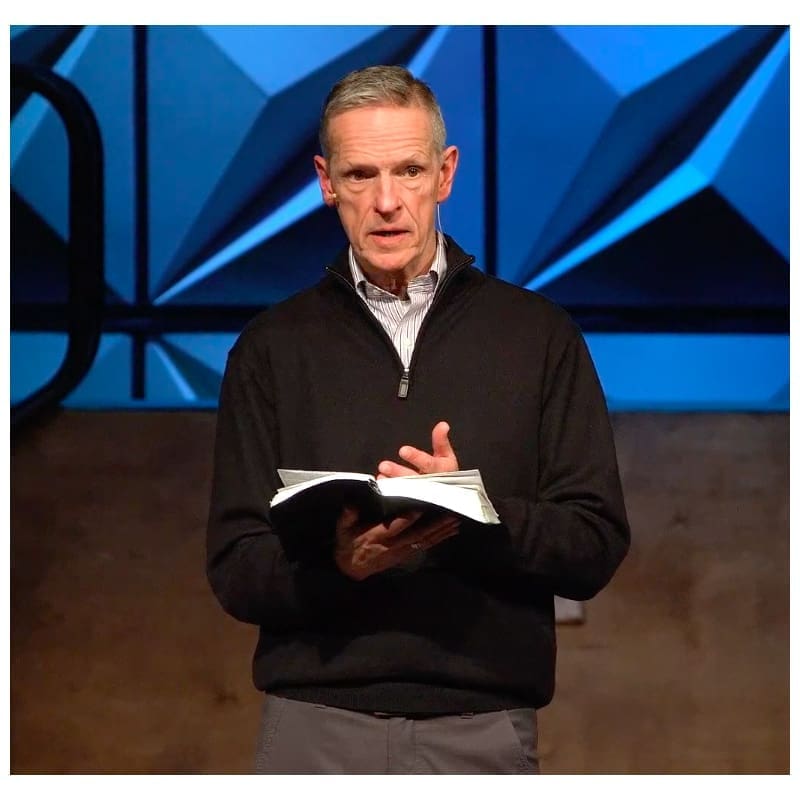
Steve White preached his farewell sermon Sunday after serving with Plainfield (Ind.) Christian Church for 34 years. In that sermon, he shared the reasons he loves the church, and specifically, why he loves Plainfield Christian.
January 10, 2022

What is the spiritual difference between working for wages and receiving a gift?

As a father, a student ministry volunteer, and a college professor, I offer these 10 suggestions of what I would teach in student ministry to help prepare resilient and growing disciples of Jesus.
January 3, 2022

In Romans 2:1-16, what comparisons and contrasts did Paul make between Jews and Gentiles?
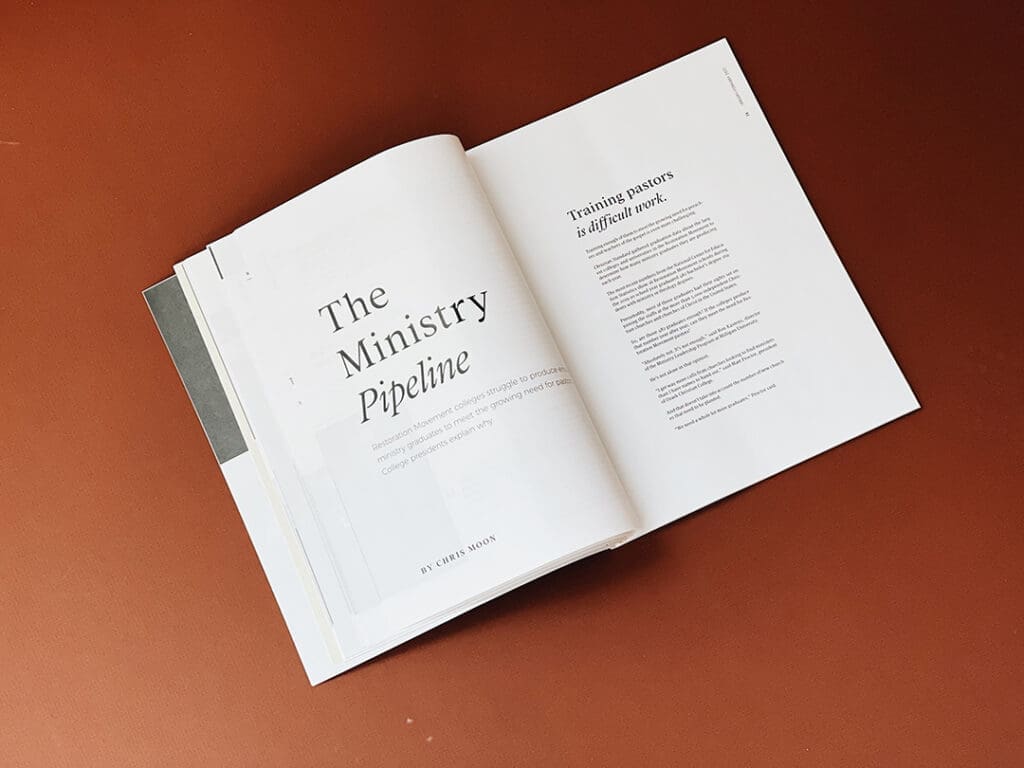
Restoration Movement colleges struggle to produce enough ministry graduates to meet the growing need for pastors. College presidents explain why.

By Kevin Stone Since the beginning of our church in Pennsylvania, staffing has been among our biggest challenges. There is a continuous, ever-increasing need for people to lead stuff! As we all know, without a constant flow of good people, it’s very difficult to grow. Hiring from the Outside Your church has a leadership need, so you go to an outside recruiting firm for help. You know the process—you write a position description and start the search. I wish it were that simple. Our desire to prevent theological drift requires that we recruit from within the tribe, so to speak. And finding

In a world where traditional Bible colleges and universities face many challenges, what options (and opportunities) are emerging for theological and ministry training . . . and how do they stack up?
January 1, 2022

So Christ himself gave the apostles, the prophets, the evangelists, the pastors and teachers, to equip his people for works of service, so that the body of Christ may be built up until we all reach unity in the faith and in the knowledge of the Son of God and become mature, attaining to the whole measure of the fullness of Christ (Ephesians 4:11-13). As 2020 started, the church in America was already coping with issues ranging from racial tensions to gay marriage, all while competing with sports for a family’s attention on Sunday mornings. Then COVID-19 arrived in full
January 1, 2022

What do a lawyer, a football player, and a youth pastor have in common? It might sound like the setup to a bad joke, but it isn’t. All three are examples of professionals who recently left their jobs to plant independent Christian churches in the United States. Many of today’s church leaders are asking where tomorrow’s church leaders will come from. That’s a critical concern among church planters as well. In fact, Stadia president Greg Nettle says, “The number one challenge we face right now is our leadership pipeline of church planters.” Nettle and other church-planting leaders estimate it will

Pastors in Restoration Movement churches quit at an alarming rate. According to research from the Christian Church Leadership Network, 70 percent of Bible college graduates in the Restoration Movement leave pastoral ministry within the first 10 years.* That means 7 out of 10 current Bible college students called to pastoral ministry in this movement probably will not last a decade. How might we better develop and grow healthy leaders? In what ways might we support the leaders we already have so they last a lifetime in ministry? The future of our movement and the health of our churches is at

Message drift is not new. Israel faced it. When Moses predicted that the Lord God would raise up a prophet like him (a reference to the Messiah), he also warned against prophets who would presume to speak in God’s name but actually speak in the names of other gods (Deuteronomy 18:15, 20). Jeremiah ran into a similar situation with a false prophet named Pashhur (Jeremiah 20:1-6; cf. 14:14; 23:32). Message drift was not foreign to the New Testament either. In the Olivet discourse Jesus predicted that false prophets would arise (before the destruction of Jerusalem) and lead many astray, and

As Katie Hughes made her way to her car at the end of another long school day, she reflected on her day in the classroom. After years of studying to become a teacher like her mom and other family members, she felt disappointed and exhausted in her student-teaching experience. The more time she spent in the classroom, the more she questioned her decision to become an educator. Was this really what God had planned for her? A New Plan Katie talked with her parents and began to take an inventory of the gifts and interests God had given her. She
January 1, 2022

If not for the obstacles standing in the way of the Colorado River, there would be no Grand Canyon. Without these natural barriers, the river would not have created dramatic ravines, horseshoe bends, and whitewater rapids. Instead of a Grand Canyon, we would have a “Grand Trench.” How awe-inspiring would that be? Not very. If I could give any counsel to Christians and ministry leaders in today’s world, it would be this: Lead like you are the Colorado River. Anticipate impediments to your progress. Don’t expect the way to be free and clear of obstacles. No matter what the barrier,

A ministry friend recently worked with the Slingshot Group, a church staffing firm, to find a new ministry, and they told him he was one of 19,000 candidates they were helping. I imagine this represents people from a multitude of denominations and backgrounds, as well as those seeking a variety of church ministry roles. Either way, it’s clear there’s a sizable number of people currently in ministry who are looking for something different or somewhere new to serve. But what does the future “preacher pipeline” look like based on who’s leading our Christian churches today? A Long-Term Look at Lead

Alyeska . . . Keystone XL . . . Colonial. Each is a commercial pipeline, and each has a unique crisis in its story. Alyeska is the Trans-Alaska Pipeline System, which now transports less oil than in years past. Keystone XL is the pipeline that was once under construction from Alberta, Canada, south to Nebraska; it has now been officially shut down. The Colonial Pipeline made news recently when it was the victim of a ransomware attack that completely shut down its oil flow. Similarly, we face a crisis in the local church, and it has everything to do with

I am thankful for my time in Bible college. I enrolled at Ozark Christian College in the fall of 1976 and while there I developed lifelong friendships, a greater understanding of the Scriptures, and a deep love for preaching. Don DeWelt was my homiletics professor, and every class was memorable. That course provided me with a better understanding of how to preach, and it awakened my love for preaching. But it wasn’t just my homiletics class, it was also the opportunity to hear great preachers in chapel services and at special events. I learned about preaching with passion by listening

Jesus said much about the church’s leadership pipeline. In fact, he initiated it. Without it, the church’s proliferation from “Jerusalem . . . to the ends of the earth” would be impossible. And while we have few examples of how the original 12 apostles developed future leaders, we know they must have by how quickly the church expanded. The Bible describes in much greater detail the apostle Paul’s leadership pipeline—the individuals he discovered, developed, and deployed as well as the instructions he gave them to do the same. Two millennia later, however, Jesus’ church is facing a leadership pipeline problem.
Sponsored

Sponsored

Sponsored

July 21, 2026
David Faust

July 21, 2026
Tyler McKenzie

July 21, 2026
Anne Bachle Fifer