Marching Forward
with a Dream of Destiny

How One Ministry Seeks to Lead the Way in Diversity and Racial Reconciliation in the Church When Dream of Destiny was founded in the summer of 2007, I never could have imagined where we’d be as a country some 13 years later. From the coronavirus pandemic and massive unemployment, to the political divide and racial tensions, 2020 was a year like no other. Without a doubt, these will continue to be critical factors that will significantly shape our nation’s future for many generations to come. The tragic death of George Floyd shocked the entire world and became a turning point

Who Will Break Down the Walls?

After all the upheaval of 2020, the world needs some reconciliation. Truth is, it always has. Struggling and estranged marriages . . . damaged friendships and divided families . . . polarized political parties . . . racial strife . . . churches from the same movement disembodied over methodological preferences. Who can possibly break down the walls of hostility that divide us?   “[God] reconciled us to himself throughChrist.” That answers the question, but there’s more! “. . . and gave us the ministry of reconciliation” (2 Corinthians 5:18). As crazy as it might sound, we, as reconciled sinners,

A Core Conviction
(for All of Us)

(Read “When Brothers Dwell in Unity,” a companion article by Rudy Hagood’s brother, Fate Hagood.) Behold, how good and pleasant it is when brothers dwell in unity! It is like the precious oil on the head, running down on the beard, on the beard of Aaron, running down on the collar of his robes! It is like the dew of Hermon, which falls on the mountains of Zion! For there the Lord has commanded the blessing, life forevermore (Psalm 133, all Scripture quotations are from the English Standard Version). I have always been passionate about unity. While it might be a manifestation

Four Important Questions to Advance Reconciliation

By Larry Griffin, LaTanya Tyson, and David Fincher (The column about racial justice, equality, and reconciliation was written by three Christian college presidents. Larry Griffin serves as president of Mid-South Christian College, Memphis, Tenn.; Dr. LaTanya Tyson serves as president of Carolina Christian College, Winston-Salem, N.C.; and Dr. David Fincher serves as president of Central Christian College of the Bible, Moberly, Mo., while also leading the Association of Christian Church Colleges and Universities.) As presidents of Christian church colleges that serve the Restoration Movement, we lament the examples of injustice and division that have sadly become too commonplace in America.

Righting the Wrongs of the Past

By Jerry Harris I’m a product of the suburbs. I grew up on the west side of Indianapolis in the early 1960s, part of a post-World War II migration from urban areas to planned neighborhoods that sprang up from what were formerly farm fields surrounding big cities. There were a number of reasons for this great migration. Ex-servicemen had access to loans to pursue the American dream, so they moved out of apartments in the city and purchased their own homes on their own land in burgeoning suburbs. The availability of automobiles and creation of the interstate highway system encouraged

Pantano Recognized for Racial Reconciliation Efforts

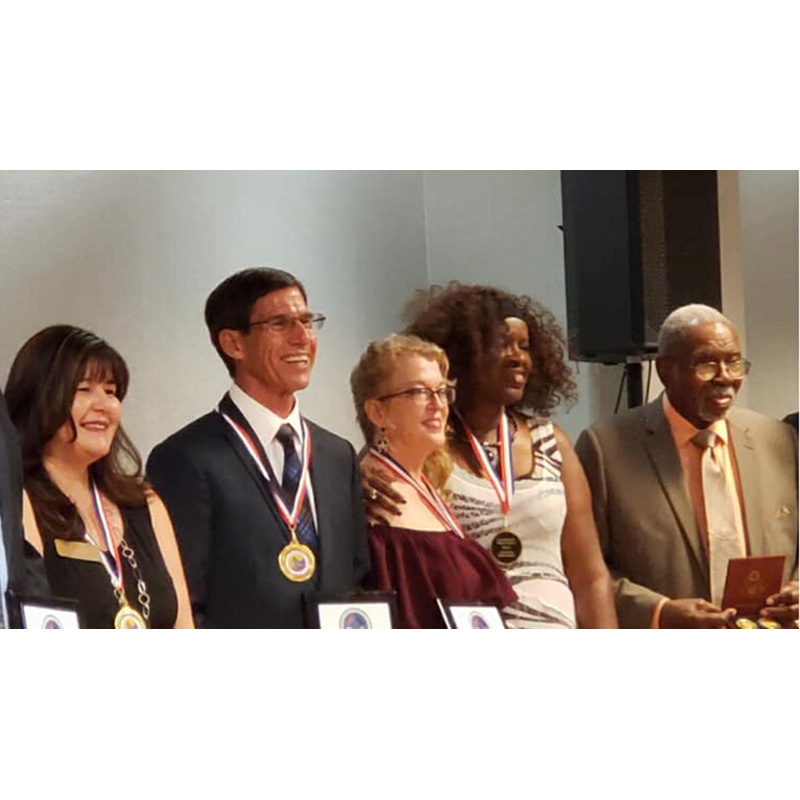
By Jim Nieman Glen Elliott, lead pastor with Pantano Christian Church, Tucson, Ariz., represented PCC Sunday as they received the church of the year award for racial reconciliation from the Racial Reconciliation Community Outreach Network in that city. “I’m so grateful to be a part of a church that embraces racial equality & unity,” Elliott wrote on Facebook. Pantano has been working toward racial reconciliation for many years. “Back in 2013 a small group of black and white pastors agreed—some reluctantly—to meet to better understand each other and see if we could address this in our community,” Elliott shared with

The Value of Another Person’s Story in Resolving Racial Conflict in the Church

“Jesus treated everyone as important, regardless of their race, ethnicity, gender, or class. Are we not to do the same?”   By Matthew McBirth As I see it, the relationship between two Jewish characters and their families in Chaim Potok’s novel The Chosen illustrates one of the primary causes of racial conflict in our communities. The plot (in short): Reuven and Danny grow up in different sects and communities, and Reuven strongly objects to how Danny’s father raises his son in virtual silence to prepare him to be his community’s next leader. When Danny and his father do speak, it’s

Racial Reconciliation: Strides in the Right Direction

By Michael C. Mack Most of us can agree on a few facts about racial prejudice, division, and conflict. It’s real. It has existed in our culture and in our churches in the past. It persists today. And it will likely  continue to be an issue for some time. Thank God, it will not exist in Heaven. I think we’d all agree it’s wrong. It’s unbiblical. It’s definitely not Christlike. Most of us know the Bible verses: Matthew 28:19; Galatians 3:28; Colossians 3:11; 1 John 4:8-11; Revelation 7:9; and others. Many of us know something I didn’t. Most Restoration Movement

The State of Racial Reconciliation in the Church

An interview with Sonny Smith, lead pastor of Detroit Church   By David Dummitt In a February 1957 message for the National Council of Churches’ observance of Race Relations Sunday, Dr. Martin Luther King Jr. wrote, Racial segregation is a blatant denial of the unity which we all have in Christ. Segregation is a tragic evil that is utterly un-Christian. . . . Every Christian is confronted with the basic responsibility of working courageously for a non-segregated society. The task of conquering segregation is an inescapable must confronting the Christian Churches. King’s bold words speak to churches today as clearly

Denzil Holness Spreads a Message of Racial Reconciliation

By Jacqueline J. Holness Had Denzil D. Holness been hired as a pastor in Coward, South Carolina, or Peculiar, Missouri, or any other out-of-the-way American town or city, he may not have been led to take on racial reconciliation in the Christian church. However, since Holness was hired as the first black pastor at Central Christian Church in Atlanta, Georgia, “The City Too Busy to Hate,” it would seem tackling racial reconciliation was God’s plan for him all along.   Committed to Christian Church Principles Holness became CCC’s pastor in September 1979 and in December 2017, he retired from ministry

Living Together in Sweet Unity

By Victor Knowles   “How truly wonderful and delightful to see brothers and sisters living together in sweet unity!” (Psalm 133:1, The Passion Translation).   The year 1906 is memorable to me for a number of reasons—even though I wasn’t born until 1945. It was the year of the great San Francisco earthquake; the year one of my heroes, Dietrich Bonhoeffer, was born; and a year the Chicago Cubs went to the World Series (and lost). Finally, 1906 is the year a division occurred in the American Restoration Movement. “Conventional wisdom” today is that David Lipscomb, editor of the Gospel Advocate,

David Johnson and a Harvest of Reconciliation

By Jerry Harris It was November in Charleston, South Carolina, but for our group of northerners it didn”t feel like late fall on that beautiful and warm Sunday morning. We had arrived early for meetings that would take place over the next two days, and so we took the opportunity to attend church services at Harvest Pointe Church in suburban North Charleston. It would prove to be a new experience for many of us. At that time, Harvest Pointe was a noninstrumental African-American church of Christ, a part of our brotherhood we had very little connection with until the past

Reconciliation

By Jim Tune “There is neither Jew nor Greek, there is neither slave nor free, there is no male and female, for you are all one in Christ Jesus” (Galatians 3:28, English Standard Version). “All this is from God, who through Christ reconciled us to himself and gave us the ministry of reconciliation” (2 Corinthians 5:18, ESV). ___ A number of widely publicized events have many people concerned about racial tensions in America. Blacks and whites may not agree on underlying causes or potential solutions, but skin color aside, it seems no one is happy about the present state of

Love and Reconciliation

By Jim Tune On Sunday, September 15, 1963, four members of the Ku Klux Klan planted and then detonated at least 15 sticks of dynamite beneath the front steps of an African-American church in Birmingham, Alabama. The firebombing of the 16th Street Baptist Church killed four girls, prompting Martin Luther King Jr. to make one of the most radical statements imaginable: “At times life is hard, as hard as crucible steel. In spite of the darkness of this hour, we must not lose faith in our white brothers.” To insist on faith in the humanity of an enemy and to

Living Out the Mystery

By Travis Hurley My story changed when I served as lead minister for a multiethnic congregation in the Washington, D.C., area. Suddenly I was seeing an answer to Jesus” prayer for the visible unity of his people (John 17:20-23) in a way I had never seen before. As I developed deep, rooted relationships across ethnic, cultural, and socioeconomic lines, my faith was sharpened, my willingness to love and serve all people was stretched, and a newfound humility and teachability was born within me. The mystery of the gospel””reconciling us to each other as well as to God himself””defies conventional wisdom.

Love Is the Universal Language

By Becky Ahlberg The problem with discussions about race relations is that we too often start with the differences and not the things we have in common. It”s easy to make hasty generalizations and base our thinking on stereotypes or other people”s experiences. Depending on where you live, you may not encounter many people who are different from you, and it can be difficult to make a fair and objective assessment of them. Let me give you an example. In Anaheim, California, where I live, we have one of the most diverse populations in the country. More than 50 different

Who Will Lead Racial Reconciliation in Your City?

By Glen Elliott Evangelical leaders have been very intentional about creating unity among the faith community to make a spiritual, social, and economic difference in our city, Tucson, Arizona. Our combined prayer is the one Jesus asked us to pray: “Your kingdom come, your will be done, in Tucson as it is in Heaven.” Even after seeing huge progress among the white and a few of the Hispanic churches, we realized the racial divide still exists. So about three years ago, a group of white and black pastors decided to meet. One of the black pastors agreed to host the

Secret Link