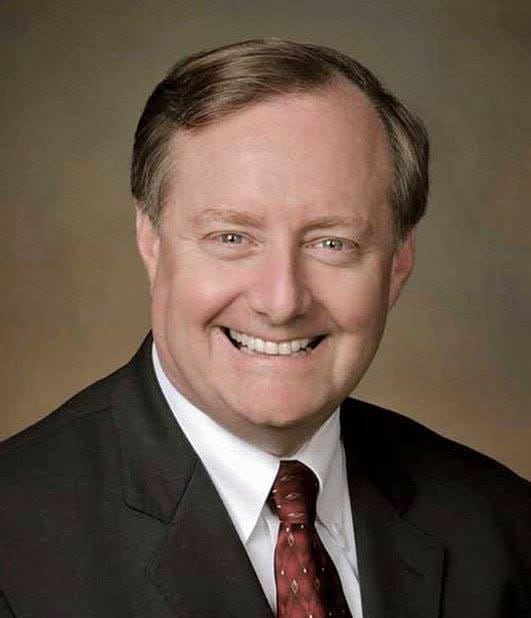
Articles for tag: Kent E. Fillinger

The Resurrection and the Afterlife: What Do We Believe?

The Resurrection and the Afterlife: What Do We Believe?

By Kent E. Fillinger  In Bible college, I encountered this simple but powerful two-question outline to discuss the resurrection of Jesus: What proves the resurrection? And what does the resurrection prove?  I don’t have the space to unpack the answers to these questions, but I do want to explore what people believe about the resurrection of Jesus to help you consider the array of beliefs you might encounter in your church (and with your family) this Easter. I also want to examine current beliefs regarding the afterlife—heaven, hell, and reincarnation.  Views on the Resurrection  The 2020 Lifeway Research State of

Are You a Truth-Teller?

By Kent E. Fillinger   A January 2021 Lifeway Research survey found 49 percent of U.S. Protestant pastors say they frequently hear members of their congregation repeating conspiracy theories about something happening in our country. Around 1 in 8 pastors (13 percent) strongly agree their congregants are sharing conspiracy theories.   WHAT THE RESEARCH SHOWS  An October 2020 research report found that Facebook users engage with misinformation 70 million times per month on average. Though far fewer than the 2016 peak of 200 million monthly fake news engagements, it still is no small figure. On Twitter, people share false content 4 million

A Macro View on Generosity

A Macro View on Generosity

By Kent E. Fillinger  Giving USA 2022: The Annual Report on Philanthropy for 2021 reported charitable giving rose for its fourth consecutive year, reaching its highest level in history, $484.8 billion. Total giving increased 4 percent in current dollars but decreased 0.7 percent in inflation-adjusted dollars.   About two-thirds (67 percent) of total giving came from individuals, the fourth straight year individual giving totaled less than 70 percent. The wealthiest 1.4 percent of the country accounted for 86 percent of charitable donations, according to the Philanthropy Roundtable. Giving is highest among those in their 60s and 70s.     Charitable giving since World

Kent E. Fillinger

Why Do We Gather?

By Kent E. Fillinger  As a movement, we’ve striven from the beginning to be a church based on New Testament principles. Where the Bible speaks, we speak, and where the Bible is silent, we are silent. No creed but Christ and no book but the Bible.   When was the last time your church staff or elders stopped to consider what these maxims mean when it comes to worship gatherings? When did you last study the New Testament to see what it teaches about our purpose for gathering? Have your church leaders ever considered why you do what you do when

Communion Survey Results: Prepackaged Cups Widely Used (and That’s Likely to Continue)

A little more than half of the respondents (54 percent) reported their church uses the prepackaged Communion cups (with juice and bread sealed in a single container, purchased from a vendor). Among those folks, 42 percent either “strongly agreed” or “agreed” they were easy to use, while 45 percent either “disagreed” or “strongly disagreed” the prefilled cups were easy to use. . . .

Current Trends in Dating, Marriage, and Parenting

Current Trends in Dating, Marriage, and Parenting

By Kent E. Fillinger When I was young, whenever a boy and girl played together on the school playground, the other kids typically would tease them by singing “The Kissing Song”: “[Boy’s name] and [girl’s name], sitting in a tree, K-I-S-S-I-N-G! First comes love, then comes marriage, then comes baby in the baby carriage!” The order prescribed in that song is being followed less and less these days. The purpose of this article is to explore recent data on dating, marriage, and parenting to help church leaders better understand current trends to help shape future teaching and ministry possibilities. DATING

Kent E. Fillinger

How Churches Are Serving Their Communities

By Kent E. Fillinger Some churches create “holy huddles” that are internally focused and address only the needs of their own members. Their mantra could be, “Us four, no more, close the door!” Other churches are more externally focused and spend time, energy, and resources serving their local communities and meeting practical needs. Church leaders should periodically ask, “If our church were to close today, would our community realize it and miss us?” Answering that question will help a church assess where they fall on the internally focused versus externally focused spectrum. Local Community Involvement Our annual church survey for

Kent E. Fillinger

The Faith Practices Churches Emphasize

What people believe really matters, according to a 2017 Canadian study of 22 churches and more than 2,000 churchgoers. Churches that adhere to conservative theology are more likely to grow than those that do not, and people who attend growing churches reported praying more often and reading their Bibles more often than those who attend declining churches, the study showed. What churches teach impacts the spiritual practices of their attendees and, in turn, the health of the church. Our 2020 annual church survey asked church leaders this question: How much does your church emphasize the following personal and family faith

The Financial Impact of COVID-19 on Christian Churches

By Kent E. Fillinger As I write this in late June, the COVID-19 pandemic continues to morph daily as it impacts the world, economy, and church in innumerable ways. During the week of June 7, I conducted a COVID-19 Church Impact Survey to take a “snapshot” of how churches fared during the initial three months of quarantine (March to May) and what they anticipated would be happening over the next three months (June to August) as many started to regather for in-person worship services. A total of 334 church leaders from 39 states responded, providing a balanced cross-section of all-sized

Kent E. Fillinger

Beyond the Pandemic: How the Church Can Respond to Three Urgent Needs in Their Communities

By Kent E. Fillinger The full impact of COVID-19 goes well beyond the number of confirmed cases, the death toll, and the unemployment rate that many are tracking. The pandemic has exacerbated several preexisting problems like anxiety, depression, suicide, child abuse, drug abuse, and others. These often overlooked “killers” are affecting scores of Americans today, and some experts say these conditions have reached epidemic proportions. Dr. Elinore McCance-Katz, assistant U.S. secretary for mental health and substance use, said in late May, “The increase in the number of suicides, fatal drug overdoses and instances of domestic abuse will be broad, deep

The Financial Impact of COVID-19 on Christian Churches

(This article is excerpted from a longer feature article written for our October print magazine. We post some of the more time-critical information now for the benefit of our churches. The longer version—available at the end of September—provides a more comprehensive report.) By Kent E. Fillinger During the week of June 7, I conducted a COVID-19 Church Impact Survey to take a “snapshot” of how churches fared during the initial three months of quarantine (March to May) and what they anticipated would be happening over the next three months (June to August) as many have started regathering for in-person worship

Kent E. Fillinger

A Political Self-Evaluation

By Kent E. Fillinger CLICK HERE to download the printable version of this list featured in “The Final Word” of our July 2020 issue. The votes of white evangelicals impacted the last presidential election in a measurable way. A Lifeway Research study determined 4 of 5 such voters (80 percent) cast their ballots for Donald Trump in 2016. But it’s wise to understand that “evangelicals” are not a homogenous group. The same LifeWay study found that 4 of 5 black evangelicals (82 percent) voted for Hillary Clinton, while Hispanic evangelical voters were evenly split—47 percent Clinton, 48 percent Trump. Looked

Kent E. Fillinger

The Role of Women from the Resurrection to Today

By Kent E. Fillinger The greatest and most important event in the history of the world—Jesus’ resurrection—was announced first to a small group of women who had loved and followed Jesus. These women then communicated the news to the rest of Jesus’ disciples. In subsequent years, as the young church grew, women like Lydia, Phoebe, and Priscilla played notable roles. Fast-forward to today. Where do we find women serving in the church? The short answer is—it depends on the church! Our 2018 annual church survey sought to determine how women are serving in ministry leadership today. Please note: My intent

Kent E. Fillinger

Church Management Systems: Who Is Using What . . . and How?

By Kent E. Fillinger For all but the smallest of churches, leaders need an efficient and effective way to collect, organize, and utilize church-member data. A Church Management System (ChMS) is a powerful tool that can help churches with communication, giving and other financial reporting, event registration, children’s check-in, and more. In the last four years, a seismic shift has occurred in the ChMS world, according to leading expert Mark Kitts. During this time, a technology company called Ministry Brands has bought up more than 20 ChMS companies and their programs and consolidated them into a few basic platforms. This

2018 SPECIAL CHURCH REPORT, PART 1: Megachurches and Emerging Megachurches

By Kent E. Fillinger When I started conducting megachurch and emerging megachurch research 15 years ago, there were a total of 255,179 people attending these churches on a given weekend. That number has grown 52 percent to 388,243 in 2018, which is a cause for celebration! For me, this statistical journey has always been about sharing and celebrating how God is at work in churches of all sizes in many different ways. My focus continues to be on helping churches learn from one another and providing context and clear metrics for church leaders to make better decisions based on research

Kent E. Fillinger

A Snapshot of Rural America and Restoration Movement Churches

By Kent E. Fillinger Nonmetropolitan or “rural” counties make up 72 percent of the land area in the United States and are home to 14 percent of the nation’s population. The landscape of small towns and rural America is changing in distinct ways. Using U.S. Census Bureau data, Brookings Institution researcher William H. Frey reported, “Not only has the nonmetropolitan population remained much whiter than the rest of the nation, it is also getting older faster and shrinking in size” (www.brookings.edu). Almost three-fourths of these rural counties are at least 70 percent white, according to Census Bureau data. The age

Kent E. Fillinger

Monthly Attendance: The New Norm?

By Kent E. Fillinger “Is monthly attendance the new norm?” asked the headline of a recent article by Warren Bird, director of research at Leadership Network. The trend for several years is that regular churchgoers attend less frequently. Bird said his research shows the typical church reaches 1.8 times its average weekly attendance in a month. He said the average doesn’t change much regardless of the size of the church, age of the church, or age of the lead pastor. Therefore, a typical church can determine how many different people attend each month by multiplying the average weekend worship attendance

Help Keep Christian Standard Free & Accessible with a Tax Deductible Donation

We can do more together!

Every gift makes a difference!

No, thank you.
100% secure transactions - receipts provided.
Does Your Church Want to Support Christian Standard?

Would your church consider including support for Christian Standard in its annual missions budget? Your support would help us not only continue the 160-year legacy of this unifying ministry, but also expand the free resources, cooperative opportunities, and practical guidance we provide to strengthen churches in the U.S. and around the world.

We can do more together!

Every gift makes a difference!

No, thank you.
100% secure transactions - receipts provided.
Secret Link