January 1, 2026
Bridging the Leadership Gap: Essential Steps for Church Succession
Elders and pastors need to intentionally work to identify and develop future pastors and leaders, viewing this as both a calling and a priority.
January 1, 2026
Elders and pastors need to intentionally work to identify and develop future pastors and leaders, viewing this as both a calling and a priority.
January 1, 2026
When done with the guidance of the Holy Spirit, succession and an intentional interim create the smoothest path to pastoral transition.
January 1, 2026
Over time I learned that, while emotions shouldn’t be the dominant voice in my life, understanding them is a wise choice for my life.
November 5, 2025
A sermon should be long enough to adequately exegete and apply the main point of the passage, but short enough to leave mature Christians willing to listen a few minutes longer.
December 31, 2024
We’re all interim leaders and at some point retirement is inevitable. Therefore, church elders and boards should be proactive to ensure a healthy, smooth pastoral transition.
September 11, 2024

What is a child of God? I certainly identified myself this way, but I defined it through my service and leadership in the church. But what happens when the titles are transferred? What happens when the gift set has no place to be plugged in? How can I be a child of God without the things that I’ve used to define me as one?
September 19, 2018
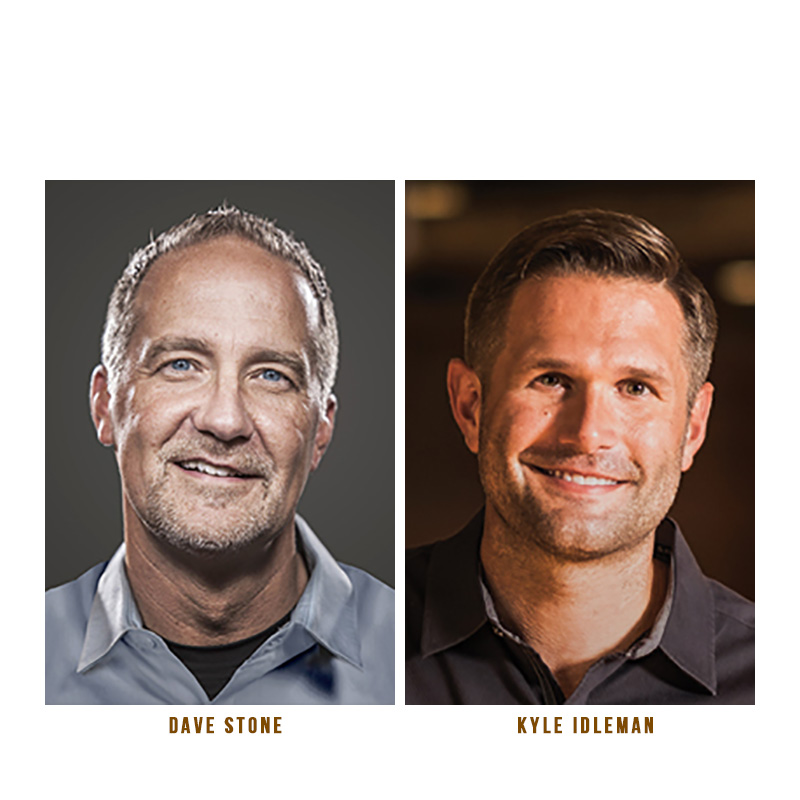
(Updated Sept. 24) Dave Stone, senior pastor of Southeast Christian Church in Louisville, Ky., has announced he will retire sometime in the next six to nine months. Teaching pastor Kyle Idleman will replace Stone in the lead role at the church. “This is a process that has been in the works for a number of years,” Stone said in a story published on the Southeast Christian Church website. “My wife, Beth, and I decided on this timing about five years ago. We felt that 2019 would be the wisest time for the transition to take place.” Stone made the announcement
April 27, 2018
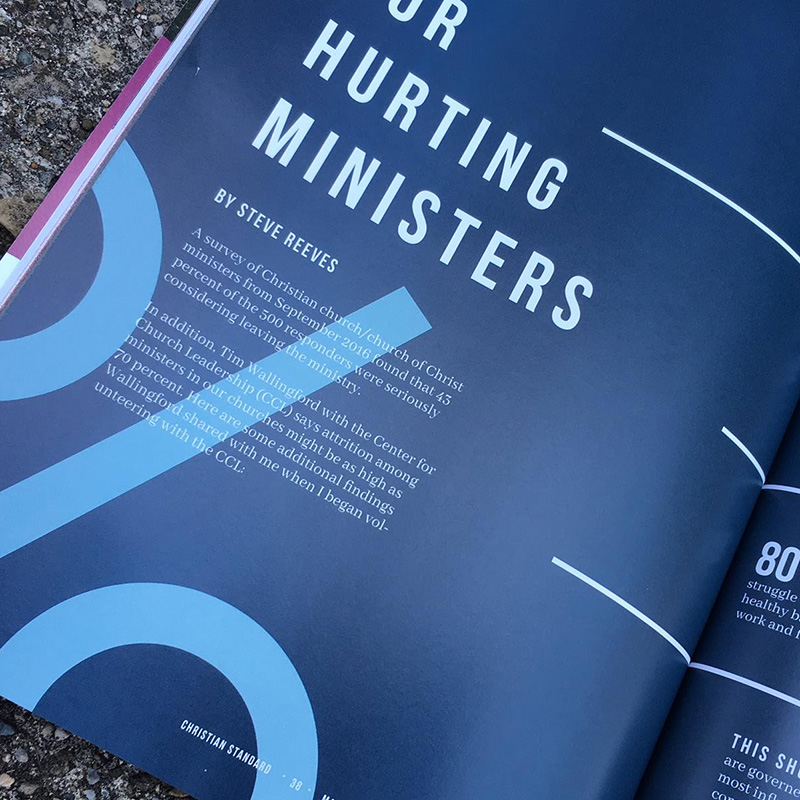
By Steve Reeves A survey of Christian church/church of Christ ministers from September 2016 found that 43 percent of the 500 responders were seriously considering leaving the ministry. In addition, Tim Wallingford with the Center for Church Leadership (CCL) says attrition among ministers in our churches might be as high as 70 percent. Here are some additional findings Wallingford shared with me when I began volunteering with the CCL: 74 percent of ministers have debt. The school debt among many couples, upon their graduation, is as high as $75,000. 54 percent of churches offer no retirement benefits; 47 percent offer
January 1, 2018
By Steve Reeves A survey of Christian church/church of Christ ministers from September 2016 found that 43 percent of the 500 responders were seriously considering leaving the ministry. In addition, Tim Wallingford with the Center for Church Leadership (CCL) says attrition among ministers in our churches might be as high as 70 percent. Here are some additional findings Wallingford shared with me when I began volunteering with the CCL: 74 percent of ministers have debt. The school debt among many couples, upon their graduation, is as high as $75,000. 54 percent of churches offer no retirement benefits; 47 percent offer
June 3, 2016
By LeRoy Lawson The Locust Effect: Why the End of Poverty Requires the End of Violence Gary A. Haugen and Victor Boutros New York: Oxford University Press, 2014 Freakonomics: A Rogue Economist Explores the Hidden Side of Everything Steven D. Levitt and Stephen J. Dubner New York: HarperPerennial, 2009 SuperFreakonomics: Global Cooling, Patriotic Prostitutes, and Why Suicide Bombers Should Buy Life Insurance Steven D. Levitt and Stephen J. Dubner New York: William Morrow, 2011 Think Like a Freak: the Authors of Freakonomics Offer to Retrain Your Brain Steven D. Levitt and Stephen J. Dubner New York: William Morrow, 2014 Next: Pastoral Succession that Works William
By Ken Idleman I call it “ecclesiastical matchmaking,” playing cupid to help a local church get together with a minister or a minister together with a church. Part of the experience involves coaching leaders and churches through the courting/calling process. And I”ve done quite a bit of it. After decades of church consulting, including 30 years of helping churches and leaders as a Christian college president, I”ve logged some experiences and come to some conclusions about ministerial succession in local churches. Here are my observations. Defining Terms First let”s define some terms. Pastoral transition and pastoral succession are not the same
An Interview with Warren Bird, coauthor of Next: Pastoral Succession that Works By Kent Fillinger What are the key points from Next? The first is the sobering reminder that we”re all interims. A reality of life is that whatever our role is, someone is going to come after us unless Jesus comes back before then. We try to unfold that in the book. And there”s a theology behind that. Jesus had a succession plan, so shouldn”t you? Moses had a succession plan. And look at how, from Moses to Joshua, it worked so well. But Joshua didn”t have a successor, and
October 11, 2013
By Aaron Brockett Six months after the grand opening of our church plant, I hit a wall. The combination of seeing the last of the “well-wishers” depart, watching our first disillusioned family leave the church, and experiencing the drought of summer attendance was too much. I”d given everything I had to get this young church started, and now the needle of my emotional tank was firmly planted on empty. I wanted to bail. To be honest, I was irritated with the stories of church planters turned megachurch pastors who made it look so easy (or so I thought). On paper,
August 5, 2012
By Mark A. Taylor Sometimes we discover truth from an unexpected source. Not long ago, I pondered the implications for the church in a Harvard Business Review blog post by a columnist for Time magazine. Joel Stein shared a conclusion he had reached as he did research for his new book, Man Made: A Stupid Quest for Masculinity. “I learned that my vision of what makes a good leader was all wrong,” he wrote.* I spent hours working alongside fire chiefs, army captains, Boy Scout troop leaders, and others who guide teams. To my surprise, the best of them
March 27, 2026
Rick Cherok

March 27, 2026
David Empson

March 27, 2026
David Faust