The Rahab Rehab (Aug. 2 Lesson Application)
Rahab's story reminds us that God restores broken people. David Faust explores forgiveness, everyday faith, and the scarlet cord as a symbol of renewal, challenging readers to invite God into their struggles.
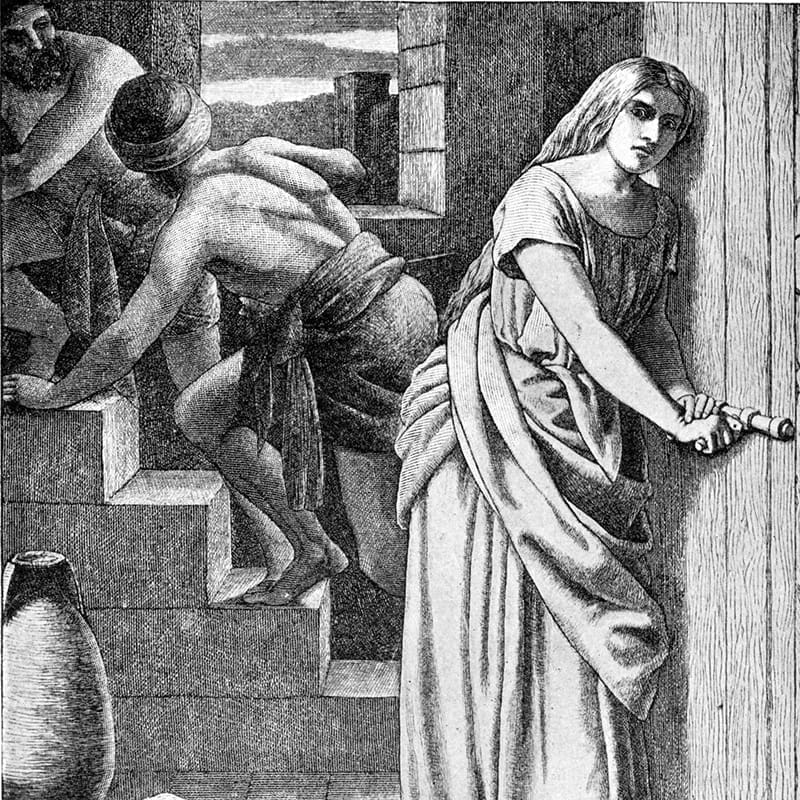
The Rahab Rehab: Everyday Faith, Forgiveness, and Restoration
The Rahab Rehab explores how Rahab’s story reveals God’s willingness to forgive, restore, and welcome people with complicated pasts. David Faust reflects on Rahab’s place in Jesus’ genealogy and challenges readers to invite God into their struggles, practice everyday faith, and trust in Christ’s saving power. The article concludes with a personal challenge to identify an area of life in need of renewal.
- Rahab’s inclusion in Jesus’ genealogy illustrates God’s power to restore people with troubled pasts.
- Genuine faith involves daily action rather than occasional religious activity.
- Rahab’s scarlet cord points readers toward forgiveness, restoration, and the hope offered through Christ.
Most family trees contain some bad apples. My parents proudly informed me that our ancestors include notable figures such as Johnny Appleseed, William Penn, and General George Patton. However, in German my last name means “fist,” so I suspect my family tree also includes some horse thieves and barroom brawlers.
Jesus’ family tree in Matthew 1 includes some shady characters. Names that appear on the first page of the New Testament remind us of Jacob’s conniving, David and Bathsheba’s adultery, Solomon’s hundreds of marriages, and the wickedness of King Ahaz and King Manasseh. These ragged-edged stories remind us that the people we read about in the Bible are not make-believe, fairy-tale characters. They are real flesh-and-blood people with messy lives. And so are we.
Jesus’ genealogy includes Rahab, who lived in a pagan city so morally depraved that even its elevation was low. (If you search Google for “What is the lowest city on earth?” the answer is Jericho.) The guest register at Rahab’s inn was like a logbook of her past sins, and her story in Joshua 2 reads like a movie script complete with spies, cover-ups, and daring escapes. Her name, which to me sounds a lot like rehab, appears three times in the New Testament. Matthew 1 includes Rahab in the family tree of Jesus, Hebrews 11 recognizes her faith, and James 2 says she put her faith into action. When Jesus was born in Bethlehem, the blood flowing in his veins contained some of rough-edged Rahab’s DNA.
Rahab serves as a vivid example of what Jesus told his self-righteous critics: “Truly I tell you, the tax collectors and the prostitutes are entering the kingdom of God ahead of you” (Matthew 21:31). God specializes in rehabilitating, reconciling, and restoring broken people. You and I could benefit from a Rahab rehab! Here are three questions to consider.
Will You Invite the Lord into Your Mess?
We all have done unsavory and embarrassing things. None of this surprises God. Instead of trying to hide from him, we should invite the Lord into the ugly stuff and seek his forgiveness. Just as the tax collectors Matthew and Zacchaeus did, let’s invite the Lord into our homes and hearts.
Do You Have Now-and-Then Religion or Everyday Faith?
Rahab put her faith into action, risking her life to protect the spies. Her example reminds us that faith without works is dead (James 2:25, 26).
Our faith should be active 24 hours a day, seven days a week. Now-and-then religion comes and goes, but everyday faith affects how we handle our time and money. It shapes how we manage our relationships with others at home, work, and school. Now-and-then religion might generate an occasional spiritual high, but everyday faith brings us into the Lord’s presence 365 days a year. Why settle for now-and-then religion when Jesus offers the adventure of everyday faith?
Is There Hope in Your Window?
The scarlet-colored cord in Rahab’s window served as a symbol of hope. Rahab trusted God to save her, and that was the best homeowner’s insurance policy in Jericho.
God can make our scarlet sins white as snow (Isaiah 1:18). Like a scarlet cord, the blood of Christ offers hope that rough-edged sinners like us can be included in the Lord’s family tree.
Personal Challenge: In your prayer journal or on a sheet of paper, write down one area of your life that you would like God to “rehab” (rehabilitate and make new).
Image: Frederick Richard Pickersgill’s 1890s illustration of Rahab helping the two Israelite spies. Courtesy of Wikimedia Commons.

Author: David Faust
David Faust serves as contributing editor of Christian Standard and senior associate minister with East 91st Street Christian Church in Indianapolis, Indiana. He is the author of Not Too Old: Turning Your Later Years into Greater Years.
Sponsored

For 160 years Christian Standard has served the churches of the Restoration Movement. Your gift keeps articles like this one free for every church leader.
Sponsored

Keep reading
More in Christian Living



From the archive
Christian Standard has covered this since 1866.





Joseph came from Rahab’s blood. Why is Jesus listed as coming from her when Joseph wasn’t His father?