Articles for tag: Biblical Interpretation

An 1800s Preacher Shares His Story

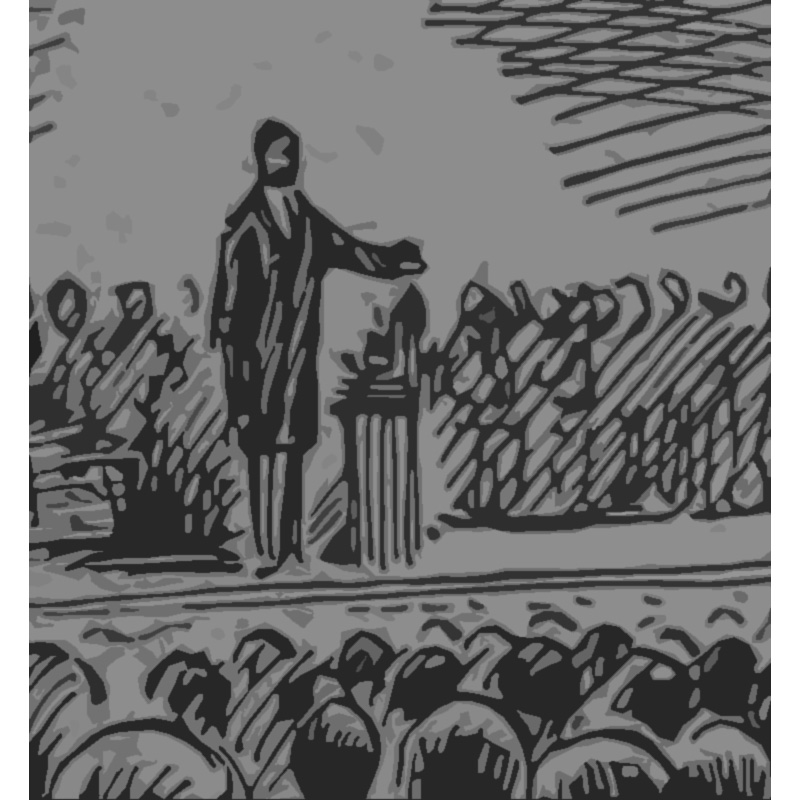
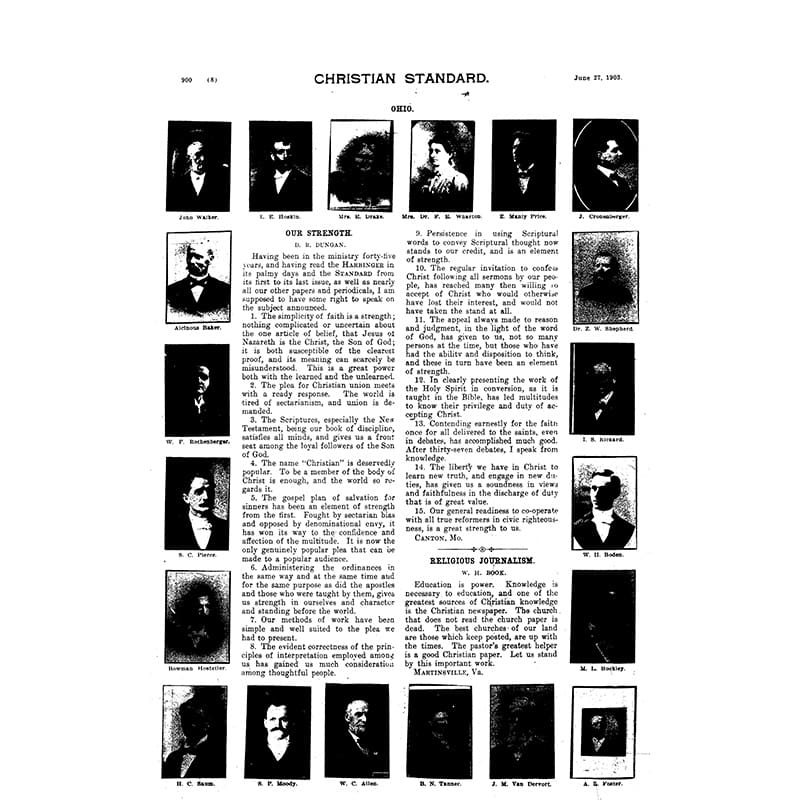
Buried toward the back of the Oct. 12, 1889, issue was a column by an unknown preacher who shared short recollections of his inadequacies and failings as a young evangelist. This column is several things: raw, uneven, humorous, painful, perceptive, and poignant. _ _ _ Reminiscences from a Young Preacher’s Experience By Y. P.Oct. 12, 1889; p. 11 Yes, I remember quite a number of the firstlies in my ministry. My first sermon was in a new, unfinished, country meetinghouse, painted without, but rough within; the studding, joist and rafters were bare. The benches were slabs from the saw-mill, supported

Lost in Translation

By Jim Tune I wrote my message quickly and fired it off. Just seconds after clicking Send, it dawned on me with mortifying clarity that I had sent the text message to the wrong recipient. My message fortunately was not overly sensitive, rude, or confidential. Still, it left room for both misunderstanding and embarrassment. I”m guessing this experience is not unique to me. We”ve all been in a situation where someone reads a message intended for someone else that potentially could lead to misunderstanding and conflict. I was relieved when the unintended recipient responded graciously and with minimal offense. It

Wrestling with Faith and Disagreeing on the Bible

By LeRoy Lawson My Bright Abyss: Meditation of a Modern Believer Christian Wiman New York: Farrar, Straus and Giroux, 2013 The Civil War as a Theological Crisis (The Steven and Janice Brose Lectures in the Civil War Era) Mark A. Noll Chapel Hill: The University of North Carolina Press, reprint edition, 2015 When a speaker is teetering on the brink of death, ravaged by bone marrow cancer, you pay attention. When he is poet Christian Wiman, sharing his personal insight into the Bright Abyss, readers””religious and nonreligious alike””ponder his every thought. Wiman is struggling””against death, against the danger of being

Books for Bible Students: Reading the Bible for All Its Worth

By Mark Matson If I had to choose just one Bible handbook to accompany solid Bible study, it would be How to Read the Bible for All Its Worth (Zondervan) by Gordon Fee and Douglas Stuart, both well-known and respected biblical scholars. This book, now in its third edition, has proven itself over three decades. The first edition, which came out in 1981, is still valuable, and the latest edition is a real treat. I use this book for college and seminary classes, and I also recommend it to my church. Fee and Stuart”s book is not a handbook, as

Books for Bible Students: Read These Books to Understand the Old Testament

By Gary Hall The IVP Bible Background Commentary: Old Testament by John H. Walton, Victor H. Matthews, and Mark W. Chavalas (Intervarsity Press, 2000) The cultural and historical background of the Old Testament is a mystery to most Christians, leading to many misinterpretations. This book begins with Genesis 1 and goes through the entire Old Testament, section by section, giving crucial sociocultural, historical, and geographical information. It is a treasury of facts that brings the text to life and enables Bible students to penetrate many of the barriers to Old Testament understanding. It is well informed, accurate, easy to use,

Biblical Interpretation in the Restoration Movement

By Mark Weedman The history of the Restoration Movement is diverse and complex, and summarizing it is necessarily difficult. But some general patterns do emerge, and we can use those patterns to gain an overview of how followers of the Restoration Movement have approached biblical interpretation. Three moments in that history stand out as especially important in shaping how Thomas and Alexander Campbell and their followers would interpret the Bible. The first was the appearance of Thomas Campbell”s Declaration and Address, a seminal document that established the movement”s governing plea. The second moment was a debate between Isaac Errett and

Equipping Volunteer Leaders

By Jennifer Taylor Churches around the country struggle with the wonderful problem of how to expand their work by involving enthusiastic new leaders””people who may have limited Bible knowledge or ministry experience. The Crossing (Quincy, IL) created its Ministry Development Institute in 2009 to equip and encourage these volunteer leaders. The 18-month course of study provides in-depth biblical teaching and training in ministry skills. Classes include Old and New Testament surveys, the book of Acts, biblical interpretation, worldview and spiritual formation, practical ministry, and more. The institute posts syllabi and reading lists for each course on its website, and the

Getting the Most from the Epistles (Part Two)

By Matt Proctor   We have seen that the New Testament Epistles are published apostolic sermons intended to be read publicly to the recipient churches””with rich theological content, skillful rhetorical crafting, and deeply personal emotion. Now let me suggest five questions that can help you understand these sometimes-difficult books.   Have I Read the Entire Letter? Gordon Fee and Douglas Stuart give this challenge: “You need to develop the habit of reading the whole letter through in one sitting. You will need to block out an hour or so to do this, but nothing can ever substitute for this exercise. It is the

Jobian Musings

By David A. Fiensy The psalmist wrote that the righteous person “meditates on his law day and night” (Psalm 1:2). A wise rabbi advised, “Turn it and turn it.”1 (That is, turn the Old Testament law over and over in your mind.) Those authors believed that God speaks to us through the Bible in new ways when we reflect on it deeply and repeatedly. Søren Kierkegaard once retold the story of Abraham”s offering of Isaac (Genesis 22), each time with new details and from different vantage points.2 In this way, he brought insight to a troublesome biblical teaching. Each successive

Getting the Most from the Gospels (Part One)

By Matt Proctor “Irresistibly drawn to Jesus.” That phrase describes many who have come to faith after reading the Gospels. Most of us love the Gospels because we love Jesus, and the Gospels bring us face to face with him. For some the Gospels are so familiar, though, that they miss truth contained there. A few helps can prevent that from happening. When he was growing up, Vince Antonucci”s parents never took him to church. Maybe it was because his mother was Jewish and his father was a professional gambler. Regardless, he knew nothing about Jesus. He says, “As far

Getting the Most from Old Testament Stories (Part 2)

(This is the second of six articles Matt Proctor will write this year under the theme, “Reading the Bible for All It”s Worth.) By Matt Proctor When we read one of these Hebrew narratives, we want to discover the author”s intended meaning. This guards us against imposing our own meaning on the text. How do we uncover the clues to the author”s intended meaning? I love Warren Wiersbe”s observation in The Wiersbe Bible Commentary: The Complete Old Testament, “If you don”t talk to your Bible, your Bible isn”t likely to talk to you!” In other words, if you don”t ask the text

Getting the Most from Old Testament Stories (Part 1)

By Matt Proctor (This is the first of six articles Matt Proctor will write this year under the theme, “Reading the Bible for All It’s Worth.) All human beings love a good story, so when God wanted to communicate the most important message in the universe to us, guess what he did? He told stories . . . and we”ve been captivated ever since. The Bible, and especially the Old Testament, is chock-full of narratives. The Old Testament is two-thirds of Scripture, and more than 40 percent of the Old Testament is narrative. In Sunday school children are still taught much-loved

Both Sides and a Strong Conclusion

By Mark A. Taylor Some readers will remember Paul Williams”s wry column (March 2 issue) that mentioned his friend who always saw both sides of an issue. “On the Other Hand” was Paul”s title and the mantra of the friend he mentioned. “I am drawn to reflective people,” Paul wrote. “They know what they don”t know and are not inclined to speak until they thoroughly understand an issue.” Actually, I would have been pleased for Paul to tell you I”m the friend he described. But maybe what followed the above sentences is the reason he didn”t mention my name. (It”s

A Publication for Scholars: A Review of Stone-Campbell Journal

By Paul E. Boatman The gathering crowd had a distinctive appearance. Many were young (20-something) and “non-chic”; not slovenly, but lacking the affected “coolness” offered by the latest fashions. This group reminded me of high school meetings of the National Honor Society””often not the most popular kids on campus, but the ones we knew to watch through the coming years. Several of the older members of the crowd were people I knew through academic collegiality or through their writing. My first venture into a conference sponsored by the Stone-Campbell Journal (SCJ) both stimulated and defied stereotyping. In collective IQ, the

How Lincoln Christian Seminary Is Training Second-Career Ministers

By Paul E. Boatman Lincoln (Illinois) Christian Seminary (www.lccs.edu) Seminary students are an increasingly diverse lot. The 88 students entering Lincoln Christian Seminary (LCS) in the fall of 2007 all hold at least a bachelor”s degree from one of 37 colleges or universities. Of those students: 32 (36 percent) are female; 37 (42 percent) are between 30 and 57 years of age; just 33 (38 percent) are age 25 or younger””the traditional age for beginning graduate school; 60 (68 percent) are Bible college graduates; and the other 28 (32 percent) come from universities. The reasons for entering seminary vary widely,

What We Can Do if We Can”t Agree

By Mark A. Taylor Can we ever agree about women in ministry? Given the huge breadth of belief and practice among Christian churches, maybe not. Some Christian churches, for example, have decided to add women to their board of elders. But then there’s the church that will not ordain the women on its ministerial staff or let these ladies attend an off site overnight planning retreat with the male ministers and elders. Our major conventions welcome women speakers to their platforms. But I heard about a Christian church that hired a woman music director with the stipulation that she face

Secret Link