October 2, 2023
Avoiding Spiritual Jeopardy
We should treat Communion as the most important meal of our week. . . .
October 2, 2023
We should treat Communion as the most important meal of our week. . . .
August 28, 2023
Acknowledge how sinful you are and be reminded of how good you can be through Christ Jesus . . .
November 7, 2022

Do you ever try to one-up someone and make yourself feel superior? Have you ever engaged in a competitive conversation where, instead of listening well, everyone tried to outdo each other by telling more impressive stories of their own?
February 15, 2021
By Scott Franks In your relationships with one another, have the same mindset as Christ Jesus:Who, being in very nature God, did not consider equality with Godsomething to be used to his own advantage;rather, he made himself nothing by taking the very nature of a servant, being made in human likeness.And being found in appearance as a man, he humbled himself by becoming obedient to death— even death on a cross! (Philippians 2:5-8). In other words, God submitted himself to us! Christ died because it was necessary for us to live. Christ’s incomprehensible journey from the glory of Heaven to
November 22, 2020

How You Can Begin 2021 with Courage and Understanding This year-end article was written in mid-September. Due to the magazine’s production schedule, I simply don’t have the luxury of knowing if we’ve made strides toward loving each other well, who won the election, the state of the economy, or whether there is a coronavirus vaccine. As I type these words, my mother is suffering from COVID-19. She’s older, in poor health, and already fighting cancer, so I have no clue whether she will survive or go to be with the Lord. Remember the old saying, “hindsight is 20-20”? If
September 22, 2020

By Jerry Harris The church established in Acts 2 identified two sacred observances: baptism, which was discussed in week 1 of this series (May 2020), and Communion, termed “the breaking of bread” in Acts 2:42, that this article discusses. The word sacred is used to describe baptism and Communion for a reason. These rituals are often labeled as “ordinances,” but they are much more than obligations to adhere to, for they possess an aspect of holiness that connect us to the blood of a sacrifice. This blood is connected to both cleansing and the forgiveness of sin (Hebrews 9:22), meaning
March 5, 2019

By Halee Wood Have you ever had an MRI? An MRI produces detailed pictures of internal body structures. It can assist in diagnosing many things we never want to face: aneurysms, inner ear issues, spinal cord injuries, cancerous tumors, and more. A prescribed MRI makes us cringe because we don’t want anything “bad” exposed, though all the while, in our gut we already know something is wrong or we would not have sought the help of a physician. An MRI can diagnose, but it cannot cure. The physician is who leads you through the healing process. The apostle Paul once
March 16, 2018

By Mark Scott In the middle of the second century, Justin Martyr gave an account of the weekly worship of Christians. And on the day called Sunday, all who live in cities or in the country gather together to one place, and the memoirs of the apostles or the writings of the prophets are read, as long as time permits; then, when the reader has ceased, the president verbally instructs, and exhorts to the imitation of these good things. Then we all rise together and pray, and, as we before said, when our prayer is ended, bread and wine
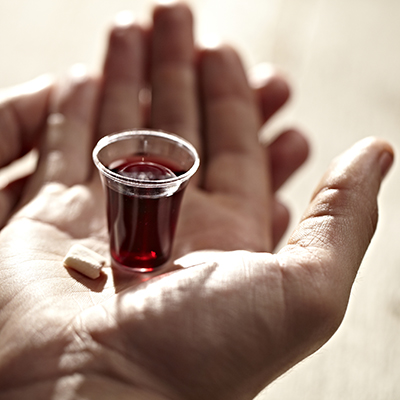
By Randy Gariss The Lord”s Supper is about celebration. After all, the meal points to the love of Christ, forgiveness of sins, the coming of the kingdom, and other wonderful repercussions of the cross. Yet, in the midst of the joy there is another imperative from Paul, one with more sobering overtones. We are each told to “examine” ourselves. Therefore, whoever eats the bread or drinks the cup of the Lord in an unworthy manner will be guilty of sinning against the body and blood of the Lord. A man ought to examine himself before he eats of the bread
By Chuck Sackett Immediately before worship was to begin, a leader in the congregation dumped a boatload of complaints on the preacher. As the preacher entered the worship area, his once light spirit””which had been anticipating worship and preaching””bottomed out in a wash of questions. Instead of worshipping, he fidgeted throughout the singing, trying to get his heart and mind back on track. He was agonizing over the complaints, frustrated by the timing, and momentarily incapable of preaching. Fortunately, Communion was served before the sermon that day. As he continued to try to settle his spirit, he felt a hand
February 26, 2016
By Tom Claibourne “A man ought to examine himself before he eats of the bread and drinks of the cup” (1 Corinthians 11:28). As the dramatic events leading up to Jesus” death on the cross began quickly to unfold, our Savior caused each person around him to examine himself and make important choices. During his last Passover meal, Jesus prompted uncomfortable introspection for his disciples with his shocking statement, “One of you will betray me.” Stomachs churned. Heart rates increased. Minds raced. Mouths muttered the fearful inquiry, “Lord, is it I?” With a single statement Jesus caused his closest companions
September 1, 2015
By Mark A. Taylor The October issue of CHRISTIAN STANDARD is devoted to the theme of integrity. As we finish making final corrections before sending it to the printer this week, I know it contains some of the best material we”ve ever published. Surely the issue will prompt soul-searching in every reader. In a world characterized by concern for image management more than private goodness, even Christians too often fail to walk their talk. But a question has come to me in recent days that we do not consider in those pages. What do we do with integrity failures we
August 25, 2015
By Mark A. Taylor I first prepared the following as a Communion meditation for the church where I worship. It occurs to me that it considers a biblical challenge that Christians everywhere do well to remember. We don”t read far in Paul”s first letter to the Corinthians till we see this was a church with problems. “I appeal to you brothers,” he wrote, “in the name of our Lord Jesus Christ, that all of you agree with one another in what you say and that there be no divisions among you, but that you be perfectly united in mind and
March 27, 2015
By David Ray When you were little and getting ready to take your seat at the family dinner table, did your mom ask, “Have you washed your hands?” If you had, you probably proudly held them up to show her. But on those rare occasions when she caught you “dirty-handed,” you”d sheepishly have to slip away to put soap and water to work. As often as we were reminded, we should have remembered to wash our hands every time. But since we are creatures of forgetfulness, or just too preoccupied with other things, that getting ready for the table often
January 6, 2015
By Mark A. Taylor Is your church healthy? Unfortunately, our quest to answer that question may send us looking in the wrong direction. Our tendency is to consider symptoms, not causes, of church health. We analyze statistics about giving or growth or participation, externals that may indicate how we”re doing but don”t tell how to make it better. What can we do to make our church healthier? The best answer””certainly the first answer””is to look in (not out), to cast our gaze upon ourselves. The function of any individual part affects the health of the whole. A quick look at
September 19, 2014
By J. Michael Shannon “Therefore, whoever eats the bread or drinks the cup of the Lord in an unworthy manner will be guilty of sinning against the body and blood of the Lord. A man ought to examine himself before he eats of the bread and drinks of the cup” (1 Corinthians 11:27, 28). No one who visits Gettysburg, Pennsylvania, can leave unchanged. In a three-day period, two great armies struggled there in an epic conflict. There were approximately 50,000 casualties from both sides. What makes Gettysburg significant today is that the entire town and county stand as a reminder
February 28, 2014
By Tom Claibourne The Lord”s Supper is quite paradoxical. It looks backward and forward. It calls us to look upward but also inward. It is utterly profound yet disarmingly simple. It celebrates life while focusing on death. The Communion emblems prompt feelings of assurance while also calling for an honest self-evaluation regarding our sin. They honor Jesus” death but also his resurrection. They help us celebrate the forgiveness of our sins while reminding us of our ongoing struggle with temptation. The Lord”s Supper stirs tears of repentance but also smiles of celebration. It calls forth horror at the intensity
February 20, 2012
This treatment of the International Sunday School Lesson is written by Sam E. Stone, former editor of CHRISTIAN STANDARD. ______ By Sam E. Stone This week we conclude a four-week survey of the book of Galatians. This also is the final lesson under this quarter”s general topic, “God establishes a faithful people.” The Christians in Galatia had to contend with false teachers who insisted on the legalism of first-century Judaism. They taught that a person first had to become a Jew before he could become a Christian. Paul pointed out that this was never the case (Galatians 2:6-9; see Acts
February 5, 2012
By Lee Magness Gathering is central to our identity. Worship is central to our gathering. And breaking bread is central to our worship. Luke describes how, “On the first day of the week we came together to break bread” with the early Christians of Troas (Acts 20:7). So many centuries later, their practice is still instructive. The Lord’s people gathered for the Lord’s worship on the Lord’s Day to share the Lord’s Supper. The church may gather for any number of reasons—for service, for prayer, for study. But there is no better reason for Christians to gather
December 26, 2007
By Mark A. Taylor “Why don”t you just talk with them?” I suggested. She and I were discussing a married couple in the church whose attitudes would probably slow down progress on our ministry project. “Because it won”t do any good,” she answered quickly. “I”ve discovered through the years that talking to people about some way they need to change seldom results in making the change happen.” Even though I”ve forgotten the details surrounding this conversation, I still wrestle with this Christian leader”s conclusion. Don”t talk to people about change? But isn”t the church in the change business? Hasn”t Paul

April 7, 2026
John B. Penrose Jr

April 7, 2026
David Faust
March 27, 2026
Rick Cherok