Articles for tag: Racial Reconciliation

Denzil Holness Spreads a Message of Racial Reconciliation

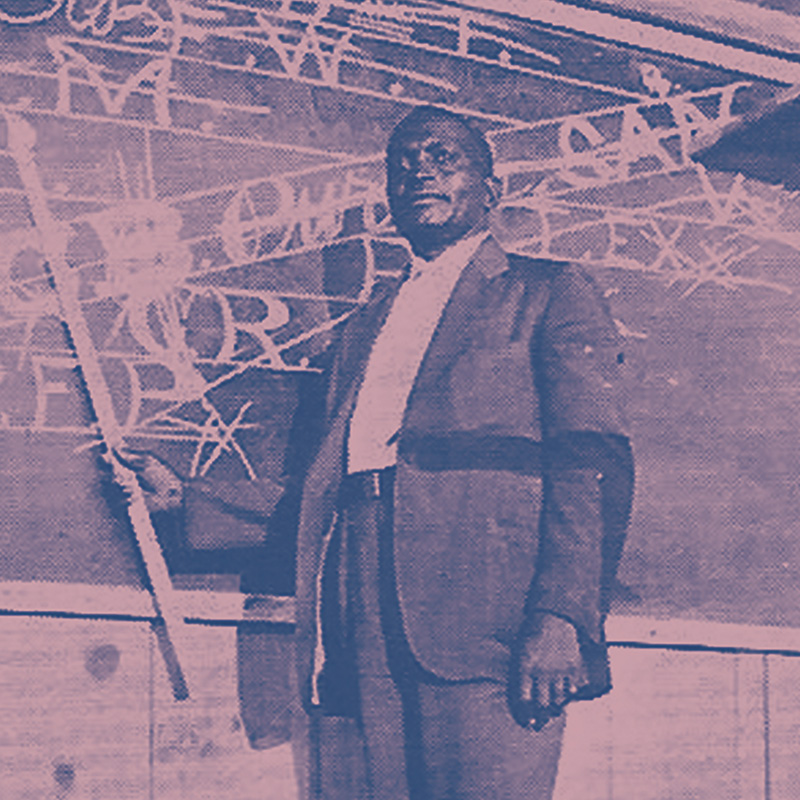
By Jacqueline J. Holness Had Denzil D. Holness been hired as a pastor in Coward, South Carolina, or Peculiar, Missouri, or any other out-of-the-way American town or city, he may not have been led to take on racial reconciliation in the Christian church. However, since Holness was hired as the first black pastor at Central Christian Church in Atlanta, Georgia, “The City Too Busy to Hate,” it would seem tackling racial reconciliation was God’s plan for him all along.   Committed to Christian Church Principles Holness became CCC’s pastor in September 1979 and in December 2017, he retired from ministry
Leading in the Direction of Unity      

By Alan Stein In the movie Hidden Figures, Kevin Costner plays Al Harrison, a mission director of NASA in April 1961 when the Soviets launched the first man into Earth’s orbit. Harrison (a composite character) had a single-minded mission: successfully launch an American into orbit and safely return him to Earth. NASA was just beginning to transition into the computer age, and so they had some uncertainty about the trajectory calculations provided by the agency’s IBM computer. Astronaut John Glenn, preparing for the Friendship 7 launch that would send him into orbit in February 1962, asked for mathematical genius Katherine

Marshall Keeble and What He Taught Me

By Jerry Harris I, like so many independent Christian church preachers, had the opportunity to study the history of the Restoration Movement in Bible college. My experience was a droning professor in a 7 a.m. class. My goal then was simply to survive it, achieve the best grade possible, and then move on to more interesting things. Biographical sketches of our movement’s pioneers held little interest for me at the time, and for the most part, it stayed that way for many years. It wasn’t until our church launched a multisite location in Hannibal, Missouri, that an interest in our

Inspiring Us to Greater Things

By Jerry Harris Last year at the North American Christian Convention, David Johnson of Harvest Point Church in North Charleston, South Carolina, stopped by the Christian Standard Media booth to talk. When I mentioned that I had been reading about Marshall Keeble, David just lit up. He began to share things he’d learned about Keeble’s methods of establishing churches and raising up leaders for them. He mentioned names of some other folks and asked if I’d heard or read about them. It was my favorite part of the convention, and it energized me for writing the article about Keeble this month.

What Kind of Extremists Will We Be?

By Michael C. Mack “If today’s church does not recapture the sacrificial spirit of the early church, it will lose its authenticity, forfeit the loyalty of millions, and be dismissed as an irrelevant social club with no meaning for the twentieth century. Every day I meet young people whose disappointment with the church has turned into outright disgust.” Dr. Martin Luther King wrote these words in his “Letter from Birmingham Jail” on April 16, 1963. Now, nearly 55 years later, his words seem prophetic. King’s letter was in response to eight white Alabama clergy members who wrote a letter asking

Letter from a Skeptic

Editor’s note: We present the following essay as an example to Christians, showing us how many skeptics think about the faith we hold dear. The thoughts and arguments here are not unique, and Christians do well to listen to them. In a separate post, Dick Alexander answers this anonymous writer. You’ll want to read his piece after you’ve read this one. By Anonymous When asked why he did not embrace Christianity, Mahatma Gandhi replied with this widely known remark: “I like your Christ. I do not like your Christians. Your Christians are so unlike your Christ.” The sentiment resonates with

Reconciliation

By Jim Tune “There is neither Jew nor Greek, there is neither slave nor free, there is no male and female, for you are all one in Christ Jesus” (Galatians 3:28, English Standard Version). “All this is from God, who through Christ reconciled us to himself and gave us the ministry of reconciliation” (2 Corinthians 5:18, ESV). ___ A number of widely publicized events have many people concerned about racial tensions in America. Blacks and whites may not agree on underlying causes or potential solutions, but skin color aside, it seems no one is happy about the present state of

Love and Reconciliation

By Jim Tune On Sunday, September 15, 1963, four members of the Ku Klux Klan planted and then detonated at least 15 sticks of dynamite beneath the front steps of an African-American church in Birmingham, Alabama. The firebombing of the 16th Street Baptist Church killed four girls, prompting Martin Luther King Jr. to make one of the most radical statements imaginable: “At times life is hard, as hard as crucible steel. In spite of the darkness of this hour, we must not lose faith in our white brothers.” To insist on faith in the humanity of an enemy and to

A Church Family for All People

By Brian Jennings and José Heredia If you walked around our urban neighborhood, you”d find a mix of ethnicities, cultures, and skin colors (about 30 percent minority and growing). You”d meet widows who”ve lived in their homes for 40 years and couples restoring the floors of their first home. You”d also see lots of apartments, several of which house people with poverty, hunger, disability, or struggles with mental illness. A few years ago, the Holy Spirit began compelling us to take steps toward ethnic, generational, and socioeconomic diversity. We have a great church of loving people, but we acknowledged that issues

Who Will Lead Racial Reconciliation in Your City?

By Glen Elliott Evangelical leaders have been very intentional about creating unity among the faith community to make a spiritual, social, and economic difference in our city, Tucson, Arizona. Our combined prayer is the one Jesus asked us to pray: “Your kingdom come, your will be done, in Tucson as it is in Heaven.” Even after seeing huge progress among the white and a few of the Hispanic churches, we realized the racial divide still exists. So about three years ago, a group of white and black pastors decided to meet. One of the black pastors agreed to host the

Read More About Religion, Racism, and Practical Steps Forward

Compiled by Travis Hurley Divided By Faith: Evangelical Religion and the Problem of Race in America, by Michael O. Emerson and Christian Smith (New York: Oxford University Press, 2000) “” Despite its age, this remains essential reading for anyone looking to get a grasp on evangelical religion and the problem of race in America. There are helpful historical summaries of the church and race in America in early chapters, and once you understand their explanation of the “white evangelical tool kit,” you”ll start to see how using these tools actually hinders reconciliatory progress before it even begins. Reconciliation Blues: A Black Evangelical”s

We CAN Bridge the Racial Divide

By Travis and Dena Hurley Society”s efforts to build racial unity are not succeeding. Only the gospel offers the possibility for easing racial tensions and bringing together those who have long stayed apart with suspicion toward each other. The church can make the difference””if we will. When the American Crime Story miniseries revisited the O.J. Simpson trial this spring, it reminded us of the “not guilty” verdict in 1995. At the time, the evidence of Simpson”s guilt seemed overwhelming. We were baffled by what appeared to be scenes of celebration among the black community. Was there no respect for the

Barreto Lectures on ‘Race, Ethnicity, and the Bible Today’

To whet your appetite for our June issue, which features articles that provide insight and encouragement about racial reconciliation and the church, and which also features 11 leaders who tell about how they are bridging the racial divide, we thought we would recommend a video on the subject filmed earlier this week at Emmanuel Christian Seminary at Milligan College in Tennessee. Dr. Eric Barreto, Weyerhaeuser Associate Professor of New Testament at Princeton (NJ) Theological Seminary, spoke Monday night as part of the Myron Taylor Lectureship. His topic was “A People for God”s Name: Race, Ethnicity, and the Bible Today.” The

Jesus in the Rubble

By Rich Gorman We were failing miserably. We moved into our Chicago neighborhood in 2010 to join others in starting a new church that would help people discover Jesus and lead to lasting life change and community transformation for God”s glory. Our neighborhood provided some unique challenges. It is one of the most dense and diverse in the city, a home to refugees and immigrants from all over the world. It is a community of stark divisions: ethnic, racial, gender, socioeconomic, language, religion, culture . . . and the list goes on. But we were certain God would bless what

Moving Beyond “˜Color Blind”

By Mark A. Taylor Many thoughts have threatened my internal comfort zone since I attended a daylong conference on racial unity outside Baltimore, Maryland, last month*. I came face-to-face with the reality of racism that still flourishes in my country. I came to understand the privilege that comes automatically, systemically to white people in America. And I was forced to consider how that privilege has benefitted me and hurt others. I came to see that Jesus” prayer for unity will not be answered when Christians of different races distrust or blatantly denigrate each other. (Nor will it happen when members

Back to the City

By Kendi Howells Douglas Our increasingly urban world requires a commitment to embracing diversity and pursuing reconciliation as we plant churches in cosmopolitan environments. Our world is more urban than rural for the first time in history1, and in addition to rethinking how we prepare people to minister in an urban world, we must look at church planting efforts in light of this new reality. In researching the history of the Restoration Movement in urban areas, I have discovered some factors that have kept many of our churches out of cities in the past. One issue was failure to be

Making the Grade

By Jim Tune Mark Twain spoke in 1900 on the value of an education. “Every time you stop a school, you will have to build a jail,” he said. “What you gain at one end you lose at the other. It”s like feeding a dog on his own tail. It won”t fatten the dog.” We need our schools in this movement of ours, perhaps more than ever. As president of the 2015 International Conference on Mission in Richmond, Virginia, October 29″”November 1, I”ve had the unique privilege of personally visiting nine of our Bible colleges and Christian universities. As I

A Conversation with John Perkins

John Perkins, one of the leading evangelical voices coming out of the U.S. civil rights movement, spoke with contributing editor Jennifer Johnson at the North American Christian Convention, June 2015. In this exclusive interview, he explains why many efforts toward racial reconciliation are like trying to cure cancer with Tylenol and what the church’s role in racial healing must be. See the interview here.

A Conversation with Sean Palmer

  Sean Palmer talks about his church, The Vine, in Temple, Texas, and reacts to the predominantly white complexion of the North American Christian Convention. When asked about race relations in America, he answers, “The racial problem is a gospel problem.” In this exclusive interview with Mark A. Taylor, he shares his views on the major obstacle to racial reconciliation in the United States and shares his congregation”s strategy for evangelism: “Spend some time with people who are not like you.” See the interview here.

On the March

By Jennifer Johnson This August, Matt and I took the kids to Washington, D.C., for several days of museums and merriment. (A tip: if you have kids, the single best thing you can ever spend money on in your entire life is a hotel room with a set of bunk beds and a second TV.) Because we are rock stars at planning, our week in the city happened to coincide with the 50th anniversary of the March on Washington, which meant visiting the Lincoln Memorial with 9 trillion extra people. It also meant that on the morning of the event,

Secret Link