February 14, 2022
A President’s Faith
Jesus fought for our freedom, as president Calvin Coolidge described, “not with the sword, but with the cross.”
Politics & Government gathers Christian Standard articles that explore the Christian’s relationship to civic life through a biblical lens. Here you’ll find thoughtful engagement with topics like authority and obedience, religious liberty, public policy, elections, justice, and how believers should speak and act in the public square. These articles aim to help Christians pursue faithful citizenship with conviction and humility—seeking the common good while keeping ultimate allegiance to Jesus and his kingdom.
February 14, 2022
Jesus fought for our freedom, as president Calvin Coolidge described, “not with the sword, but with the cross.”
September 1, 2021
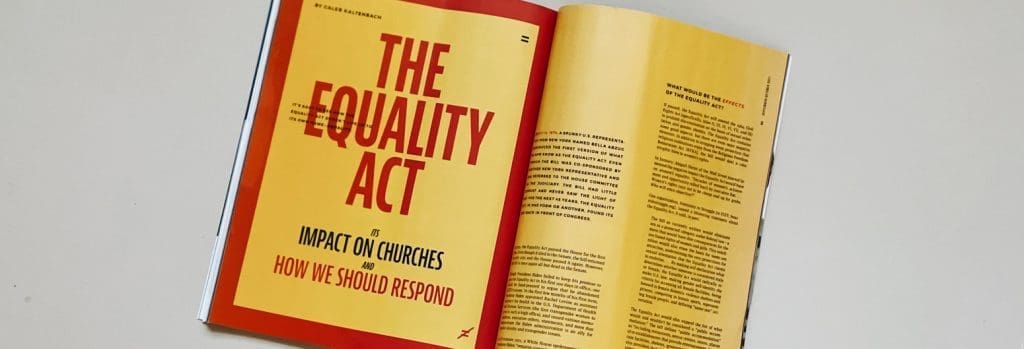
On May 14, 1974, a spunky U.S. representative from New York named Bella Abzug introduced the first version of what we now know as the Equality Act. Even though the bill was co-sponsored by another New York representative and was referred to the House Committee on the Judiciary, the bill had little support and never saw the light of day. For the next 45 years, the Equality Act, in one form or another, found its way back in front of Congress. In 2019, the Equality Act passed the House for the first time. Even though it died in the Senate,

If we want to see God do something big and miraculous, we need to pray. The Afghan people are in a dangerous moment in their history. Pray for a miracle . . . but also pray for endurance and tenacious faith. . . .

The manipulation capabilities of the “invisible government” are chilling and terrifying.
January 1, 2021

A couple of exciting events took place in 1956. First, I was born, which was pretty exciting for me. Second, our federal government adopted the official motto, “In God We Trust.” That phrase quickly was stamped onto our currency and coin, where it remains today. Why did America adopt a motto in 1956? We were fighting a Cold War with the Soviet Union, a superpower that championed atheism. While the U.S.S.R. contended God did not exist, the United States not only declared his existence, but that our nation trusted in him. “In God We Trust” is more than a
November 22, 2020

How We Chose to Deal with the Restrictions and Mandates Placed on Us by State and Local Governments “I had some serious thoughts of suicide in December. I was making headway with the help of my mental health classes and church, then both were taken away from me. Now, with nowhere else to physically go, I’m struggling.” This was a direct message from a church member who reached out to me for help during the coronavirus pandemic. This precious believer was struggling, lost, hurting, and losing hope. It crushed me because I felt helpless to do anything about it. I’m
November 11, 2020
By Jim Nieman A first-time political candidate from eastern Illinois who attends a small-town Christian church—where her husband serves as an elder—was elected to Congress with more than 70 percent of the vote, according to unofficial totals. Republican Mary Miller—described as “a wife, a mother, a grandmother, a local farmer, and a business manager,” by her website—is set to represent Illinois’ 15th Congressional District, which includes 33 counties that cover most of the southeastern part of the state. In her spare time, she teaches Sunday School and Vacation Bible School, according to her website. Mary and her husband, Chris, attend

(An earlier version of this article was posted at our website in April. This is the version that appeared in our July 2020 print edition.) By Rusty Russell Should we have canceled church during the COVID-19 pandemic? What if the virus rebounds and we are asked to cancel again? What if there’s a less serious pandemic in the future? Will we be asked to cancel the next time there’s a flu outbreak? I was discouraged by how many Christians—even church leaders—quickly made judgments about church closings based on whether they watch Fox News or CNN rather than what God would

By Bob Russell Imagine that a godly couple unexpectedly inherits $10 million. How should they react? Their first response should be one of deep gratitude both to the benefactor and to God, the giver of every good gift. There should also be an overwhelming sense of responsibility to be wise stewards and not squander their fortune. Unearned wealth could spoil their kids or destroy their faith if unprepared, so they need to train their children to be sensible money managers. The Bible says, “Now it is required that those who have been given a trust must prove faithful” (1 Corinthians

By Dudley Rutherford It’s no secret that California, where I live and pastor, is a blue state when it comes to the voting majority. However, not everyone leans to the left. Here you’ll find not only Democrats, but also Republicans, independents, and everything in between. Our church, Shepherd Church, is located in Southern California and is a reflection of our city’s great diversity. When I stand up to preach each weekend, we have people from every political persuasion, race, socioeconomic status, and background sitting in the audience of our worship center. Unlike many other churches across the country, every political

By Michael C. Mack I’m guessing some of you are wondering why Christian Standard would devote almost an entire issue to politics . . . especially this year. I know—you know, we all know—what a divisive topic this can be. I know our readership, like many of our churches, consists of people across the political spectrum. Some of you may believe we shouldn’t talk about politics at all. We are, in fact, the Christian Standard, with a heavy emphasis on Christian. Some may assert we should stay in our lane and keep our focus on Christian church leadership issues. After

By Bob McEwen Is it true that righteousness exalts a nation, but sin is a reproach to any people? Is it true that when the righteous are in authority, the people rejoice; but when the wicked rule, the people mourn? Is it true that blessed is the nation whose God is the Lord? If Scripture is not true, then Christian involvement doesn’t matter. However, if Scripture is true, then anyone with a heart for the hurting will want to follow its admonition to pursue righteousness. Where can one go for righteous counsel and biblical answers to personal, family, and national

By Mark E. Moore Did Jesus engage in political debate? Well, that depends on your definition of political. I’m not trying to be clever or coy, just clear (an attribute desperately lacking in modern political debate). The word political comes from the Greek word politeuomai which means “to live as a citizen” (Acts 23:1; Philippians 1:27). It had to do with social engagement in the public sphere. According to this technical definition, to be political, Jesus would have to meet these four criteria: (a) Be a public figure—his ideas or vision would need to be declared publicly rather than merely

A Review of Christian Standard’s Coverage of U.S. Presidents Since 1866 By Jim Nieman Has Christian Standard’s coverage of politics been slanted during its 154-year history? Undoubtedly. The readership of a Christian journal would demand nothing less. The better question might be: Has Christian Standard’s coverage of politics been fair? We certainly hope so . . . but when you root through more than 7,500 issues of a magazine, you’re bound to find at least a few items that give you pause. When asked to examine the magazine’s treatment of politics since 1866, I decided for expediency’s sake to focus

By Megan Rawlings We’re entering that time of year. We are inundated with campaign signs, slogans, brochures, and TV ads. Candidates are making promises, doing their best to make their competitors look bad, and trying to convince the public that they are the right person for the job. Unfortunately, it doesn’t stop there. Serious disagreements erupt in the public arena, and even believers get caught up in the drama. But how are we, as Christians, supposed to politely express our political opinions without offending others? Good Manners Had Bad Results Etiquette books fascinate me. I read them and study how

What are you bringing to the political fire? By Ben Cachiaras Our nation is polarized politically. It seems everyone is politicked off. The flames of strife, disagreement, and contentiousness are burning everywhere, and each of us has a choice in how we respond. In one hand you hold a can of gasoline.It’s obvious what happens when you pour gas on a fire. The fire explodes, destruction follows, people are hurt. In your other hand is a bucket filled with water. Pour the water on a flame and you hear that defusing sound: tsssss. The bucket contains the Spirit’s calming waters

Learning from Our Restoration History—and the Civil War—How to Fight Well By Steve Carr An adage suggests there are three subjects one should not bring up in public conversation: sex, religion, and politics. In this article, I throw caution to the wind and bring up all three, while pursuing how political issues have impacted the Restoration Movement. One of the mottoes of our movement is, “In essentials, unity; in nonessentials, liberty; in all things, love.” In the traditional understanding of this proverb, nonessentials refers to those extra-biblical topics not specifically mentioned in Scripture. While politics would seem to fit in

By Jim Estep Lyrics by Buffalo Springfield from 1966 are coming true: “There’s battle lines being drawn, and nobody’s right if everybody’s wrong . . . singing songs and they’re carrying signs, mostly say, ‘hooray for our side.’” Democrat, Republican, independent. Red, blue, purple. Radical right and social democrats. We live in what may be the most polarized period in U.S. history, short of the Civil War. Regardless of where you live, in what country, within which state or province, we all live in the tension between two worlds. Our dual citizenship between here and Heaven. Living in the Dichotomy

By Kent E. Fillinger CLICK HERE to download the printable version of this list featured in “The Final Word” of our July 2020 issue. The votes of white evangelicals impacted the last presidential election in a measurable way. A Lifeway Research study determined 4 of 5 such voters (80 percent) cast their ballots for Donald Trump in 2016. But it’s wise to understand that “evangelicals” are not a homogenous group. The same LifeWay study found that 4 of 5 black evangelicals (82 percent) voted for Hillary Clinton, while Hispanic evangelical voters were evenly split—47 percent Clinton, 48 percent Trump. Looked

(This article is a sidebar to Ben Cachiaras’s “The Separation of Church and Hate”; that article and this sidebar both appear in our July 2020 issue.) Three Changes We Must Make to Stop the Infighting and Get Back to the Mission By Ben Cachiaras In his excellent book Dancing in No Man’s Land, Brian Jennings describes the elaborate bunkers used in World War I. Soldiers hunkered in deep trenches for months, close enough to shoot at their enemies but separated from them. They might raise up their head to hurl a grenade or take a shot, but they had to
Sponsored

Sponsored

Sponsored


Learn how to make the Sermon Content you’re already producing draw people into your local church.
For preachers, church media and website teams, and anyone who’d like to learn how to increase the visibility of their local church online.
August 25, 2026
Rick Cherok

August 25, 2026
David Faust

August 25, 2026
Michelle Maris