Articles for tag: Millennials

Gone Fishing Lately?

If we’re serious about trying to reach lost sinners and fish for people like Jesus told us to, then it’s essential we understand the beliefs, behavior, and belonging of those we’re fishing for so we can use the right kind of “bait.”

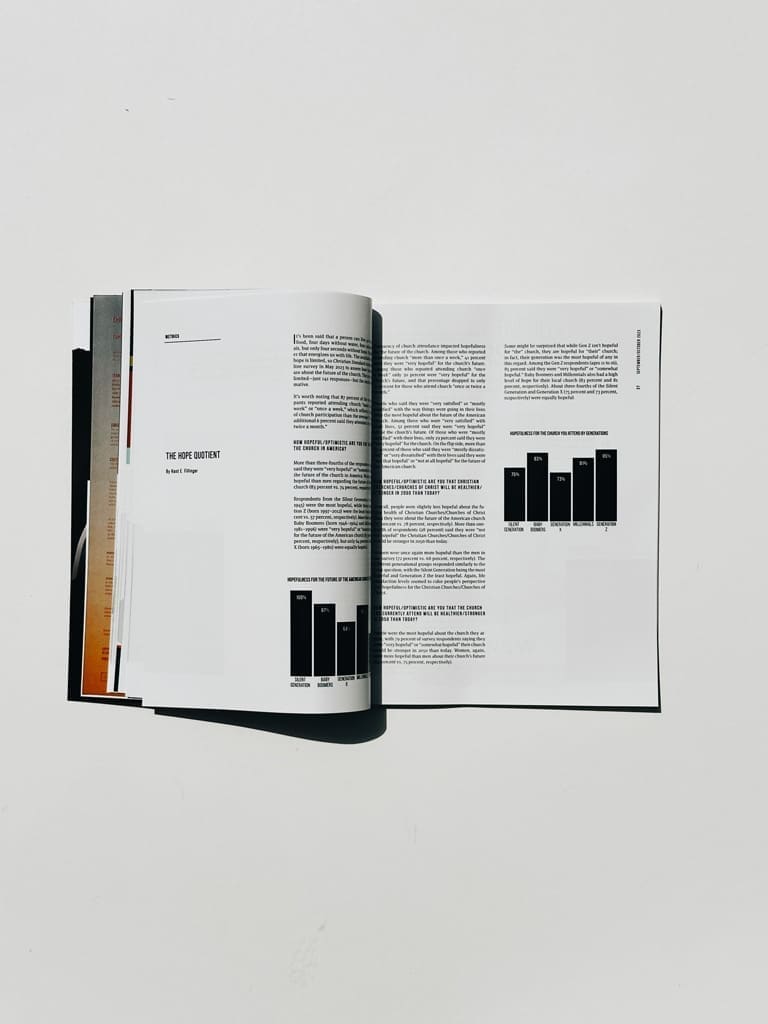
The Hope Quotient

The Hope Quotient

By Kent E. Fillinger  It’s been said that a person can live 40 days without food, four days without water, four minutes without air, but only four seconds without hope. Hope is a power that energizes us with life. The available research on hope is limited, so Christian Standard conducted an online survey in May 2023 to assess how hopeful people are about the future of the church. The survey size was limited—just 141 responses—but the results were informative.   It’s worth noting that 87 percent of the survey participants reported attending church “more than once a week” or “once a

Start-up AI Platform Aims to Help Pastors Make the Most of Their Sunday Sermons

Some laud the potential of artificial intelligence to make life easier for everyone. Some fear how AI could be misused. But like it or not, it’s here—and one company is looking to bring it to the church. Michael Whittle, a California entrepreneur and lay pastor, is the founder of Pulpit AI, a soon-to-be-released platform designed to help pastors make the most of their weekly sermons. . . .

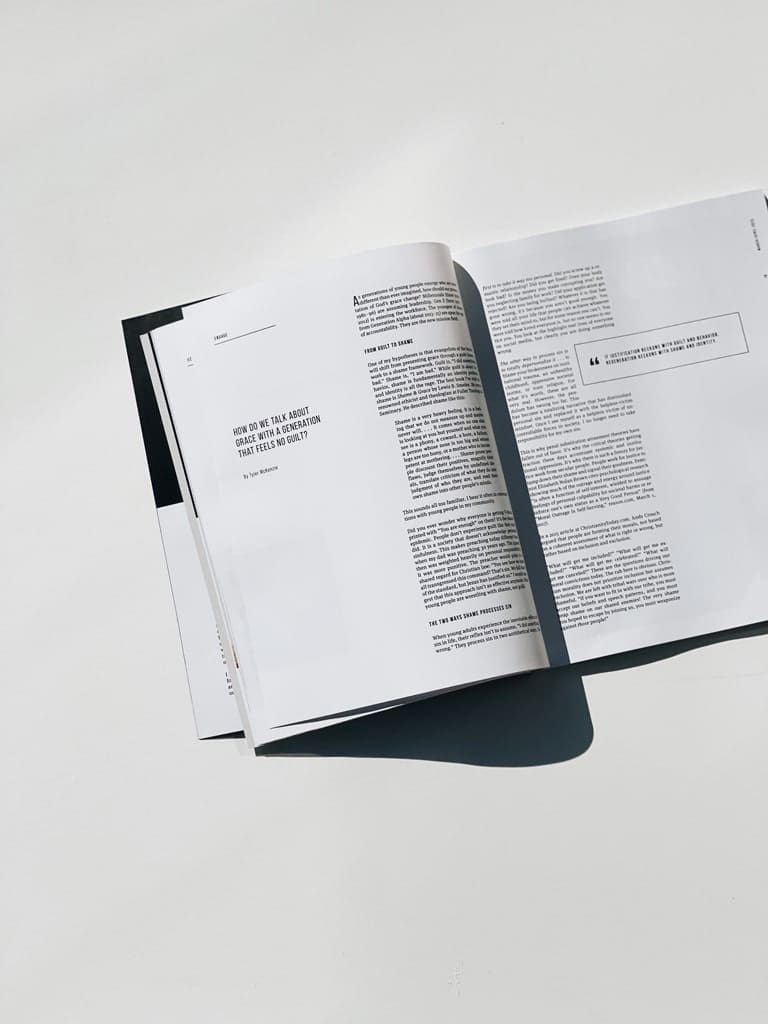
How Do We Talk About Grace with a Generation That Feels No Guilt?

How Do We Talk About Grace with a Generation That Feels No Guilt?

By Tyler McKenzie  As generations of young people emerge who are more different than ever imagined, how should our presentation of God’s grace change? Millennials (those born 1981–96) are assuming leadership. Gen Z (born 1997–2012) is entering the workforce. The youngest of those from Generation Alpha (about 2013–25) are upon the age of accountability. They are the new mission field.  From Guilt to Shame  One of my hypotheses is that evangelists of the future will shift from presenting grace through a guilt framework to a shame framework. Guilt is, “I did something bad.” Shame is, “I am bad.” While guilt

Megan Rawlings

You Can Get Young Adults Involved in Your Women’s Ministry!

By Megan Rawlings Women’s ministry has a nebulous reputation. Whenever I say those two words together, women’s ministry, I get different reactions depending on the audience. I despise overgeneralizations, but I will make one here. People in Generation Z (those born 1999–2015) and millennials (1981–1998) nearly gag when the mere idea of women’s ministry surfaces in conversation. Am I coming on too strong? Have a chat with a few women in those generations and see for yourself. I don’t think it needs to be this way. After studying the situation for the last few years, I have five suggestions that

Megan Rawlings

The Quest for Authentic Identity

By Megan Rawlings “Tell me about yourself.” There was a long, long pause. “Well,” she finally said, “I’m a 2.” “A 2?” I asked. “Yeah, on the Enneagram. It’s this test that tells you who you are and so much about yourself . . .” This conversation and others like it spurred me on to contemplate the emotional and mental state of young adults in our country. Although I cannot speak for the masses, in my experience, millennials (those born 1981–1998) and Generation Z (born 1999–2015) are longing to find their identity and purpose. There appears to be a chasm

Kent E. Fillinger

The Future of Evangelism, Missions, and the Church

The headline “51% of Churchgoers Don’t Know of the Great Commission” from a Barna report in March 2018 caught my eye and caused me great concern. The report said that for 25 percent of churchgoers, the term “Great Commission” sounded familiar, but they could not remember the meaning of it. Only 17 percent of churchgoers said they had heard of the Great Commission and knew what it meant. Although not even half of any age group knew the term Great Commission well, the youngest adult generation was the least likely to recognize it. Only 10 percent of millennials (those born

A WARNING FROM EPHESUS . . . And Jesus’ Solution for When a Church Loses Its First Love

By Tyler McKenzie The Ephesian church was a first-century megachurch that had everything, and then, by all historical accounts, lost everything. Ephesus was the sort of city Paul liked to target: a hub of culture and a place of notoriety. He knew if he could plant the gospel in Ephesian “soil,” it would spread. Ephesus was a major commercial center—three trade highways ran through it—it was a port town, and it was tourist hub. One of the seven wonders of the world, the temple to the goddess Artemis, was located there. Some estimate the city’s population at a quarter-million people—massive

Six Reasons Your Church Needs a Mobile-Giving Option

By David Dummitt IBM created the first smartphone in the early 1990s, but it was Apple’s release of the first iPhone in 2007 that effectively changed the world at large. Fast-forward to today and approximately 81 percent of people in America own a smartphone. The world has literally moved into the palms of people’s hands. The advent of smartphones over the past quarter century has revolutionized the way people prefer to learn, shop, and, yes, give. While many churches are embracing financial technology in new ways and are experiencing the positive impact on congregational generosity, many churches in America continue

Kent E. Fillinger

"This Is for All the Lonely Boomers"

By Kent E. Fillinger “OK Boomer” is a new social media catchphrase that is becoming popular with many people younger than 40. In the Washington Post, Holly Scott defined the phrase as “a jab from the young to the old, a collective eye-roll at the out-of-touch judgments baby boomers pass on the tastes, values and lived experiences of millennials and Gen Zers.” Generational divides and derision are nothing new. Ironically, when boomers (those born between 1946 and 1964) were young adults, many said you can’t trust anyone over the age of 30. In my June 2019 Metrics article, I asked,

December 17, 2019

Kent E. Fillinger

Kent E. Fillinger

‘I’ll Be (Living at) Home for Christmas’

By Kent E. Fillinger This Christmas, you might be looking forward to your adult children returning home. Or maybe they’re home already. A Pew Research Center report found that 15 percent of millennials (ages 25 to 37) were living at home in 2018, nearly double the rate of older baby boomers when they were in that age range. In fact, a smaller percentage of people in the rising generations are checking off the four major life events that historically have signified “adulthood”: leaving home, getting married, becoming a parent, and getting a job. And the percentage of adults in the

Young People in Ministry: Invest, Invest, Invest

By Emily Drayne As a child, when I heard the word missionary, I envisioned an elderly lady sitting around a fire talking about Jesus to unreached peoples. Now, eight years into my job working with missionaries, I know that’s not (always) the case. Kendi’s Cows of Grace is a great example. Kendall Grace Kemerly visualized her mission when she was 8 years old. I’m not sure what you were doing at that age, but I was playing with Barbies and Cabbage Patch dolls. Purchasing livestock wasn’t on my radar. It’s key to note that no one pooh-poohed Kendi’s idea simply

Kent E. Fillinger

Is Your Church Ready for Generation Z?

By Kent Fillinger It might seem hard to believe, but the millennial generation is approaching middle age! The oldest millennials will turn 38 this year, which means they were entering adulthood before today’s youngest adults were born. Many researchers and demographers are now shifting their attention from millennials to generation Z to learn more about them. Researchers quibble about when the millennial generation ends and generation Z begins—the years range from 1996 to 2002—but a Pew Research Center article from January indicates people in the two age groupings aren’t all that different. Here’s the article’s headline (so judge for yourself):

Taking a Break: Reevaluating the Post-High School Path

By Emily Drayne Education is crucial for success in life, but many students just graduating high school, and any number of students already studying at college, have no clear goal or plan for the next 30 to 40 years . . . or even the next 5. Are there other paths available besides a four-year college program? If you know someone who is about to graduate high school or who is struggling for direction in college, a new program starting up later this year might prove a good alternative. I am a millennial (born between 1981 and 1996), and it

Kent E. Fillinger

How Changing Shopping Trends Affect the Church

By Kent Fillinger Eight of the 10 biggest shopping days of the year occur in December. The other two take place in November. Sales spike in December at retail stores, online stores, and even grocery stores. Based on my research, church attendance also spikes during December due to special events and Christmas Eve services that attract more people than any other time but Easter. Despite a strong economy and low unemployment, the retail industry is undergoing a major repositioning as legacy stores and brands that were once customer favorites fall victim to shifting consumer demands. Stores like Nine West, Toys

Generations in Missions: Don’t Count Me Out!

By Emily Drayne  An older missionary might say, “They’ll never understand how we did it.” A younger missionary might complain, “They’re so old school.” It’s a generational issue that’s probably been around forever. Leaders err, however, when they count out those from other generations simply because of age, style of doing the job, or lack of “experience.” In missions and in ministry, it seems, there are two ways to do the job. There’s the way it’s been done for years, and then there’s the way new leaders with new ideas are doing it. So how can we carry out our

Intergenerational Small Groups: Mix It Up a Little!

By Jessie Clemence I invite you to peek inside our kitchen on a small-group night. Four baby boys and a preschooler are strapped into various high chairs around the table. Three young fathers are trying to assemble dinners for their offspring while a mother nurses a newborn in the living room. The room smells heavily of tacos and mushed-up baby food. Four older adults work side by side with the young mothers, feeding babies and sneaking cookies to toddlers when their parents aren’t looking. A pile of Bibles is stacked on the coffee table for the upcoming study, but only

5 Things You Need to Know about the 5-Generation Church

By Haydn Shaw I was recently in a church talking with a room full of baby boomers (those born 1946–64) and millennials (born 1981–2001) who wanted to understand how to build community across generations. They realized that people tend to socialize with others of their own generation before and after the worship services, and they wanted to know how they might bridge the differences. They wondered if they should have intergenerational small groups. The boomers and millennials want to spend more time together, but their different life stages create practical challenges. For instance, many baby boomer small groups enjoy big

Help Keep Christian Standard Free & Accessible with a Tax Deductible Donation

We can do more together!

Every gift makes a difference!

No, thank you.
100% secure transactions - receipts provided.
Does Your Church Want to Support Christian Standard?

Would your church consider including support for Christian Standard in its annual missions budget? Your support would help us not only continue the 160-year legacy of this unifying ministry, but also expand the free resources, cooperative opportunities, and practical guidance we provide to strengthen churches in the U.S. and around the world.

We can do more together!

Every gift makes a difference!

No, thank you.
100% secure transactions - receipts provided.
Secret Link