Articles for tag: Rural Ministry

Changing Our Church to Change Our Community: The South Fork Story

By Bob Hightchew How do you change an unhealthy church culture without any pain? How do you make necessary biblical changes without upsetting people? You can”t. If we are to serve the kingdom, we will have to fight some battles. The battle is worth it, though, if the process helps move a church to better health. I”ve learned this firsthand over the course of the last 20-plus years. South Fork Christian Church in Verona, Kentucky, has been an easy congregation for me to love. Our pews are filled with kind, generous, and loving individuals. However, when I arrived, the church

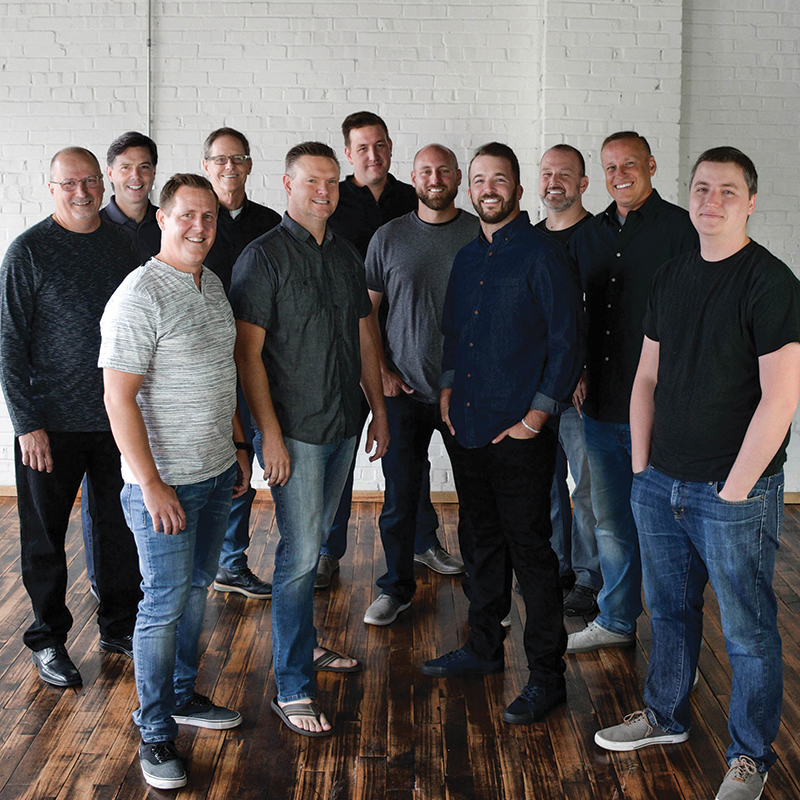
Rural Church Planting: A Conversation with Pastor Jerry Harris

By David Dummitt Last month I had the opportunity to speak with Eric Metcalf in Chicago about the unique opportunities and challenges of urban church planting. But across America, millions of people live outside of metropolitan areas, and so I wanted to explore similar questions from a rural perspective. As I considered who could speak candidly and with authority on the subject of rural church planting, Jerry Harris, senior pastor of The Crossing, a multisite church located in three states across the Midwest, immediately came to mind.    Jerry, how do you measure the health and success of a rural

September 21, 2017

Jerry Harris

A Church for Forgotten Places

By Jerry Harris Forgottonia . . . would you believe it”s a real place? The place is real but the name was more of a publicity stunt. It was adopted by 14 counties in west-central Illinois that were intentionally neglected by the state and federal government with regard to interstates and rail service in the early 1970s. Without interstate highway access, the region was denied decent transportation for commerce as other towns and cities benefitted from them. Businesses and not-for-profit entities dried up or left the area and calls for fair treatment with tax dollars for infrastructure fell on deaf

September 19, 2017

Michael C. Mack

Common Threads Woven Throughout

This month we focus on the rural church and rural ministry . . . but what exactly is rural, and how are rural areas different from small towns or micropolitan communities? Before you read other stories in this issue, be sure to read “A Salute to Small Towns, Rural Areas, Micropolitan Communities: Our Attempt at a Glossary of Terms.” It takes many threads to weave a beautiful church, and I noticed four prevalent threads in many of the articles this month. And, while this issue is about rural ministry, I think these threads are important regardless of where your church,

The Engine that Powers Our Progress

The Vital Difference Between a Church that Prays and a Praying Church By Derek Dickinson I thought planting a new congregation in Fairbanks, Alaska, was a terrible idea. The winters are brutal. It occasionally hits 50 degrees below zero! In the winter, it”s a place of darkness, with only four hours of sunlight per day. This “terrible idea” wasn”t mine, thankfully, but God”s. I was so opposed to planting a congregation here that I fasted from all solid foods for 30 days on two occasions and prayed that I could plant somewhere else. But God”s answer was clear: I was to be

A Salute to Small Towns, Rural Areas, and Micropolitan Communities (Our Attempt at a Glossary of Terms)

By Kent Fillinger and Jim Nieman This issue of Christian Standard focuses on ministry in the lesser-populated regions of our country, but defining terms associated with our nation”s nonmetropolitan areas is surprisingly difficult. For instance, a town of fewer than 2,500 with a singularly dense pocket of population has what the U.S. Census Bureau classifies as an urban component. And a metropolitan county””defined as an urbanized area by the Census Bureau when 50,000 or more people live there””usually has at least one rural section. In 2010, in fact, only 29 counties in the United States were completely urban. By contrast,

An Inside Look at Urban, Suburban, and Rural Communities and Churches

By Kent Fillinger To reflect the themes this month and next””urban ministry and rural ministry, respectively””I”ve written a two-part article that captures the present realities for both and adds some insights on suburban areas as well. I”ve examined our recent church survey data and other relevant research to identify notable differences and national trends for each type of ministry location. I don”t intend to proclaim one location type as better than another, but rather to share some commonalities and differences based on research findings and facts from the larger story taking place in our country. My goal is to help

The New Face of Rural Ministry

Roachdale Christian Church has been faithful to its mission for 129 years. Over that time, it has seen its share of preachers come and go, but lately the church is looking a whole lot younger!  Since starting, the church building has been located on the same corner in Roachdale, Indiana, a sleepy little town of just over 900 in the middle of Indiana cornfields, about an hour west of Indianapolis. A circa 1888 white clapboard building was replaced in 1924 by a larger brick structure. An educational wing was added in the 1960s, and in the “90s, a worship center

Large Church . . . Small Town?

By Jim Estep It”s easy to understand why small towns have small churches. We can visit a town of 3,500 and find several congregations with fewer than 100 people in each. In fact, some would say that small towns like small churches. Bristow, Iowa, for example (population 160), boasts of having “The Smallest Church in Iowa.” One can readily explain a large church being in a large city. Finding a church of 1,000 in a city of 200,000 people””that”s reasonable. Most megachurches are in “mega” cities. But, what happens when we encounter a church of 1,200 in a town with

The Peculiar Duty of Pastoring

By Patrick Mitchell When I entered a conversation with a dear friend that morning at Milligan College”s exercise facility, I never would have thought that within a few months I would be pastor of a 125-year-old church in a town that boasts a population of approximately 1,000. While still chugging along on the elliptical machine, Phyllis asked if I would consider helping fill the pulpit of a rural church in our area while it searched for a pastor. You should know that at that point in my life (I was then 30 years old), I was done with church ministry.

The Test

By Marion Duckworth My husband, Jack, our two young sons, and I drove 3,000 miles from New York to the state of Washington to begin our first assignment as rural missionaries. Since the community had no church or parsonage, we”d be living in a tiny cabin in the woods with an outhouse “down the path.” Upon arrival, we discovered the cabin was dominated by two voracious, wood-chomping stoves, one in the kitchen and the other in the tiny living room. The steps leading to the second floor were Bunyan-sized. But it was the sight of the metal bunk beds where

Leading Young

By Will Thomas Young ministers can overcome the challenges that have faced them since Paul wrote Timothy. I understand Timothy”s predicament. “Don”t let anyone look down on you because you are young,” the apostle Paul encouraged (1 Timothy 4:12). Timothy was a preacher and in all likelihood younger than most of the people in his church. Been there, done that. I had just turned 19 when I began serving as a minister. I had preached a fair number of sermons as a teenager in my home church and had always been a motivated student of the Bible. But suddenly, a

Enlarging the Vision of Rural Preachers

By Jennifer Johnson “Small towns are getting smaller,” says Jim Hardy. “And the churches in these areas are getting smaller, as well.” Hardy founded the Center for Rural Church Advancement at Nebraska Christian College to encourage and equip the leaders of rural churches in Nebraska and beyond. The new initiative includes a series of two-day events in conjunction with The Barjona Company; Chad Hunt founded the company after growing Caveland Church from 150 to 750 people in the small town of Cave City, KY. A four-session series of these “strategic roundtables” is spread over two years, and groups are kept

Interview with Ron Payne

By Paul Boatman   For 46 years Ron Payne has served as minister with the 173-year-old Ingraham (Illinois) Christian Church.   How did nearly a half century of ministry with one church begin? When I was a Bible college freshman, I was asked to fill in [at Ingraham] until they found a preacher. They never found one, so I”m still here.   Was there anything about the church to predict such a long ministry? Since 1839, only the founding minister, Mr. Ingraham, stayed longer than four years. The 16 preachers who served before me stayed an average of just 11

Feed My Sheep

By Bill D. Hallsted The dream came again that night. It was always the same dream, with minor variations. In the dream, I was asked by some friends to care for their animals while they were gone. I don”t remember whether the dream even included why they were gone, or for how long. What was clear was my failure. The request, or my agreement, was not at all foreign to my experience. With my background in ranching, it was natural. I knew how to take care of animals. I was also the preacher. Who better to ask for a favor

LARGE-SIZED CHURCHES: A Church Planting Hick from French Lick

A Church Planting Hick from French Lick By Kent E. Fillinger Jasper, Indiana, is not likely on your bucket list of places to visit. If you are like me, you need the help of MapQuest to even find it. And Jasper also isn”t the type of town a typical church planter or church planting organization would pinpoint for a new church. But Darrel Land is not your typical church planter. At age 26, he was confident God was calling him to plant a church in this small, rural community of 14,000 people in southern Indiana. Land grew up about 30 minutes

Interview with David Bycroft

By Brad Dupray Tyro, Kansas, is a city of 250 people with a post office, a secondhand store and a church: Tyro Christian Church. David Bycroft started preaching at the church as a weekend minister in 1969 while a junior at Ozark Christian College in Joplin, Missouri. After graduation he was called by the church to preach full time and he has been leading Tyro Christian ever since. David”s wife, Kathy, grew up in the Tyro church and was baptized there in her youth. David and Kathy recently celebrated their 40th wedding anniversary. Their three children are involved in local

Mega Ministry in Miniature Actions

By Mike Cahill The kingdom rarely comes as we expect. Jesus” humble beginning was a stumbling block for some because power does not normally come from weakness. Yet, Christ”s kingdom advances through surprisingly simple means. Smallness is big in Scripture. Jesus uses the smallness of a mustard seed as the pattern for potential in the kingdom””from a tiny seed to a great tree, from a handful of disciples to a kingdom spread over all the earth. When disciples act within God”s will, the power of his kingdom is shown through their lives. The results look like mountains moving or””a picture

Land of Opportunity

By Barney Wells, Ron Klassen, and Martin Giese     Newcomers and long-term residents of rural communities may misunderstand and disagree with each other. When this happens, the local church suffers. This issue of CHRISTIAN STANDARD examines why the two groups sometimes clash””and suggests how to ease the friction. After the introduction on these pages, you”ll find an extended article examining the differences in perspective usually held by those in these two groups. For the purposes of this discussion. Agrarians are those who have always lived in the country. Cosmopolitans are newcomers moving into rural areas from diverse walks of

Country Folks and Cosmopolitans

By Barney Wells, Ron Klassen, and Martin Giese   Newcomers and long-term residents of rural communities may misunderstand and disagree with each other. When this happens, the local church suffers. This issue of CHRISTIAN STANDARD examines why the two groups sometimes clash””and suggests how to ease the friction. After the introduction on these pages, you”ll find an extended article examining the differences in perspective usually held by those in these two groups. For the purposes of this discussion. Agrarians are those who have always lived in the country. Cosmopolitans are newcomers moving into rural areas from diverse walks of life.

Secret Link