Unbroken

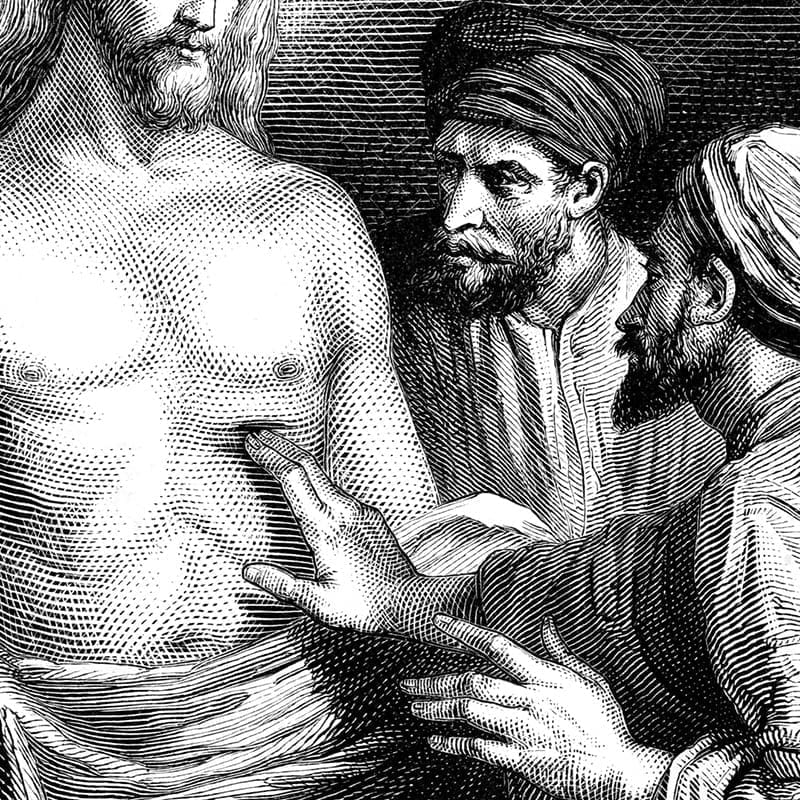
By Beau Bruton Sometimes people talk about the “broken body” of our Savior, Jesus Christ. As horrible as what Jesus went through, to say his body was “broken” is incorrect when taken literally. The Bible describes specifically what happened shortly after Jesus died: Because the Jewish leaders did not want the bodies left on the crosses during the Sabbath, they asked Pilate to have the legs broken and the bodies taken down. The soldiers therefore came and broke the legs of the first man who had been crucified with Jesus, and then those of the other. But when they came

Communion Commotion

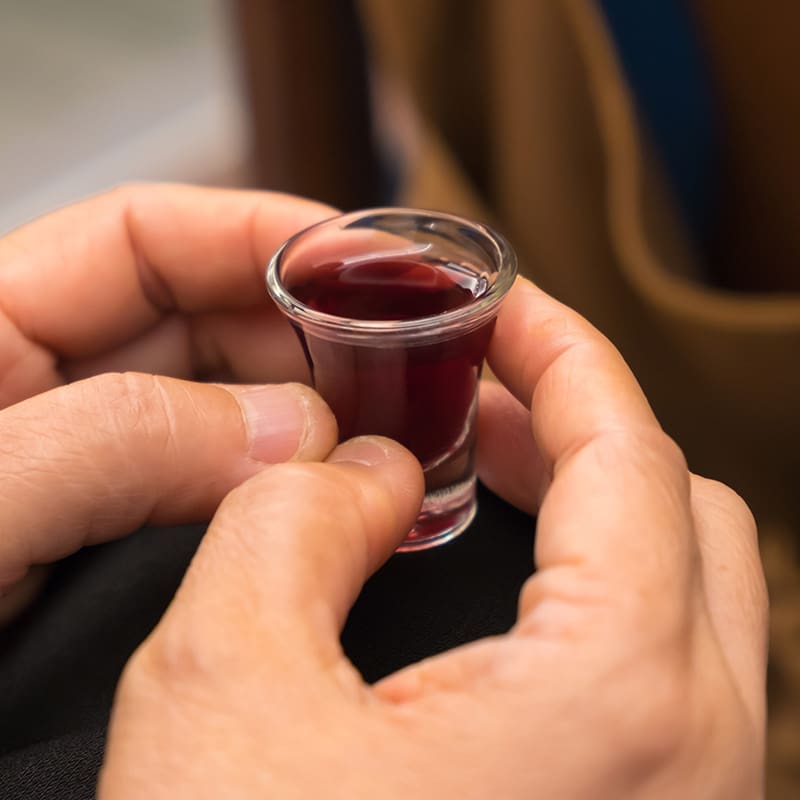
From After Class Podcast A kerfuffle at First Church of Christ these last few months shows no signs of abating. During a study on Communion in the early church, the congregation learned that first-century Christians took Communion as part of a community meal at their regular gatherings. First Church, which is committed to restoring the New Testament pattern of worship, now has a potluck each Sunday after church. At about the midpoint of the meal, participants pause to remember the body and blood of Christ by sharing broken bread and the fruit of the vine. Though it has been well

Remembering Jesus: Bread, Cup, and Fellowship of Believers

By Stuart Powell When Christians gather to partake of the bread and the cup, we have one key focus: remembering Jesus. Our Lord instructed his followers to do this. “Then he took bread, and after giving thanks he broke it and gave it to them, saying, ‘This is my body which is given for you. Do this in remembrance of me’” (Luke 22:19, New English Translation). Most of us celebrate Communion in a comfortable, modern building, but have you considered how our setting compares to those of earlier generations? Paul offers a clue to this in his second letter to

A Mirror in the Manger

(This Communion Meditation originally appeared in our issue from December 26, 2004.)   By Lee Magness But when the time had fully come, God sent his Son, born of a woman, born under law, to redeem those under law, that we might receive the full rights of sons (Galatians 4:4, 5). The scene is a sparse hill in ancient Judea, not far from Jerusalem. Nearby is a cave. Jesus wears one meager garment. Mary watches, wondering what it all means. A man stands by, not the father of Jesus, but the one who will care for her. Beneath Jesus are

A Sign and a Prediction, Both Fulfilled

(This Communion meditation originally appeared in our December 1, 1998, edition.)   By Kent Fillinger The year was 734 BC. King Ahaz of Judah was under attack by the countries of Syria and Ephraim, which were trying to dethrone him. In order to encourage King Ahaz, God told King Ahaz to ask Him for a sign. When the ruler asked, God said, “Therefore the Lord himself will give you a sign: The virgin will be with child and will give birth to a son, and will call him Immanuel” (Isaiah 7:14, New International Version). “Immanuel” means “God with us.” This

The Lord’s Supper Puts Us in Our Place

By Tom Claibourne If there was ever a place to be filled with humility, it is at the Lord’s table. It is not a place for judgmental comparisons, selfish pride, or spiritual arrogance. The Lord’s Supper puts us all on the same level by putting each of us in our place. The simple emblems ordained by Jesus remind us why he died. They call us to reflect on the apostle Paul’s stunning acknowledgment: “Christ Jesus came into the world to save sinners—of whom I am the worst.” The Lord’s table prompts us to confess, “I am as well.” The Lord’s

He’s Right Here

By Mandy Smith  Outsiders watching Christians take part in the Lord’s Supper over and over might feel sorry for us. We take a tiny piece of bread and a tiny sip of juice and remember someone who had a real meal with his friends a long time ago. It might seem foolish or sad that we keep doing this. “Jesus is gone,” they might say. “Move on.” But they don’t know what we know. We know that when Jesus left, he promised he would never leave. It’s a strange truth, but it’s what he said. Although he stopped walking around

Awaiting a Wedding Feast

By Mandy Smith First Corinthians 11:26 says: “For whenever you eat this bread and drink this cup, you proclaim the Lord’s death until he comes.” So simply by taking this bread and juice today, we remember and retell the story of Jesus’ death, every time, over and over again. We keep telling the story as we eat the bread and as we sip the juice. We tell it to ourselves as we taste it and we tell it to each other as we do it together. Christians have been doing this for thousands of years, and Christians will do this

Everyday Objects—Eternal Truths

By Joe Harvey Have you ever noticed the way Jesus took the most ordinary objects and attached extraordinary meaning to them? He talked about good seed and bad soil and the next thing we know, he challenges the receptivity of our hearts to the message of God. He talked about weeds to confront our priorities and treatment of others. He talked about catching fish, and he ended up calling his disciples to preach and teach the good news of God’s Messiah come. Over and over again, Jesus used everyday objects to teach eternal truths. When significance is added to the

A Meal That Reminds Us

By Jon Wren In the last chapter of John’s Gospel, Peter and John, among other disciples, encountered the resurrected Jesus early in the morning on a beach at the Sea of Galilee. Their meeting with him was the culmination of what surely had been a strange and confusing period of time. After spending years following Jesus through small villages and large cities, watching him heal the sick and the demon-possessed, hearing him teach and preach, and even watching him die on the cross, these disciples were sitting with Jesus on a quiet beach . . . and the Lord had

A Passover Meal to Remember

By Rick Chromey It’s so easy to forget. Most often our memory fades with time. We forget how we felt. We forget details and even reasons. Our memory of something can become jaded, biased, foggy, or lost. Sometimes our memory is damaged by age. It’s not that we want to forget, but rather, we simply can’t remember. God understands the peril of human forgetfulness. Our minds sometimes need a little jogging through a metaphor, object lesson, or visual cue. Sometimes we need to re-create the experience. The ancient Passover meal was something God used to remind the Israelites of their

Love’s Welcome

By Jackina Stark How do you come to the Lord’s Table? Surely sometimes we come weary and troubled, and we are comforted when we remember Jesus’ words, “Come to me, all you who are weary and burdened, and I will give you rest” (Matthew 11:28). Maybe you don’t think of those words of comfort, however, if the source of your weariness is the weight of sin—that is, something that is not beyond your control. Has anyone come to the table today having had a fit this week, cussing a blue streak? Has anyone come having been greedy, the very antithesis

A Family Feast

By Dick Wamsley It is significant that Jesus instituted what we today call Communion or the Lord’s Supper at Passover, a traditional Jewish family feast. Every element of the Passover meal was designed to remind the Jews of the bitterness of slavery their ancestors suffered in Egypt and their deliverance from the tenth plague, the angel of death that passed over the land killing every firstborn male. Jesus used this sacred supper of remembrance as a teaching moment for his disciples and to institute a memorial service that the church has observed for more than 20 centuries. He turned just

Archaeologists Unearth the Centrality of the Table

By Jim Nieman The discovery of a floor to what might be the earliest-known Christian church seems to confirm that early Christ followers came together around a table to celebrate the Lord’s Supper. In 2005, prisoners unearthed a 580-square-foot mosaic floor with three inscriptions likely dating to the third century. One of the inscriptions speaks of a table “offered . . . to God Jesus Christ as a memorial.” The mosaic floor was discovered within a prison holding 1,200 Palestinian inmates, in Megiddo, on a hill overlooking the Valley of Jezreel—“the place that in Hebrew is called Armageddon” (Revelation 16:16).

The Communion Distinctive: Drama of the Gospel

By Mark Scott   In the middle of the second century, Justin Martyr gave an account of the weekly worship of Christians. And on the day called Sunday, all who live in cities or in the country gather together to one place, and the memoirs of the apostles or the writings of the prophets are read, as long as time permits; then, when the reader has ceased, the president verbally instructs, and exhorts to the imitation of these good things. Then we all rise together and pray, and, as we before said, when our prayer is ended, bread and wine

Proclaiming His Death

By Dick Wamsley “For whenever you eat this bread and drink this cup, you proclaim the Lord’s death until he comes” (1 Corinthians 11:26). TCM (Taking Christ to Millions) is an international training institute in Austria, where theological graduate students from countries in eastern Europe, Russia, the Middle East, and central Asia converge for concentrated study to help them reach their people for Christ. One student at the institute describes how the church he serves in one of those closed countries observes the Lord’s Supper each week. The adults meet at an appointed time each week at a restaurant for

At a Friend’s Table

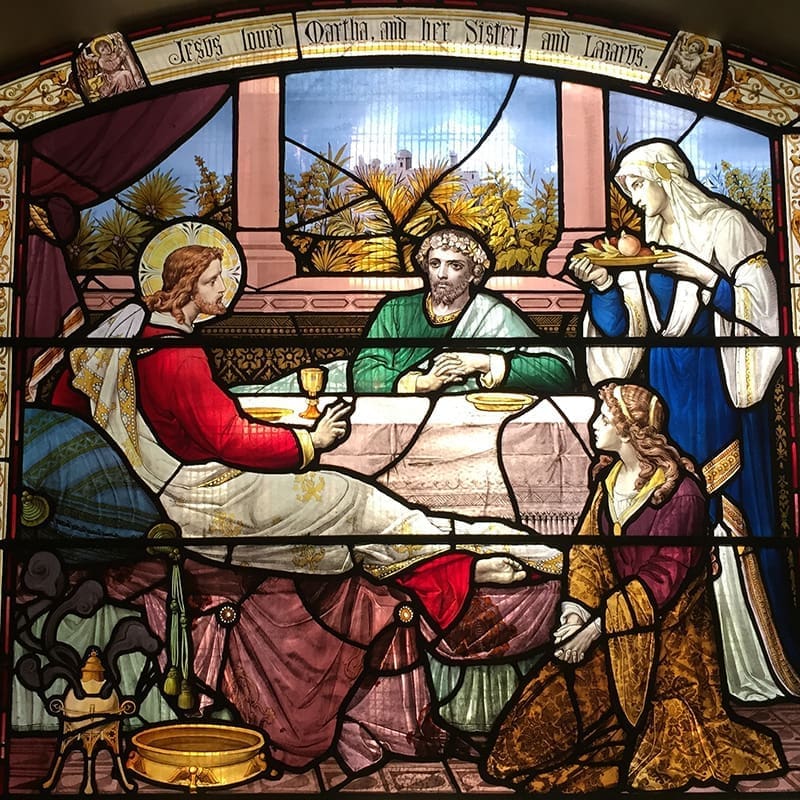
By Ronald G. Davis  Few experiences are as pleasant and satisfying as sitting at a friend’s table for a simple meal. Jesus had that experience on a number of occasions. At the home of Lazarus, Mary, and Martha, as recorded in John 12, it appeared to be especially delightful for him. That meal was, in a certain sense, a funeral luncheon prepared by a congregation for a dearly beloved member of the family. (Read John 12:1-3.) Only, on that occasion, the “dearly beloved” was still alive and present. Though the food prepared by Martha was no doubt delicious and nutritious,

Beautiful in God’s Eyes

By Jim Nieman Zion National Park in southern Utah is a true wonder to tour and explore. As with so much of Utah, Mormon settlers named the area, and the name they chose aptly befits the beauty of the park. Zion can mean a place or refuge or sanctuary, or utopia, or Heaven. They felt that being in Zion brought them close to God. Christians can appreciate the names given to the various sandstone rocks, peaks, and formations in the park. Names like Cathedral Mountain, Angels Landing, Castle Dome, the East Temple and West Temple, the Great White Throne, and

Discerning the Body

By Marsha Relyea Miles  If you were to worship with tribal Jesus followers in the jungle of Papua New Guinea, you might find yourself sitting on a rough-hewn log rather than a comfortable pew or chair. The typical church building has a thatched roof, woven bamboo walls, a dirt floor, and “windows” that are open to the jungle (no glass or screen); the church is graced with calls of tropical birds and shaded by giant palms and lush foliage.   Imagine this setting . . . the sultry, equatorial breeze wafts in, carrying with it the sweetness of exquisite rainforest flowers.

Ordinary Sacredness

By Mandy Smith We know Jesus instituted the Lord”s Supper during the Passover feast, which Jews have celebrated for generations. Passover is an annual festival remembering God”s salvation of his people from slavery in Egypt. Like all celebrations of annual holidays, it takes much preparation and is a turning point of the calendar. So, as good Jews, Jesus and his disciples prepared and celebrated this feast together. But Jesus knew this Passover would be different from all he”d celebrated before, because he knew his death was imminent. The food is a central part of the Passover feast, but so are

Help Keep Christian Standard Free & Accessible with a Tax Deductible Donation

We can do more together!

Every gift makes a difference!

No, thank you.
100% secure transactions - receipts provided.
Does Your Church Want to Support Christian Standard?

Would your church consider including support for Christian Standard in its annual missions budget? Your support would help us not only continue the 160-year legacy of this unifying ministry, but also expand the free resources, cooperative opportunities, and practical guidance we provide to strengthen churches in the U.S. and around the world.

We can do more together!

Every gift makes a difference!

No, thank you.
100% secure transactions - receipts provided.
Secret Link