Come to the Table

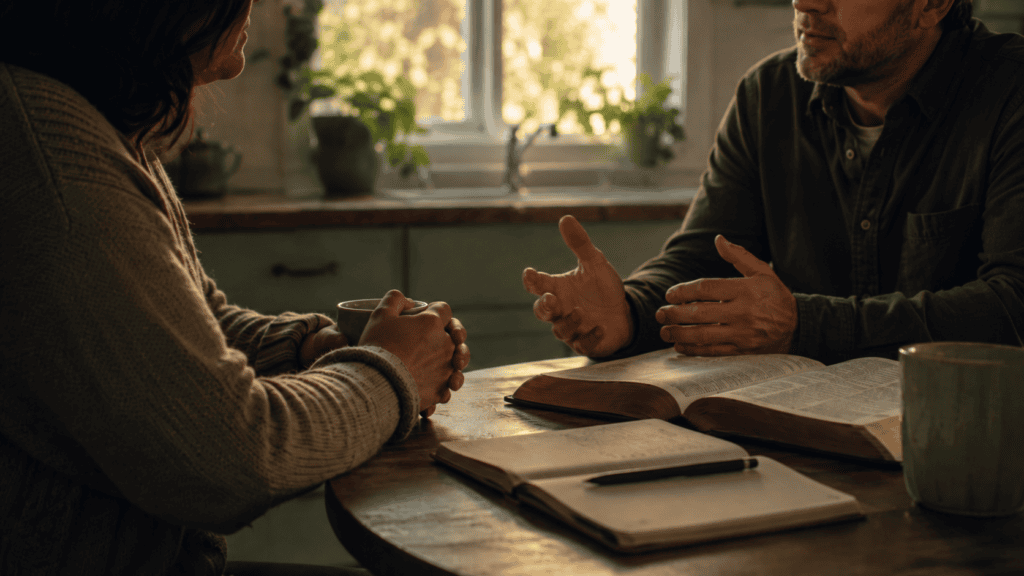
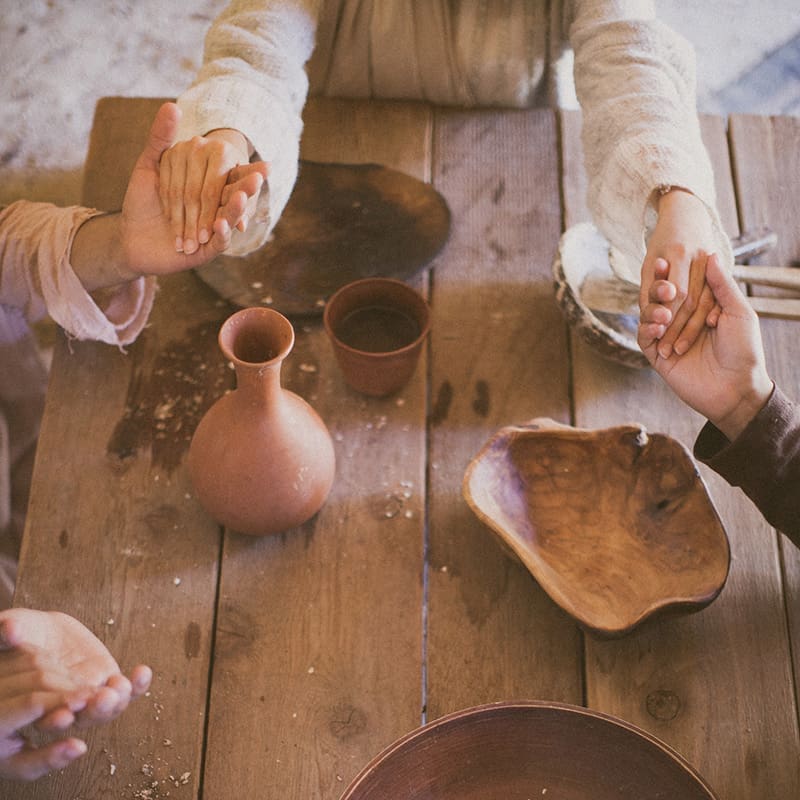
By Mandy Smith The phrase “come to the table” can mean gathering to find understanding, as in meeting to discuss how to solve a problem or end a disagreement. Lawyers “come to the table” to reconcile quarreling spouses. Warring nations “come to the table” to discuss how to end the fighting. We often think of reconciliation in these legal and political ways. But what if the table were not in an office or a war room? What if, instead of a conference or strategy table, it was a dinner table, groaning under the weight of a sumptuous feast? We often
Sinners and Saints

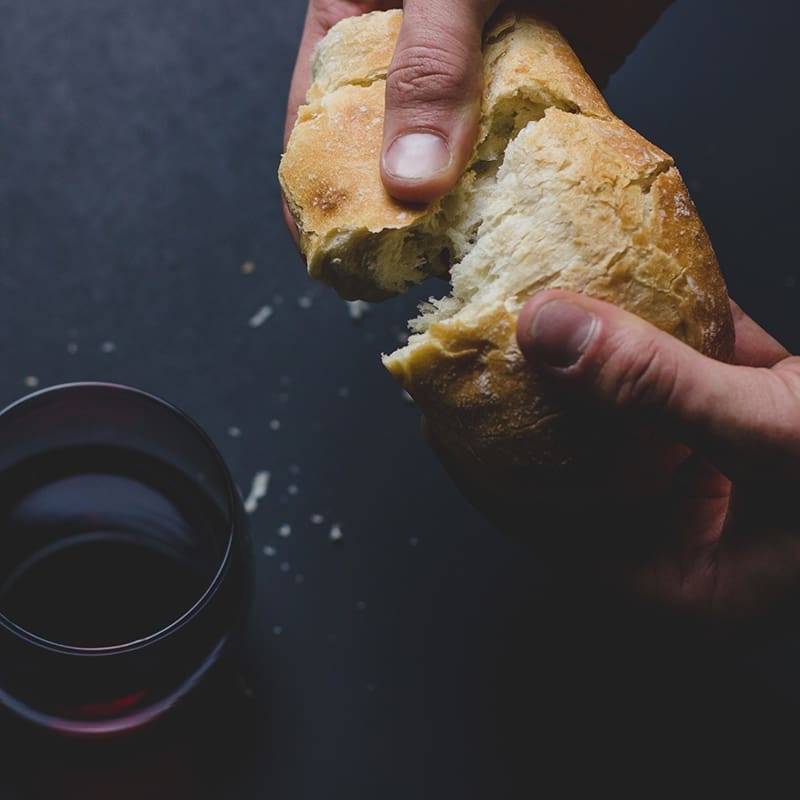
By Diane Stortz Are you a sinner or a saint? If you come to Communion today as a believer and disciple of the Lord Jesus Christ, the answer is that you are both. God gave the Passover observance to his people as a memorial under the old covenant. Passover was a time of remembering and celebrating from generation to generation how God led the Israelites, with a mighty hand, out of slavery in Egypt and into freedom. The blood of a perfect lamb on the doorpost of every Israelite home protected and saved God”s people as the angel of death

What It Means to “˜Examine”

By Randy Gariss The Lord”s Supper is about celebration. After all, the meal points to the love of Christ, forgiveness of sins, the coming of the kingdom, and other wonderful repercussions of the cross. Yet, in the midst of the joy there is another imperative from Paul, one with more sobering overtones. We are each told to “examine” ourselves. Therefore, whoever eats the bread or drinks the cup of the Lord in an unworthy manner will be guilty of sinning against the body and blood of the Lord. A man ought to examine himself before he eats of the bread

Communion with You

By Randy Gariss If the idea of a one-person wedding seems bizarre, so too does the idea of personal Communion. There are many things in the Christian life you can do on your own. You can study, pray, fast, sing, worship, and serve all by yourself. But why is there not even a hint in Scripture about taking the Lord”s Supper alone? When Christ initiated Communion, it was in a group (Matthew 26). When Communion is described in the book of Acts, it is in a group (Acts 2:42). The same is true in 1 Corinthians. A study of Scripture

In Remembrance of Me

By Becky Ahlberg Do you remember your first Communion? The first time you held the bread and cup and accepted the invitation to this table offered by the Lord himself upon your baptism and commitment to him? How old were you? Where were you? Who else was there? For some of us, that moment was decades ago; for some others, it might be this very day. For all of us, it is a call to remembrance. We”re called to remember our commitment. We”re called to remember our community here in this place and to remember Christians around the world. And

Amazing Love!

By Becky Ahlberg One of the universal truths we consider when we gather around the Communion table each week is to remember the amazing love of God. “This is love: not that we loved God, but that he loved us and sent his Son as an atoning sacrifice for our sin” (1 John 4:10). God incarnate showed his love in his willingness to bear the shame, endure the cross, and be the bridge that brings us back into relationship with him. All these things are illustrations of his indescribable love. One of the first Scriptures most of us memorized is

Eucharist

By Daniel Schantz “Enter into His gates with thanksgiving, And into His courts with praise” (Psalm 100:4, New King James Version). Eucharist is a term for the Lord”s Supper that means “to give thanks.” Giving thanks is something like a digital password to the presence of God, perhaps because it represents humility. When someone does something wonderful for me, I must acknowledge it before I do anything else. Imagine you are attending a Super Bowl. You have good seats and the stands are full. The game is a nail-bitter to the end, but whenever there is a touchdown, no one stands,

See the Body

By Diane Stortz A young woman visited a service and was surprised by how Communion was served. The elements representing Jesus” body and blood were placed on tables around the perimeter of the room, and worshippers got out of their seats and walked to one of the tables. Some people ate the bread and drank the juice right at the tables. Some took the elements back to their seats for reflection and prayer. Some people stayed seated and prayed awhile before they went to one of the tables. Still others picked up the bread and juice and then gathered as

And When He Had Given Thanks

By Ron Davis One of the curious elements of the Passover Jesus shared with his apostles in the upper room, as recorded in Luke 22:14-20, is the comment, “he gave thanks.” Thanks? For what exactly? Jesus is hours away from being arrested, cruelly abused, and murdered in humiliation. And he knows it full well. Thanks! For what? For the material elements themselves? A simple “loaf” of unleavened bread, the commonest of food, better suited to fill a stomach than to nourish. The drinkable juice of a plant that grew clusters so large and plentiful and of which some shriveled on

“˜When They Had Sung a Hymn”

By C. Robert Wetzel We often look to the Gospel of Matthew for an account of the institution of the Lord”s Supper. It is here that we read, While they were eating, Jesus took bread, and when he had given thanks, he broke it and gave it to his disciples, saying, “Take and eat; this is my body.”Â Then he took a cup, and when he had given thanks, he gave it to them, saying, “Drink from it, all of you. This is my blood of the covenant, which is poured out for many for the forgiveness of sins” (Matthew 26:26-28).

A Memorable Communion

By C. Robert Wetzel On his third missionary journey, Paul had arranged to rendezvous with some of his coworkers at Troas. Arriving there, he stayed for several days so he could meet with the church. He knew they would be meeting on the first day of the week to observe the Lord”s Supper. The meeting proved to be surprisingly eventful (Acts 20:7-12). I wonder how the people at Troas remembered Paul”s visit? “That was the longest sermon I ever heard,” recalled one man. “Far too long,” said the mother of Eutychus. “I know the boy should not have gone to

The Vertical and the Horizontal

By C. Robert Wetzel There is both a vertical and a horizontal dimension to the Lord Supper. In a spiritual sense, we are looking up as we once again focus our thoughts on the gift of God in the sacrificial death of our Lord Jesus Christ. As we eat the bread we remember his words, “This is my body, which is for you; do this in remembrance of me” (1 Corinthians 11:24). And as we drink from the cup we hear his words, “This cup is the new covenant in my blood; do this, whenever you drink it in remembrance

Wordless Groans at the Lord”s Table

By C. Robert Wetzel “We do not know what we ought to pray for, but the Spirit himself intercedes for us through wordless groans” (Romans 8:26). We often find our congregations preparing for the Lord”s Supper with an appropriate Communion hymn followed by a meditation that helps us focus on the meaning of this sacred event. This is followed by what some call the “words of institution,” such as the words of the apostle Paul in 1 Corinthians 11:23-26. The presiding elder then offers a prayer of blessing over the bread and cup. As we partake, we focus our thoughts

Come to the Table

By Jim Tune Claudia and I enjoy our annual trek to Cape Breton Island for summer vacation. Our cabin is at least six hours away from the nearest independent Christian church. There are very few churches in this remote part of Nova Scotia, and the few that can be found are all part of mainline denominations. At best these churches offer Communion quarterly, making it very easy to miss Communion entirely if the date for it doesn”t fall during our stay. I find myself keenly aware of its absence during our visits to the local Anglican church. I”m grateful to

Bless the Hands

By Nancy Karpenske When my family gathers at the dinner table, it is common for the designated prayer person to pray, “Lord, thank you for the hands that prepared this meal.” Those would be my hands they are talking about. Sometimes fixing dinner has taken hours, chopping, mixing, stirring, grating. Occasionally my hands smell like the onion I chopped, or they are scratched from picking raspberries. But quite often my hands have merely pushed the buttons on the microwave or flipped the switch on the Crock-Pot in order to produce a satisfying meal. I like to cook and bake. But

Bring It to the Table

By Nancy Karpenske “Bring it to the table.” You might hear the phrase in any one of several settings. A project manager where you work might say, “Bring it to the table.” He means you have an idea or a concern that should be examined and discussed. Until a problem is “brought to the table,” it can”t be solved. The Lord”s table is a safe place. You can bring your messiness and brokenness. You can bring your problems and worries. One of the most comforting descriptions of Jesus (although originally offered as a criticism) was, “He eats with sinners.” Sometimes

Empty/Full

By Nancy Karpenske A cup, a gas tank, a bank account, a house, even a heart can be described as empty. Typically when something is empty, the implication is it”s not worth very much, or it is waiting to be filled. Philippians 2:7 says Jesus emptied himself of godly power. He emptied himself of godly glory. The Message says, “He set aside the privileges of deity and took on the status of a slave.” That emptying process looked like this: He humbled himself, he showed up on earth as a human, he accepted the role of a servant, he obeyed

The Menu

By Chuck Sackett The menu””dated 2 April 1912″”offered a choice of consommé mirrette, sweetbreads, spring lamb, and braised ham. When the menu went to auction in 2004 (92 years after the actual meal) it was expected to produce a record sale for Titanic memorabilia. It did, selling for 51,000 pounds. The original menu was sent from Ireland by Fifth Officer Harold Lowe to his future bride, Ellen Whitehouse. Lowe figured as one of the heroes the night of April 14, 1912. He was responsible for filling a number of life rafts with women and children, actually using his pistol to

Where Everyone Is Equal

By Chuck Sackett Ellie sat in the third row, left-hand side of the worship center. Ellie was from the wrong side of the tracks. Her clothes were not the best, and sometimes not the cleanest. She didn”t always clean up well, especially at first. But she was there, every Sunday. Ellie didn”t always eat well. Many of her meals in years past had been served from the Dumpster side of restaurants. Even now she had few dishes and little money for food. Actually, she wasn”t that good of a cook. The Binghams sat in that same row. They might have

We”ve Waited All Week

By Chuck Sackett Edgar Nichols spent his final years serving in Boise, Idaho. He used to enchant his students at Boise Bible College with stories of crossing the Himalaya Mountains from Tibet to India, or induce tears telling of his family leaving him alone in India for months as he recovered from tuberculosis Having spent years as a missionary to the people of Tibet India, Ghana, and Hawaii, Nichols commanded a hearing every time he stood to speak. One Sunday morning at First Church of Christ in Boise, he stood tentatively at the Communion table. His then feeble voice was

Help Keep Christian Standard Free & Accessible with a Tax Deductible Donation

We can do more together!

Every gift makes a difference!

No, thank you.
100% secure transactions - receipts provided.
Does Your Church Want to Support Christian Standard?

Would your church consider including support for Christian Standard in its annual missions budget? Your support would help us not only continue the 160-year legacy of this unifying ministry, but also expand the free resources, cooperative opportunities, and practical guidance we provide to strengthen churches in the U.S. and around the world.

We can do more together!

Every gift makes a difference!

No, thank you.
100% secure transactions - receipts provided.
Secret Link