
Why I’m Optimistic About the Future of Christian Higher Education, and Why You Should Be Too
The public may have lost confidence in higher education more generally, yet I believe we may be entering another golden era in Christian higher education.
Ministry Training & Education equips current and future church leaders with practical, Bible-based preparation for lifelong service. Explore resources on theological training, ministry skills, mentoring, leadership development, and building healthy learning pathways for pastors, elders, staff, and volunteers. You’ll find guidance on discipleship models, teaching and communication, ministry internships, and developing teams—so training is both spiritually formative and mission-focused. Whether you’re pursuing formal education, leading an in-house training program, or coaching emerging leaders, these articles help you grow in competence, character, and faithful ministry.
The public may have lost confidence in higher education more generally, yet I believe we may be entering another golden era in Christian higher education.
January 1, 2026
A healthy children’s ministry should thrive even when its primary leader isn’t in the room. That’s why succession planning is essential.
December 22, 2025

The history of Colegio Biblico began in 1945 when Harland Cary (1916-2014), a man of principle and commitment to the Lord, dedicated himself to serving the Lord as a missionary to Mexico.
November 6, 2025
It comes down to this: Do you care? Do you value lost people? Do you have the same compassion for them that Christ had for you (John 3:16; Romans 5:8)?
RENEW.org is offering a Certificate in Theology (CIT) program that can offer transfer credits to students who desire to pursue Bible college or university degrees.
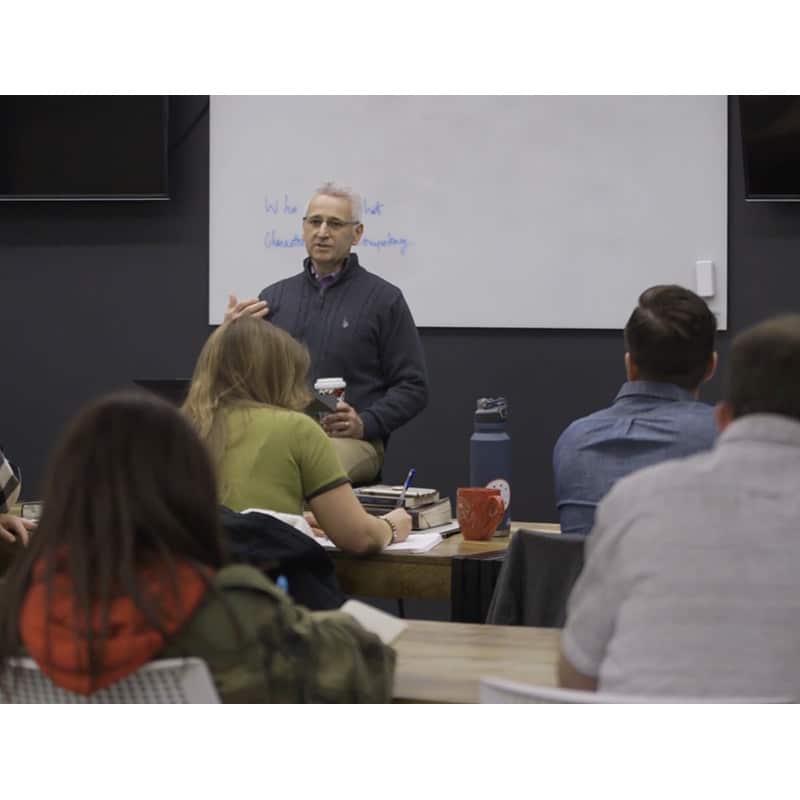
Southeast Christian Church's 215 Residency program—which gives residents firsthand ministry experience along with a deep dive into biblical study and spiritual formation—has recovered and grown since COVID-19.

Restoration Movement colleges struggle to produce enough ministry graduates to meet the growing need for pastors. College presidents explain why.

By Kevin Stone Since the beginning of our church in Pennsylvania, staffing has been among our biggest challenges. There is a continuous, ever-increasing need for people to lead stuff! As we all know, without a constant flow of good people, it’s very difficult to grow. Hiring from the Outside Your church has a leadership need, so you go to an outside recruiting firm for help. You know the process—you write a position description and start the search. I wish it were that simple. Our desire to prevent theological drift requires that we recruit from within the tribe, so to speak. And finding

In a world where traditional Bible colleges and universities face many challenges, what options (and opportunities) are emerging for theological and ministry training . . . and how do they stack up?

As Katie Hughes made her way to her car at the end of another long school day, she reflected on her day in the classroom. After years of studying to become a teacher like her mom and other family members, she felt disappointed and exhausted in her student-teaching experience. The more time she spent in the classroom, the more she questioned her decision to become an educator. Was this really what God had planned for her? A New Plan Katie talked with her parents and began to take an inventory of the gifts and interests God had given her. She

A ministry friend recently worked with the Slingshot Group, a church staffing firm, to find a new ministry, and they told him he was one of 19,000 candidates they were helping. I imagine this represents people from a multitude of denominations and backgrounds, as well as those seeking a variety of church ministry roles. Either way, it’s clear there’s a sizable number of people currently in ministry who are looking for something different or somewhere new to serve. But what does the future “preacher pipeline” look like based on who’s leading our Christian churches today? A Long-Term Look at Lead

Alyeska . . . Keystone XL . . . Colonial. Each is a commercial pipeline, and each has a unique crisis in its story. Alyeska is the Trans-Alaska Pipeline System, which now transports less oil than in years past. Keystone XL is the pipeline that was once under construction from Alberta, Canada, south to Nebraska; it has now been officially shut down. The Colonial Pipeline made news recently when it was the victim of a ransomware attack that completely shut down its oil flow. Similarly, we face a crisis in the local church, and it has everything to do with

I am thankful for my time in Bible college. I enrolled at Ozark Christian College in the fall of 1976 and while there I developed lifelong friendships, a greater understanding of the Scriptures, and a deep love for preaching. Don DeWelt was my homiletics professor, and every class was memorable. That course provided me with a better understanding of how to preach, and it awakened my love for preaching. But it wasn’t just my homiletics class, it was also the opportunity to hear great preachers in chapel services and at special events. I learned about preaching with passion by listening

Jesus said much about the church’s leadership pipeline. In fact, he initiated it. Without it, the church’s proliferation from “Jerusalem . . . to the ends of the earth” would be impossible. And while we have few examples of how the original 12 apostles developed future leaders, we know they must have by how quickly the church expanded. The Bible describes in much greater detail the apostle Paul’s leadership pipeline—the individuals he discovered, developed, and deployed as well as the instructions he gave them to do the same. Two millennia later, however, Jesus’ church is facing a leadership pipeline problem.

How One Church Is Equipping Young Adults for Ministry Without the Financial Burdens of Pursuing a Four-Year Degree By Kim Harris In 2019, 45 million young adults in the United States held more than $1.5 trillion in student debt, or more than $33,000 per debt holder, Forbes.com reported. Students are graduating with four years of knowledge and many more years of debt. Seminary and Bible college students are no exception. In 2011, roughly 25 percent of individuals graduating with a master of divinity left school with more than $40,000 in student debt (according to BusinessInsider.com), but could expect to earn

By Jeff Green His size 9½, wingtip leather shoes sit in a glass case in the library named for him. L. Palmer Young, the third president of Kentucky Christian University, was a preacher first. He followed in his dad’s footsteps, preaching for more than 69 years. The shoes serve as a reminder of the need for more preachers. Wally Rendel, who preached Palmer’s funeral, asked, “Who’s going to fill his shoes?” Where will the next generation of preachers come from? The Situation The church has constantly been challenged to find replacements in vocational ministry, especially in preaching. A forensic expert
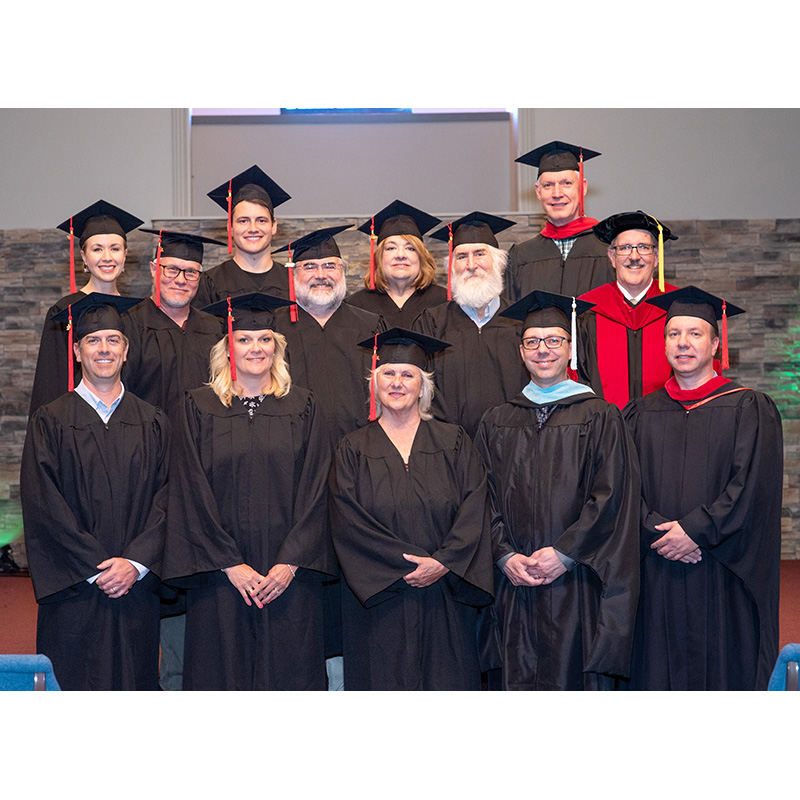
By Chris Moon Four years into its existence, the Merold Institute is looking toward the future. The ministry of Harvester Christian Church in St. Charles, Mo., began primarily as a place to help mold the church’s key volunteers and existing and incoming staff—to give them the biblical and theological training lacking in many ministry workers who were unable to attend Bible college or seminary. During its short existence, the institute named for Ben Merold, Harvester’s former senior minister (who continues serving as a teaching pastor), has largely accomplished that goal. Many of the church’s staff and volunteers have earned certificates

By Melissa Wuske “I’m the grandson of a preacher,” says Daryl Reed, “so I always had it in my mind that it’d be cool one day to be a preacher.” When it came time for college, however, “I really didn’t want to go to any preaching school or seminary, because . . . I thought I was still too cool for that,” he laughs. This isn’t a story about youthful overconfidence, though; Reed was following the example of earlier generations of his family, and now he’s helping subsequent generations of young people live it. “My grandfather was a reluctant preacher,”
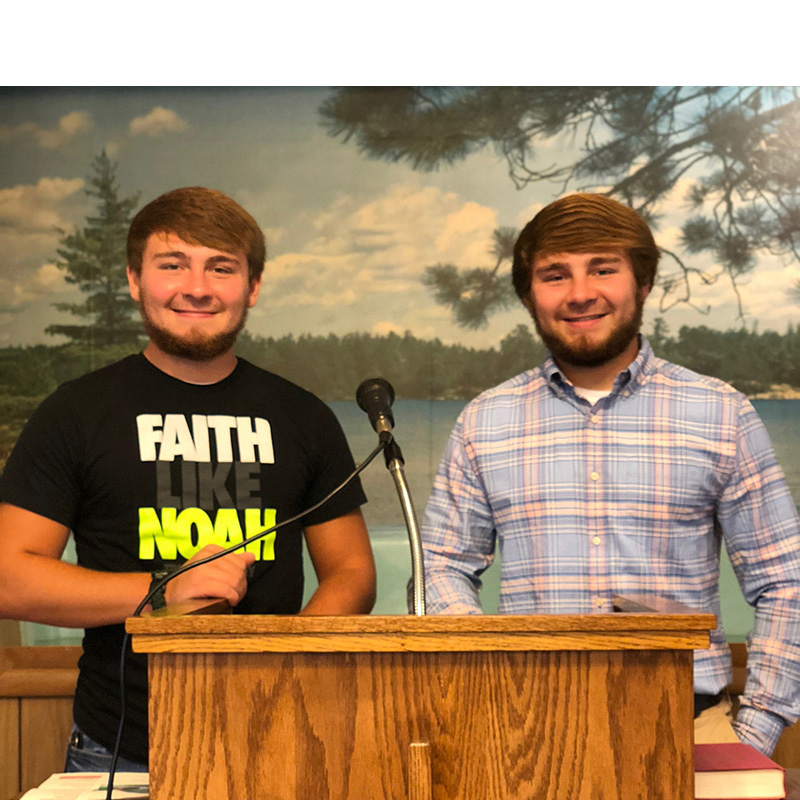
By Jim Nieman High school seniors who attend Peterstown (W.Va.) Christian Church didn’t hesitate when asked if they would be willing to fill the pulpit at a nearby church. Of course they would. And so, since the beginning of the year, these five young men, plus another who is already attending college, have been serving in a preaching rotation at the Church of Christ at Lerona (W.Va.). “I have a fantastic group of teenagers,” says Don Henegar, who has taught the high school Sunday school class most of the 16 years he has served as evangelist with the Peterstown church.
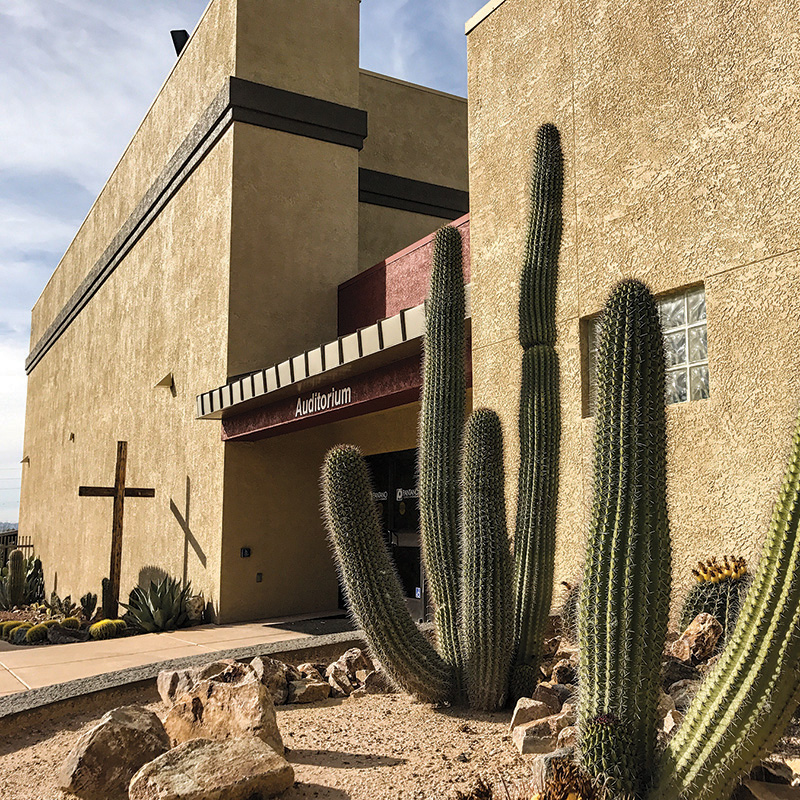
By Jennifer Johnson Several of the Restoration Movement”s largest churches have created internship programs, some that involve entire cohorts of students and work with colleges and universities for academic credit. “Those are wonderful opportunities for students, and we love what those churches are doing,” says Becki Kern. “But we decided our niche would be a more customized program that works one-on-one with each individual. With that goal in mind, we launched the Reveal Residency in 2014.” Kern, who serves as campus launch pastor and director of Reveal at Pantano Christian Church, Tucson, AZ, designed the program to work with people
March 27, 2026
Rick Cherok
March 27, 2026
David Empson

March 27, 2026
David Faust