July 1, 2024
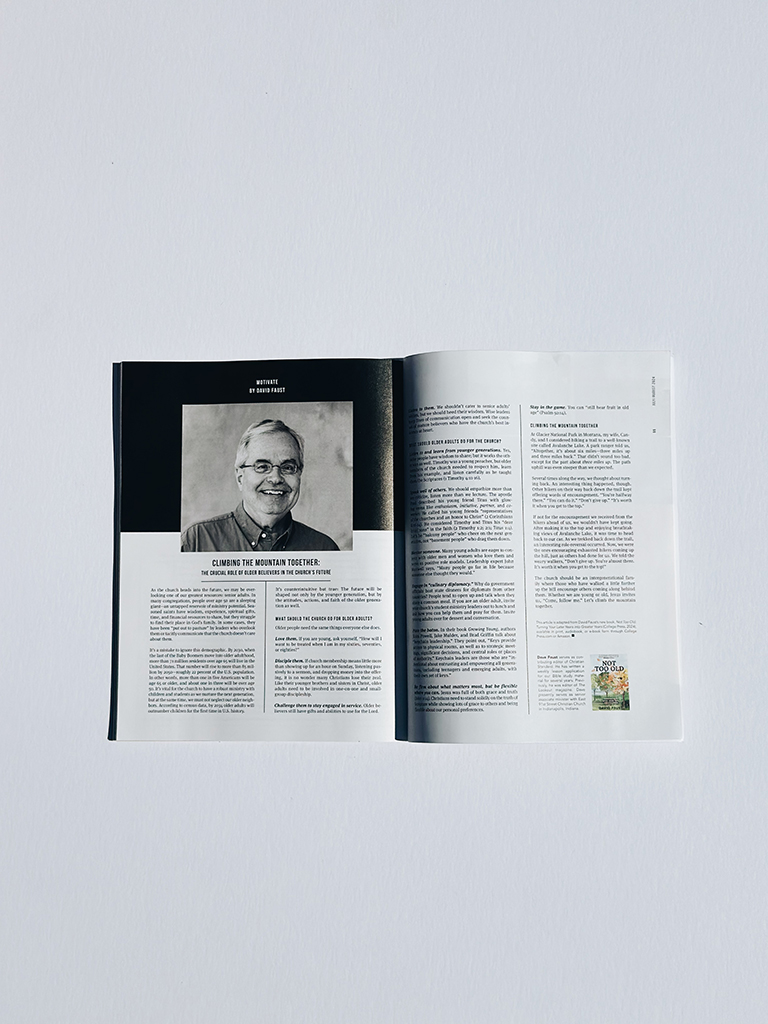
Climbing the Mountain Together
As the church heads into the future, we may be overlooking one of our greatest resources: senior adults. . . .
July 1, 2024
As the church heads into the future, we may be overlooking one of our greatest resources: senior adults. . . .
April 23, 2024
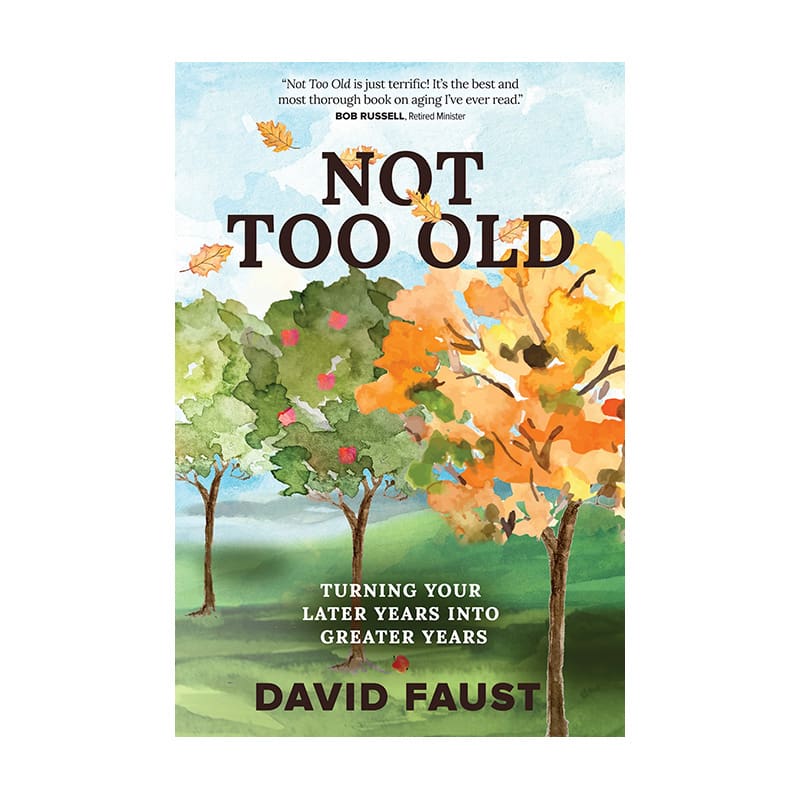
In his new book, "Not Too Old," Christian Standard contributing editor David Faust explains how "your later years can be greater years." In the book, David encourages readers to continue to "bear fruit in old age" (Psalm 92:14) . . .
September 1, 2023

By Kent E. Fillinger It’s been said that a person can live 40 days without food, four days without water, four minutes without air, but only four seconds without hope. Hope is a power that energizes us with life. The available research on hope is limited, so Christian Standard conducted an online survey in May 2023 to assess how hopeful people are about the future of the church. The survey size was limited—just 141 responses—but the results were informative. It’s worth noting that 87 percent of the survey participants reported attending church “more than once a week” or “once a
February 13, 2023
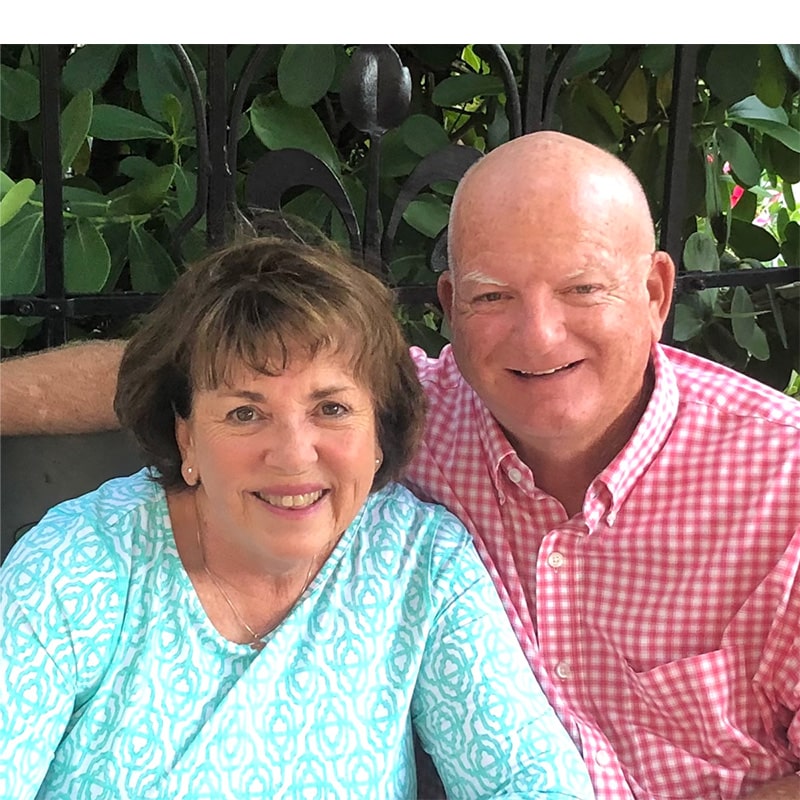
There was only so much pickleball Tom Jones could play in retirement. The longtime executive director of Stadia Church Planting recently was hired by NewThing—a church-planting organization founded by Jones’s longtime friend Dave Ferguson—to serve as the group’s director of development.
September 1, 2021

American generational history is defined by marker events. Terrible assassinations. Catastrophic disasters. Tragic failures. Bloody wars. Economic depressions. From Bunker Hill to Gettysburg to Vietnam, America has been shaped by Thomas Paine’s “the times that try men’s souls.” For those born in the last half of the 20th century, no event proved more horrific than the terrorist attacks on September 11, 2001. That moment was our generation’s “Pearl Harbor.” In its wake came transformational change in how America socialized, worked, learned, played, and churched. In telephone vocabulary, 9-1-1 is an emergency assistance call. So it’s strangely fitting that September 11,
October 24, 2020

The headline “51% of Churchgoers Don’t Know of the Great Commission” from a Barna report in March 2018 caught my eye and caused me great concern. The report said that for 25 percent of churchgoers, the term “Great Commission” sounded familiar, but they could not remember the meaning of it. Only 17 percent of churchgoers said they had heard of the Great Commission and knew what it meant. Although not even half of any age group knew the term Great Commission well, the youngest adult generation was the least likely to recognize it. Only 10 percent of millennials (those born
January 29, 2020
By Kent E. Fillinger “OK Boomer” is a new social media catchphrase that is becoming popular with many people younger than 40. In the Washington Post, Holly Scott defined the phrase as “a jab from the young to the old, a collective eye-roll at the out-of-touch judgments baby boomers pass on the tastes, values and lived experiences of millennials and Gen Zers.” Generational divides and derision are nothing new. Ironically, when boomers (those born between 1946 and 1964) were young adults, many said you can’t trust anyone over the age of 30. In my June 2019 Metrics article, I asked,
April 25, 2019

By Michael C. Mack With apologies to Abraham Lincoln (and John Wycliffe, who, it’s said, actually originated the phrase I’m referencing), Christian Standard is produced by different generations of people, with different generations of people, and for different generations of people . . . to equip and encourage people to make disciples of and effectively lead different generations of people. The Christian Standard team consists of three millennials (born 1981–2001): operations manager Renee Little and designers Megan Kempf and Abby Wittler, and four baby boomers (born 1946–1964): publisher Jerry Harris, managing editor Jim Nieman, contributing editor Shawn McMullen, and me.
January 29, 2019
By Kent Fillinger Since transformation is a main theme of this issue, I decided to explore three trends that are reshaping culture and will likely re-create the look and feel of our churches. My goal is not to stir up controversy but to change the questions we are asking in order to spark new conversations among church leaders. The Single Situation “Half of Americans ages 18 and older were married in 2016, a share that has remained relatively stable in recent years but is down 9 percentage points over the past quarter-century,” according to the article “8 Facts about
October 19, 2018
By Haydn Shaw The traditionalists (those born before 1945) were loyal to the churches they grew up in—or at least, if relocating, they were loyal to their denomination. Certainly some traditionalists left one church for another when they became upset, but they were the last generation to largely stay put within the same church. The boomers (born 1946–64) introduced church hopping and it has stunted spiritual growth as much as anything the past 50 years. I realize this is a bold claim, so let me back up and explain two things that have changed and how they led to church
May 25, 2018
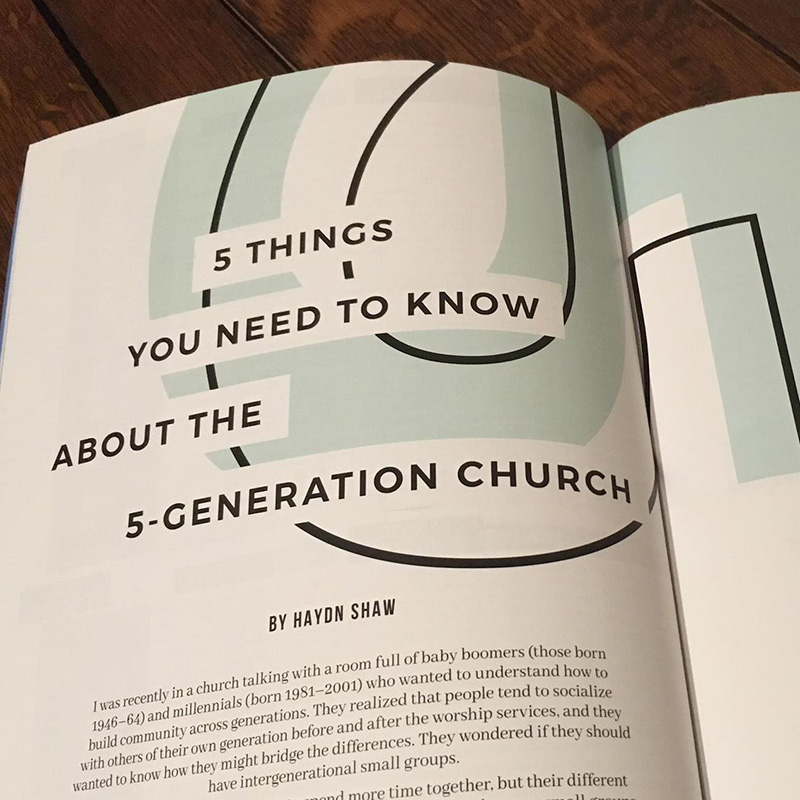
By Haydn Shaw I was recently in a church talking with a room full of baby boomers (those born 1946–64) and millennials (born 1981–2001) who wanted to understand how to build community across generations. They realized that people tend to socialize with others of their own generation before and after the worship services, and they wanted to know how they might bridge the differences. They wondered if they should have intergenerational small groups. The boomers and millennials want to spend more time together, but their different life stages create practical challenges. For instance, many baby boomer small groups enjoy big
January 14, 2018
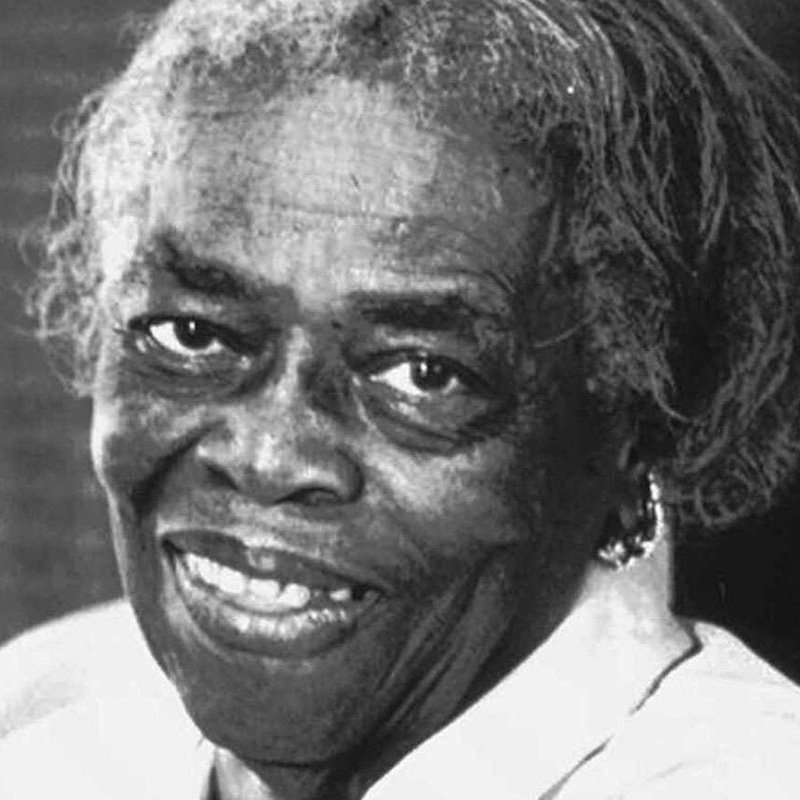
By Haydn Shaw People now live 30 years longer than they once did. In 1900 the average life span was 48; today it’s 78. But as people live longer—for which we’re all grateful—it presents new challenges that previous eras didn’t face. In previous eras, there were only three generations. The oldest generation had the money and made the decisions, and the younger generation of adults raised the children and did what the older generation asked them to until their parents died, and then their turn came to be in control. Changes in families and churches came slowly and naturally, with
September 8, 2017

By Haydn Shaw My writing collaborator and I put together most of my book Generational IQ while occupying a corner table at a local Smashburger restaurant. We spent so much time there that the entire staff got to know us. One afternoon, the manager, Veronica, asked how the book was coming along. She said she reads business books, so we talked about my first book, Sticking Points. When I told her Generational IQ was a look at the spiritual lives of the generations, she lit up and told us her grandmother was a devout Catholic. Her mother had been raised
June 20, 2017

By Haydn Shaw Churches have three main options for reaching millennials (those born 1981″“2001). When I consult with churches, I usually recommend the first, and sometimes the second, but never the third because it”s the one that doesn”t work. Option 1: Change the church now This is the best option for most churches. It”s important to hear what people who never grew up in the church have to say, so research is invaluable (my Generational IQ book is one resource, but there are many other helpful generational resources). Since 30 percent of the unchurched used to go to church, don”t
March 29, 2017
By Jim Tune I keep coming across articles about millennials. Most of them are written by millennials (those aged 20″“35) about why they”re done with church. A recent article advised churches to start listening to millennials, to ditch vision and mission statements, to stop preaching at people, to disclose on the church”s website how every dollar is spent, and more. “Decide if millennials actually matter to you and let us know,” it concluded. “In the meantime, we”ll be over here in our sweatpants listening to podcasts.” Articles like these make some valid points. Many millennials aren”t part of a church.
February 25, 2017
By Bob Mize Their needs are outpacing our resources. But the church can help. Four decades ago, Frances Schaeffer, in How Shall We Then Live?, forecast that the next throwaway segment of our society (after aborted babies) would be the elderly by euthanasia. Physician aid-in-dying, or assisted suicide, is now legal in the states of Washington, Oregon, California, and Vermont. Schaeffer”s gloomy prophecy has become reality. The elderly are becoming viewed as a dispensable segment of society. Christians should work to make sure this doesn”t occur. This devaluation of our seniors is serious, but equally concerning is that their needs
September 1, 2016
By Jennifer Johnson For years I”ve heard that Grandma Moses began her acclaimed painting career at age 78. I always rolled my eyes when older people (that is, older than me) quoted that fact, assuming it somehow comforted them to think their own chance for “significance” hadn”t passed them by. Then I turned 40 and began seeing more people posting more lists of leaders and celebrities who had started their most successful ventures later in life: Henry Ford, who created the Model T at 45. Julia Child, who wrote her first cookbook at 50. Ray Kroc, who took charge of
June 6, 2016
By Eddie Lowen With changing times has come fresh interest in leadership. That”s good, because a constantly evolving culture demands regularly rethinking how we lead. If there is a field of study that has been reclaimed or reincarnated by baby boomers, it is leadership. When I entered ministry, leadership wasn”t a hot topic. There were a handful of leadership books and a few gurus making the rounds, but not many. Dale Carnegie and Zig Ziglar talked leadership before it was cool, no doubt. But over the last 25 years, there has been an explosion of writing, speaking, tweeting, and blogging
May 21, 2016
By Michael C. Mack Studies point to a steep decline in senior adult ministries in churches. “As the large baby boomer generation moves into their older years,” says Thom Rainer, president and CEO of LifeWay, “they will resist any suggestion that they are senior adults, no matter how senior they may be.” Churches must be prepared to adapt to this new reality. If they continue to minister to senior adults as they always have, says Rainer, they are headed for failure. In February we asked Best Practices readers, both in print and in our Facebook group (www.facebook.com/BestMinistryPractices), “What are you
January 1, 2015
A popular expression among some churches goes something like, “Grow younger to grow larger.” Yet today, with the rising trend of retiring baby boomers (roughly 10 million per year), that motto may be as out-of-date as Grandpa”s vinyl records. Community Christian Church in Naperville, Illinois, has come up with a successful model for reaching what senior minister Dave Ferguson calls one of the “fastest-growing demographics.” About 12 years ago, the Chicagoland church began partnering with a small, struggling congregation that met in the clubhouse of a nearby 55-plus gated retirement community, and today the weekly attendance of this Community Christian

April 7, 2026
John B. Penrose Jr

April 7, 2026
David Faust
March 27, 2026
Rick Cherok