Articles for tag: Martin Luther King Jr.

Escaping the Echo Chamber

An echo chamber is an environment where the same opinions are repeatedly voiced and promoted, so that people are not exposed to opposing views. Echo chambers also extend to online groups where people with similar opinions on any topic share their voices and validate each other.

A Core Conviction
(for All of Us)

(Read “When Brothers Dwell in Unity,” a companion article by Rudy Hagood’s brother, Fate Hagood.) Behold, how good and pleasant it is when brothers dwell in unity! It is like the precious oil on the head, running down on the beard, on the beard of Aaron, running down on the collar of his robes! It is like the dew of Hermon, which falls on the mountains of Zion! For there the Lord has commanded the blessing, life forevermore (Psalm 133, all Scripture quotations are from the English Standard Version). I have always been passionate about unity. While it might be a manifestation

Christian Standard Interview with Fred Gray: Preacher, Lawyer, and Civil Rights Warrior

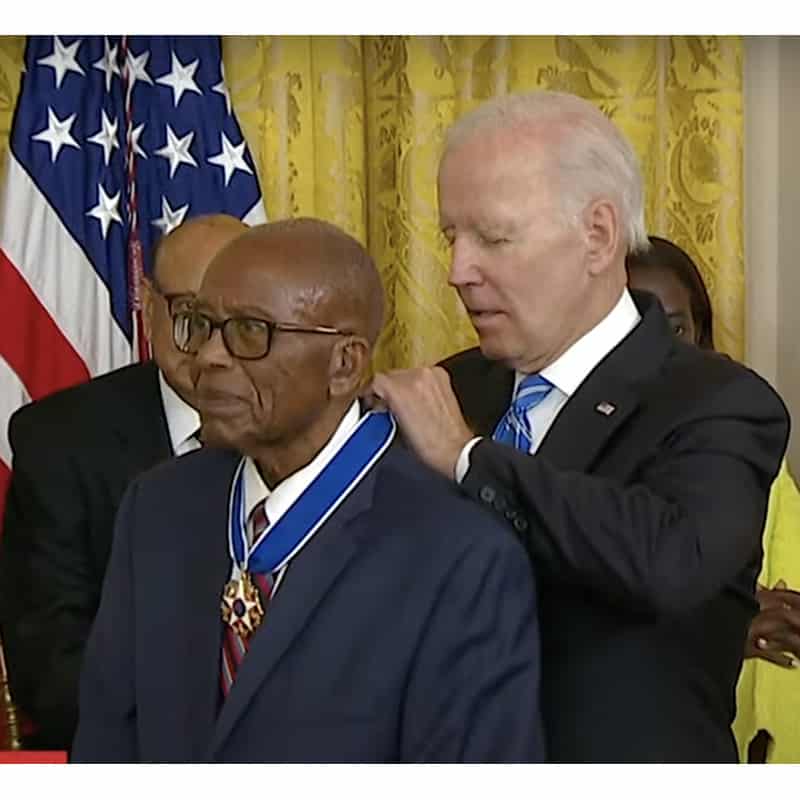
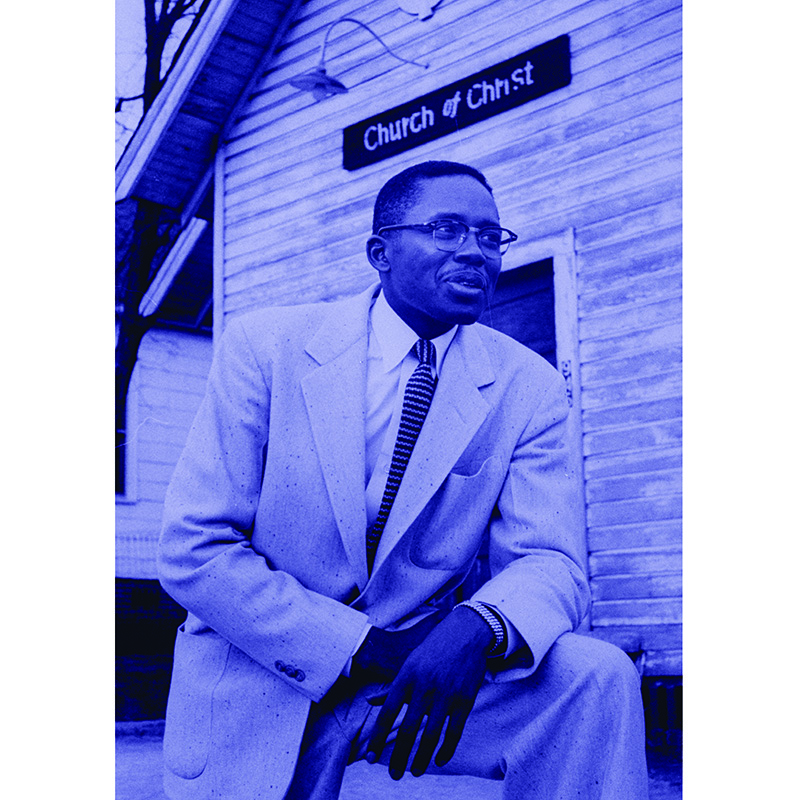
By Jerry Harris HE’S A QUIET southern gentlemen, but he wields the law like a warrior. He is fueled with a deep conviction to his calling in life. Though he is nearly 88, his recall of facts and names is instantaneous. He is friendly . . . able to distinguish lines that separate the arena of ideas from the God-given value of every human being with whom he comes in contact. He’s among the last remaining champions of the earliest days of the civil rights movement; he is the one who brought the heavy weight of the law to bear

The State of Racial Reconciliation in the Church

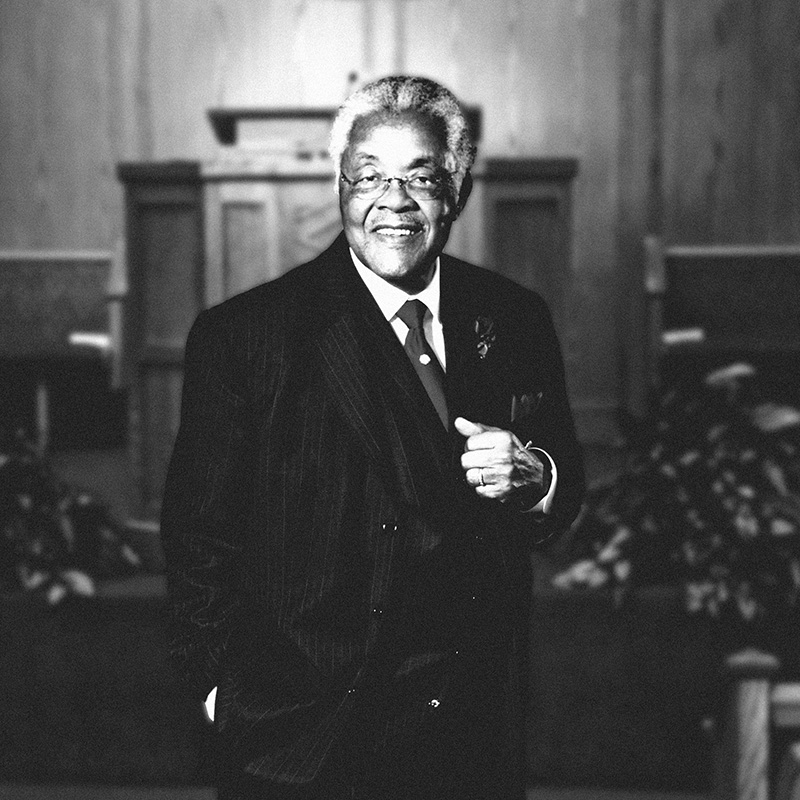
An interview with Sonny Smith, lead pastor of Detroit Church   By David Dummitt In a February 1957 message for the National Council of Churches’ observance of Race Relations Sunday, Dr. Martin Luther King Jr. wrote, Racial segregation is a blatant denial of the unity which we all have in Christ. Segregation is a tragic evil that is utterly un-Christian. . . . Every Christian is confronted with the basic responsibility of working courageously for a non-segregated society. The task of conquering segregation is an inescapable must confronting the Christian Churches. King’s bold words speak to churches today as clearly

Andrew J. Hairston: Central to the Struggle

By Jim Nieman Andrew J. Hairston has harnessed an inner drive his entire life. A drive to learn. A drive to serve his community and others. A drive to serve God. And an unwillingness to passively accept injustice. Instead, he has stood up and identified wrongs while working to change them. Hairston’s efforts, and the efforts of many others in the African-American churches of Christ, have helped bring about changes that most everyone would agree are a better reflection of God’s ideal for unity within his church. A Life of Accomplishment Hairston, 86, was born the 13th of 15 children

Inspiring Us to Greater Things

By Jerry Harris Last year at the North American Christian Convention, David Johnson of Harvest Point Church in North Charleston, South Carolina, stopped by the Christian Standard Media booth to talk. When I mentioned that I had been reading about Marshall Keeble, David just lit up. He began to share things he’d learned about Keeble’s methods of establishing churches and raising up leaders for them. He mentioned names of some other folks and asked if I’d heard or read about them. It was my favorite part of the convention, and it energized me for writing the article about Keeble this month.

What Kind of Extremists Will We Be?

By Michael C. Mack “If today’s church does not recapture the sacrificial spirit of the early church, it will lose its authenticity, forfeit the loyalty of millions, and be dismissed as an irrelevant social club with no meaning for the twentieth century. Every day I meet young people whose disappointment with the church has turned into outright disgust.” Dr. Martin Luther King wrote these words in his “Letter from Birmingham Jail” on April 16, 1963. Now, nearly 55 years later, his words seem prophetic. King’s letter was in response to eight white Alabama clergy members who wrote a letter asking

Let Us Celebrate

By Rick Chromey Every culture has holidays, but few sanctify more special days than Americans. Perhaps it”s because we embrace our past as good and godly. Perhaps it”s because we hunger for any reason to party or get a day off. Or perhaps it”s because we need another special day to capitalize on our consumerism. Regardless of the reason, Americans celebrate famous people like Martin Luther King Jr., St. Patrick, and Columbus. We memorialize Mondays into three-day weekends to rest from our labor. We throw parties on July 4, October 31, and December 31. We love to give thanks around

A Different View of the Oppressed

By Casey Tygrett   Oppressed. What does that word evoke for you? I typed oppression into Google, clicked Search, and it returned 36.5 million results. There is a lot being said about oppression. And Scripture says much about oppression, too. In fact, the word oppression appears nearly 4,500 times there. The first Bible story about oppression details the plight of the Israelites in Egypt and the beautifully momentous exodus that set them loose to chase the everlasting land and the everlasting covenant under the everlasting God. It”s a wonderful story, but it begins with oppression. To Be Helpless, to Be

Love and Reconciliation

By Jim Tune On Sunday, September 15, 1963, four members of the Ku Klux Klan planted and then detonated at least 15 sticks of dynamite beneath the front steps of an African-American church in Birmingham, Alabama. The firebombing of the 16th Street Baptist Church killed four girls, prompting Martin Luther King Jr. to make one of the most radical statements imaginable: “At times life is hard, as hard as crucible steel. In spite of the darkness of this hour, we must not lose faith in our white brothers.” To insist on faith in the humanity of an enemy and to

Read More About Religion, Racism, and Practical Steps Forward

Compiled by Travis Hurley Divided By Faith: Evangelical Religion and the Problem of Race in America, by Michael O. Emerson and Christian Smith (New York: Oxford University Press, 2000) “” Despite its age, this remains essential reading for anyone looking to get a grasp on evangelical religion and the problem of race in America. There are helpful historical summaries of the church and race in America in early chapters, and once you understand their explanation of the “white evangelical tool kit,” you”ll start to see how using these tools actually hinders reconciliatory progress before it even begins. Reconciliation Blues: A Black Evangelical”s

Open Table

By Sean Palmer Maxine was stunned when Jason and Kari Martin, along with their children, Aidan and Regan, stood outside her front door with expectant eyes. As far as Jason and Kari knew, they”d been invited to dinner at the home of our church”s matriarch. If there”s an unquestioned sage at The Vine Church, it”s Maxine. She and her late husband, Ron, served as medical missionaries in Africa, raised three children (one of whom is an elder at The Vine), and around our church, once Maxine says something, nothing else needs to be said. The reason the Martins were at

On the March

By Jennifer Johnson This August, Matt and I took the kids to Washington, D.C., for several days of museums and merriment. (A tip: if you have kids, the single best thing you can ever spend money on in your entire life is a hotel room with a set of bunk beds and a second TV.) Because we are rock stars at planning, our week in the city happened to coincide with the 50th anniversary of the March on Washington, which meant visiting the Lincoln Memorial with 9 trillion extra people. It also meant that on the morning of the event,

The Alternative Story

By Joe Boyd I want to change the world. I”m obviously not alone. Protestors, politicians, pastors, parents, and beauty pageant contestants””we all love to talk about changing the world. Just stick a microphone in front of one of us and we”ll gladly poetically drone about change and hope and the power of possibility. Except for a few fringe extremists, everyone I know genuinely desires world peace. We want to see the hungry fed, the endangered children saved, and the abandoned elderly dignified. It isn”t too hard for us to imagine a better world without slave traders, child abusers, and hatemongers. We want

Five Ingredients Sir Winston Churchill Used in Every Speech

By Max R. Hickerson A glance at The Sir Winston Method by James Humes gives us an insight into what made Churchill a compelling speaker. Churchill”s approach can help every Bible teacher and preacher. The following outline, borrowed from the book, shows us how. 1. A STRONG BEGINNING Refuse to start your message, “It is a pleasure to be here to speak.” Invent your own quotable line. Start with a quotation or a question that provokes thought: “What would you do for a million dollars?”; “What is your favorite adventure story?”; “Which is more important to you, 9/11 or 11/9?” “A

The Power to Transform

By Victor M. Parachin In 1921 when Lewis Lawes became its warden, Sing Sing Correctional Facility in Ossining, New York, had a reputation for being the toughest prison in the country. The most notorious criminals were sent to this severe and unforgiving place. But, when Lawes retired 20 years later, the prison had become a model for the humane treatment of prisoners and the development of rehabilitation programs.  Lawes instituted theatricals, film showings, athletics, and provided radio earphones for each cell. He also required prisoners to wear identical uniforms to blur distinctions of wealth and status. Yet Lawes said his

The Power of Persistence

By Victor M. Parachin In the 11th century, Henry III, king of Germany, became dissatisfied with court life and the pressures of the monarchy. Unlike many rulers, Henry was a deeply spiritual individual whose faith guided his daily life and rule. Therefore he made a visit to Prior Richard, the leader of a local monastery, asking to be received as a contemplative. His wish, Henry explained, was to spend the rest of his life in the monastery. “Your Majesty,” responded Prior Richard, “do you understand that the pledge here is one of obedience? That will be hard because you have

Presidents, Preachers, Passion, and Public Speaking

By Mark A. Taylor Tiondra Bolden spoke enthusiastically. She was supporting her candidate, she said, because he doesn”t use “all those . . . dictionary-type words.” According to the radio news feature, this 21-year-old student at the University of North Texas in Austin is typical. Many on campuses like hers are flocking to support the same candidate in this year”s presidential race. “Before it was, like, insurgents this and that, and we were just like, huh?” she said. “Now it”s, like, wait a minute, I can actually think about what I”m doing when I go to the polls and I

Secret Link