November 19, 2020
A Study of Alexander Campbell (Part 2)
And now, part 2 of John L. Morrison’s series on Alexander Campbell from 1967.
November 19, 2020
And now, part 2 of John L. Morrison’s series on Alexander Campbell from 1967.
November 12, 2020

I spoke with a former Christian college professor a couple of times in the past few weeks. John L. Morrison is a pleasant gentleman enjoying retirement in California. Through the years, he taught at San Jose Bible College (now William Jessup University), Milligan College (now Milligan University), and Puget Sound College of the Bible (now closed). I can’t recall Mr. Morrison’s exact age, but it’s in the neighborhood of 90. Mr. Morrison told me he had written for Christian Standard a number of times. I became curious and checked into this. Sure enough, I found articles by him from the
October 29, 2020

Early in his ministry career—before his long years of service as senior editor with Standard Publishing (1981 to 2014)—Jon Underwood had a brief stint as director of publications with Christ In Youth. It was during that time that he wrote this concise examination of miracles. _ _ _ IT’S A MIRACLE! By Jon UnderwoodOct. 26, 1980; p. 9 “It’s a miracle!” So easily we say it—and often so carelessly. In our quest for restoring New Testament Christianity and calling Bible things by Bible names, this word “miracle” deserves careful attention. What is a miracle? In Scripture there are three ideas
October 22, 2020

The “Throwback Thursday” online feature from Christian Standard’s archive has been on hiatus for a few months. We hope it was missed. We resume the feature this week with a short item about punishing “renegade preachers” that appeared in our pages exactly 150 years ago today. _ _ _ MICHIGAN CONVENTION—RENEGADE PREACHERS Oct. 22, 1870; p. 3 It will be remembered that one J.H. Davis was dismissed from the Franklin, Ind., Church in May, 1869, and was published for “lying, hypocrisy, and for keeping company with bad men and women generally.” About a year ago he retired to Michigan, and

Barry Cameron wrote this essay about church names in 1989 while he was serving with First Christian Church in Port Charlotte, Florida. Cameron started with First Christian, now called New Day Christian Church, in 1980. In 1992, Cameron became senior pastor with Crossroads Christian Church in Grand Prairie, Texas, where he continues to serve. _ _ _ “We’re Not the Only Christians . . . But We’re Christians Only” By Barry L. CameronApril 23, 1989; p. 15 “We’re not the only Christians . . . but we’re Christians only.” I heard that statement for the first time when I was

Here is the conclusion of our four-part series on Barton W. Stone, as excerpted from Frederick D. Kershner’s 1940 series on six of the “most significant advocates” of the Restoration Movement. (Click on any of these to read the earlier installments of the series: Part one — part two — part three.) _ _ _ “Stars: Message of Barton Stone” May 4, 1940; p. 7 The first relations of [Alexander] Campbell and [Barton] Stone appear to have been somewhat strained and not altogether cordial. The Kentucky reformer was a little dubious about too much emphasis being placed on water regeneration;

We continue this week with the third installment of Frederick D. Kershner’s biographical study of Restoration Movement father Barton W. Stone from 1940. (Part one and part two are available here.) _ _ _ “Stars” April 27, 1940; p. 7 There was a group of young ministers, of which Stone was probably the center, which reacted against the high Calvinism of their fathers after the Cane Ridge revival. Stone, McNemar, Marshall, and three or four others withdrew and organized the Springfield Presbytery. They published an apology, some part of which was comprehended in the autobiography of Barton W. Stone. The

We continue this week with our second installment of Frederick D. Kershner’s look at Barton W. Stone from 1940. Though Kershner wrote his profile on Stone in three installments, we shared only a portion of part one last week; today we share the rest of the article originally published April 20, 1940. _ _ _ “The Message of Barton Warren Stone” April 20, 1940; p. 7 BARTON WARREN STONE[’s] . . . life may be summarized under the following outline: Early period (1772–1799). Cane Ridge Revival (1799–1801). The Springfield Presbytery (1802–1804). Independent career (1804–1831). Union with the Campbells (1831). Later

In 1940, Christian Standard published a lengthy series of articles called “Stars” by Frederick D. Kershner, then serving as dean of the School of Religion at Butler University in Indianapolis. In introducing the series on March 9 of that year, Kershner wrote, “We shall strive to interpret the ongoing of a great movement in the life of the church through the contribution of six of its most significant advocates. . . . We shall be occupied only secondarily with the mere details of biography. . . .” Those six Restoration Movement “advocates” included: • Thomas Campbell . . . “who

A comprehensive indexing of Christian Standard upon our magazine’s 100th anniversary in 1966 failed to chronicle a recurring one-page feature called “Vitamins Club”—a hodgepodge of sermon outlines, memory verse listings, random poetry, original and submitted items, and also snippets gleaned from other sources. All of these had one thing in common: brevity. Today we will feature a few of these items from early in 1935 . . . 85 years ago. _ _ _ DEFINITION OF A DENOMINATION April 6, 1935; p. 6 A. E. Sterrett, of Leipsic, O., sends the following definition of a denomination, that he says he

With coronavirus, or COVID-19, continuing to infect and kill people in the United States and around the world, we thought it an appropriate time to reflect on the 1918-19 influenza pandemic that caused at least 50 million deaths worldwide, with about 675,000 occurring in the United States. Last week we shared a Christian Standard editorial from Nov. 2, 1918 (click here to read it). This week we opt for a somber editorial from January 4, 1919. (By the way, in our last column we reported there had been 475,000 confirmed COVID-19 cases worldwide resulting in more than 21,000 deaths. As
March 26, 2020

Coronavirus, or COVID-19, has quickly spread around the world and across the United States. As of early this morning, there were 475,000 confirmed cases worldwide resulting in more than 21,000 deaths. Hospitals are overwhelmed and hundreds of millions of people have been advised to stay in their homes. Many are comparing today’s health crisis with the 1918 influenza outbreak—commonly called the “Spanish flu” at the time—which was the most severe pandemic in recent history, according to the Centers for Disease Control and Prevention. At its website, the CDC writes of that flu pandemic: “Although there is not universal consensus regarding

Here is the conclusion of Wayne Smith’s keynote sermon “Preach the Word” from the 1977 North American Christian Convention. Smith helped start Southland Christian Church in Lexington, Kentucky, in 1956 and served as her senior minister until 1995. He died in 2016. Many still list Smith as their all-time favorite preacher. Click here to read the first part of Smith’s sermon, which focuses on “The Summons—Preach.” _ _ _ Preach the Word (Part 2) The President’s message at the 1977 NACC—based on 2 Timothy 4:1-8 By Wayne B. SmithMarch 10, 1985; p. 4 THE SUBJECT—CHRISTChrist said, “And I, if I

Wayne Smith helped start Southland Christian Church in Lexington, Kentucky, in 1956 and served as her senior minister until 1995. He died in 2016. Still today, many list Smith as their all-time favorite preacher. This article from 1985 was actually Smith’s manuscript from his keynote sermon at the North American Christian Convention in 1977, the year he served as president. Smith’s topic, preaching, was the subject about which he was perhaps most passionate. This is long, and so we will break it into two parts. This week focuses on “The Summons—Preach,” and part two next week will explore “The Subject—Christ”

This editorial from 1910 is—more than anything else—a comparison and commentary on the career choices of Disciples of Christ minister turned sociologist James P. Lichtenberger. The editorial also shares a rather amusing anecdote. Lichtenberger (1870—1953), a native of Illinois, preached in churches from 1896 to 1908 before earning a doctorate in philosophy from Columbia University in 1909, according to the website of the American Sociological Association (www.asanet.org). Lichtenberger served as a professor with the University of Pennsylvania the balance of his career, and in 1922 was president of the American Sociological Society (later changed to Association). Lichtenberger penned Divorce: A
February 27, 2020
S. S. Lappin served as editor of Christian Standard from 1909 to 1917, and he then wrote hundreds of articles for the magazine until his death in 1960. Here are excerpts from an essay he wrote about prayer. _ _ _ Praying and Saying Prayers Bible prayers are brief but they are genuine and fervent. Ours are too long and we “say” them By S. S. LappinMarch 2, 1940; p. 7 . . . When prayer becomes self-conscious it ceases to be a prayer; it is merely saying a prayer. A certain Pharisee could not make the grade with his
February 20, 2020

Today we conclude this two-part article from 1940 explaining the “four aspects” of Alexander Campbell’s Bible study. Today’s article covers aspects three and four. _ _ _ Alexander Campbell’s Contribution to Bible Study (Part 2) By Howard Elmo Short, B.D. (Hartford);Minister, Church of Christ, Cuyahoga Falls, O.;February 10, 1940; p. 5 . . . There is no finer contribution that Mr. Campbell has made to Bible study than this insistence upon original thinking. How often we read, leafing through, just to find the “pet” verses which prove the point we are arguing at the moment! The admonition of Mr. Campbell
February 13, 2020

Restoration pioneer Alexander Campbell’s Bible study methods might be of interest to readers and leaders. A notation above the headline of this article indicated this was “a paper read before a Bible-study conference of the churches in the Akron (O.) area some months ago.” We will break this into two parts, plus edit it a bit for length. Part one will cover the first two of “four aspects of Mr. Campbell’s Bible study.” _ _ _ Alexander Campbell’s Contribution to Bible Study (Part 1) By Howard Elmo Short, B.D. (Hartford);Minister, Church of Christ, Cuyahoga Falls, O.;February 10, 1940; p. 5
February 6, 2020

This article acknowledging the contributions of “denominationalists” received much positive feedback from readers in the weeks following its publication 55 years ago. _ _ _ Our Debt to Denominationalists By James G. Van BurenFebruary 6, 1965; p. 9 We are, much more than we sometimes realize, indebted to denominationalists. By “we” I mean those of us committed to the Restoration ideal, who delight in designating ourselves as “undenominational” and as “Christians only.” By “denominationalists” I mean those who have not been aware, as far as we know, of the sinfulness of denominational divisions and who would be considered by us
January 30, 2020

A lively editorial page from January 26, 1935, touched on such topics as the activity of the Holy Spirit, the Roosevelts planning to serve wine at the White House (Prohibition had been repealed in 1933), and reaction to a Robert Benchley essay called “The Sunday Menace” (the humor author had suggested outrageous acts “to get rid of the dullness of midafternoon on Sunday”). But the editorial we share today is a measured, almost melancholy observation about how baptism is practiced in the Roman Catholic Church. _ _ _ THE CATHOLIC CHURCH IS MISSING SOMETHING Editorial; January 26, 1935; p. 4
Sponsored

Sponsored

Sponsored
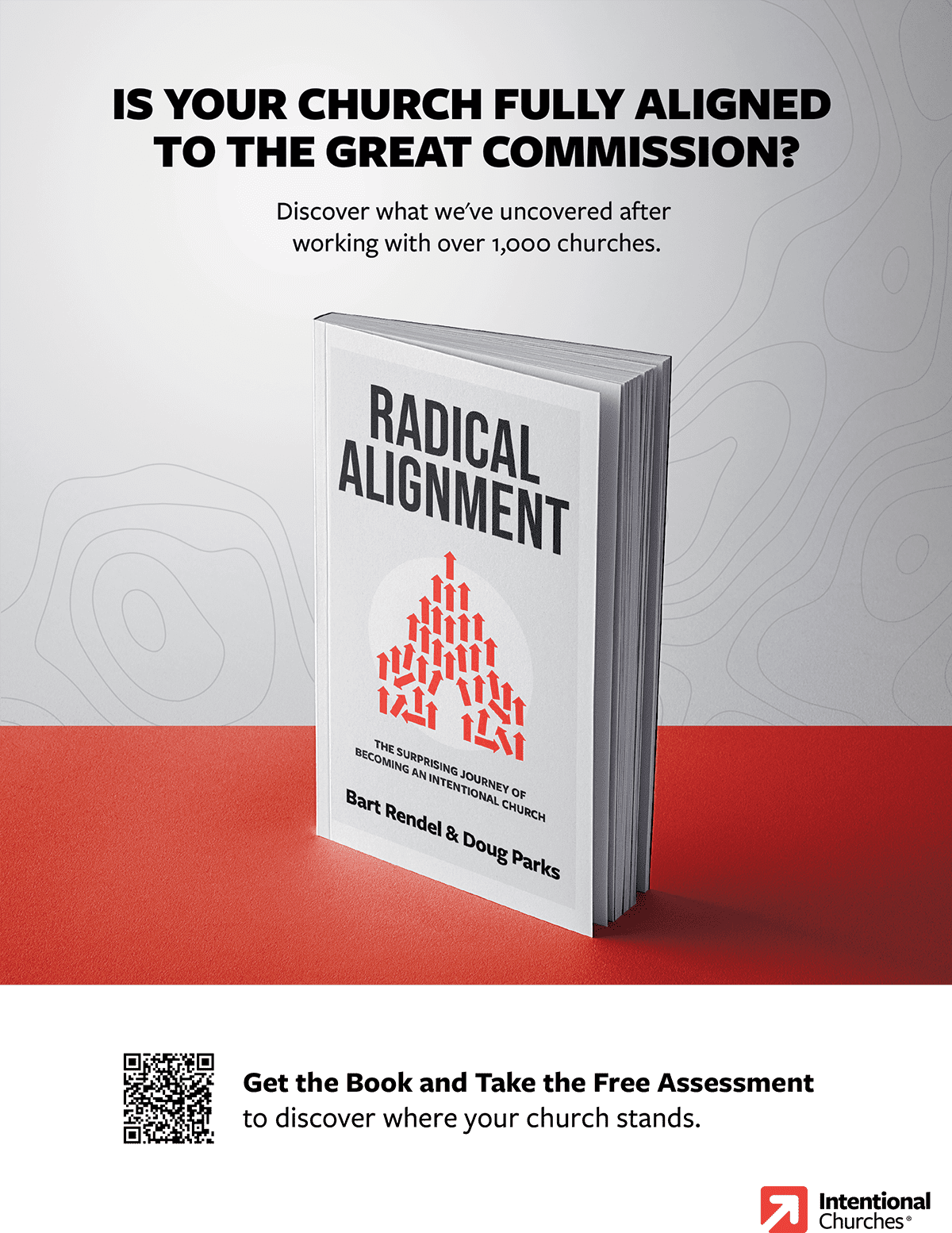

Learn how to make the Sermon Content you’re already producing draw people into your local church.
For preachers, church media and website teams, and anyone who’d like to learn how to increase the visibility of their local church online.
August 28, 2026
Quentin Davis
August 25, 2026
Rick Cherok

August 25, 2026
David Faust