Here is an Independence Day editorial by Edwin Hayden from 1960 . . . 94 years after the founding of our magazine and 184 years after the founding of our nation.
_ _ _
Which Kind of Freedom?
An Editorial
July 2, 1960; p. 2
About to talk to a group of school children on the subject of freedom, the preacher asked his young hearers to define the word free. First offered was this: “Like getting into the show without paying.”
Free—“without cost”—has been lifted from an obscure and incidental place among the definitions of freedom so that it becomes a serious competitor to the basic free—“without constraint.” Giveaways and handouts are perennially popular. Wishful thinking keeps the fiction of something-for-nothing alive in the face of facts to the contrary, and the advocates of “security” reign as though pensions and price supports came out of thin air.
People learn slowly, if at all, that neither kind of freedom—relief from cost or relief from constraint—is ever absolute, and that the two make war against each other.
Complete security—the state of having all things provided by someone else—is available only to infants, slaves, and prisoners. Since men cannot be babes forever, they approach one of the other conditions as they seek to avoid their portion of the world’s toil, and hardship, and thinking, and sacrifice, and suffering. He who would enjoy the fullest measure of manly and Christian self-determination must be prepared to sacrifice much of social and economic comfort and security, but having done so, he will testify . . . that it was abundantly worth the cost.
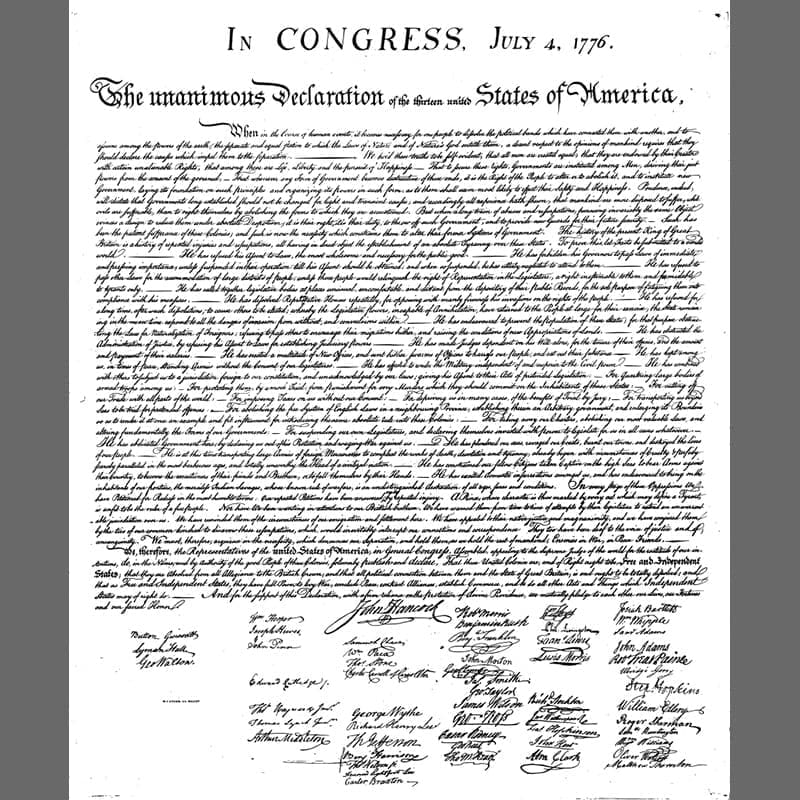
July 4 memorializes a day when an infant nation chose the kind of freedom it would have. The men who put their names to the Declaration of Independence were not expecting freedom from want or freedom from fear. Their land was yielding its riches reluctantly, and they saw the shadow of the gallows on the document they signed. Dignity and humanity, not comfort and security, was their goal. They chose well, as history has testified.
“Choose you this day whom ye will serve!” Joshua’s challenge to Israel (Joshua 24:15) describes the pattern of human liberty. To be without a master is impossible, and the very attempt to throw off all controls will bring one into the most abject slavery to self and the whims of any given moment. One can and must, however, choose his master, and when that choice is made because of love, and when service rendered springs from affectionate devotion, the servant is then most truly free. The Christian will join with Joshua in his vow: “As for me and my house, we will serve the Lord!”
— — —
Now, a quick note that might be of some interest: The July 1, 1876, edition of Christian Standard carried nothing about our nation’s independence and/or freedom, though July 4 that year was our nation’s 100th birthday. Folks who were around in 1976 for our nation’s year-long bicentennial celebration will no doubt find that hard to believe.
—Jim Nieman, managing editor, Christian Standard

Author: Christian Standard
Contact us at **@********************ia.com