Communion Meditations Sponsored by …

Eternal Thanksgiving—Eucharist
Thanksgiving is more than an annual holiday. Michael C. Mack explores how Jesus modeled gratitude, Paul encouraged thankful prayer, and the Lord's Supper invites believers into an enduring expression of worship.
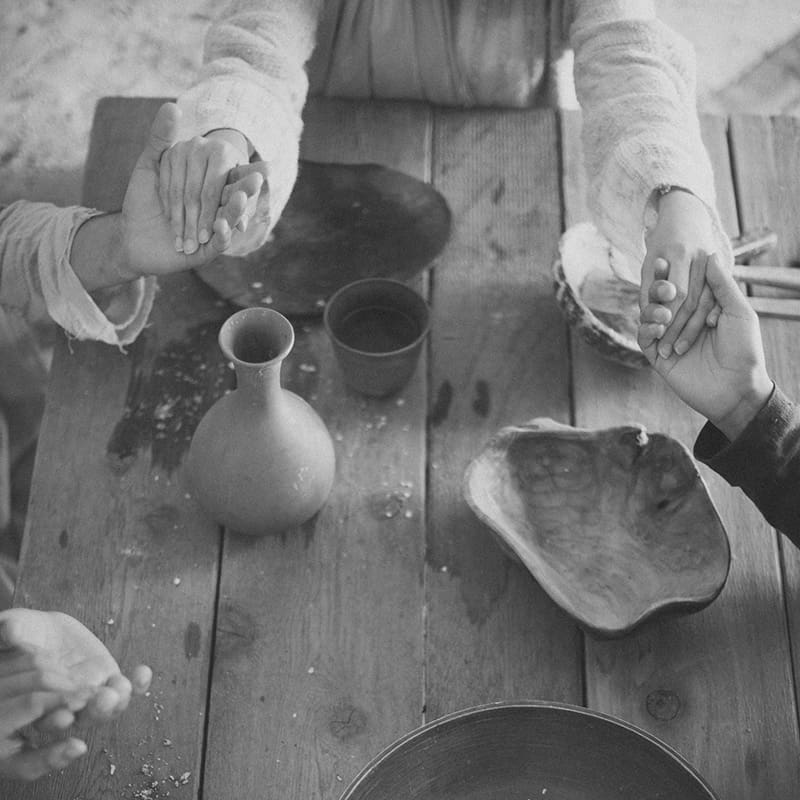
Eternal Thanksgiving: Gratitude, Worship, and the Lord’s Supper
Eternal thanksgiving is more than an annual celebration; it is an ongoing expression of gratitude and worship modeled by Jesus and taught by the apostle Paul. Michael C. Mack explores how thanksgiving shapes daily life, even during difficult circumstances. He also connects the Greek word eucharistos with the Lord’s Supper and the church’s continuing remembrance of Christ’s sacrifice.
- Jesus modeled gratitude in both extraordinary moments and ordinary circumstances.
- Paul encouraged believers to bring their requests to God with thanksgiving rather than anxiety.
- The Lord’s Supper is an ongoing expression of gratitude and worship for Christ’s sacrifice.
Thanksgiving is more than an annual holiday. For Christ followers, it’s a vital spiritual discipline. Jesus often modeled giving thanks for us. When he raised Lazarus from the dead, Jesus thanked his Father for hearing him (John 11:41-42). Before he fed the 4,000, he gave thanks for what was available to him—seven loaves and a few small fish (Mark 8:6-7). Jesus lived a life of thanksgiving for the big as well as the small blessings.
And the early church followed Jesus’ example. The apostle Paul wrote, “Do not be anxious about anything, but in every situation, by prayer and petition, with thanksgiving, present your requests to God” (Philippians 4:6).
Don’t miss the words “with thanksgiving.” Giving thanks is an attitude that is part of our lives. Especially in the circumstances of this past year, we need to live with this attitude. Instead of worrying, we can be thankful because we trust in an all-powerful God. In every situation. In every circumstance of life. Even in 2020.
Thanksgiving and the Meaning of Eucharist
The word for thanksgiving in Philippians 4:6 is also used in 1 Corinthians 11:23-24: “The Lord Jesus, on the night he was betrayed, took bread, and when he had given thanks, he broke it and said, ‘This is my body, which is for you; do this in remembrance of me.’”
The word used in both cases is a form of the Greek word eucharistos. Sound familiar? Eucharist literally means “giving thanks” or “gratitude.” Eucharist became the word believers (sometime before AD 100) used for the celebration of the Lord’s Supper.
This is incredibly significant! As followers of Christ, we gather together every week to give thanks for Jesus’ death, burial, and resurrection, which bought for us eternal life with him.
Living with Thanksgiving and Worship
Thanksgiving, eucharistos, is also an act of worship. Worship is more than something we do in a building once a week. It’s part of who we are—and whose we are—as Christ followers.
As we take this bread and this cup, reminders of Jesus’ crucified body and shed blood, we do so with eternal thanksgiving and with abiding worship.
Michael C. Mack is editor of Christian Standard.

Author: Michael C. Mack
Michael C. Mack is editor of Christian Standard. He has served in churches in Ohio, Indiana, Idaho, and Kentucky. He has written more than 25 books and discussion guides as well as hundreds of magazine, newspaper, and web-based articles.
Sponsored
For 160 years Christian Standard has served the churches of the Restoration Movement. Your gift keeps articles like this one free for every church leader.
Keep reading
More in Theology & Bible



From the archive
Christian Standard has covered this since 1866.





