Communion Meditations Sponsored by …

The Christian’s Ritual of Remembrance

Why Christian Remembrance Matters: Memorial Day and the Lord’s Supper
Remembering shapes our identity, strengthens our relationships, and reminds us of God’s faithfulness. Drawing on Memorial Day traditions and the history of Israel, Mark A. Taylor explains why remembrance remains essential to Christian life. The Lord’s Supper provides a recurring opportunity to remember Jesus’ sacrifice and our identity in him.
- Shared traditions and memories help families and communities maintain their identity.
- Israel’s history demonstrates the spiritual consequences of forgetting God’s faithfulness.
- Communion calls Christians to remember Christ’s sacrifice and their relationship with him.
Last Saturday, The Wall Street Journal posted a headline above a picture of a grade-school boy decorating a soldier’s grave in Virginia: “With Memorial Day Approaching, Rituals of Remembrance Begin.”
But the American Automobile Association estimated more than 36 million Americans would be traveling over the holiday weekend. A spokesman suggested this year’s unrelenting winter created a pent-up longing to experience warm temperatures in wide-open spaces. And I’m wondering how many of these sun-starved campers, fliers, and interstate sojourners took time for a “ritual of remembrance.”
Only a minority, most likely, but I’ll not bore you with a hand-wringing scold about the demise of patriotism in America. Instead, let me share why I can’t get that “rituals of remembrance” headline out of my head.
Why Remembering Matters to Families and Faith
The fact is that remembering is important. Families stay close by relishing traditions that often are the sum of past practices remembered and repeated. This is how we celebrate birthdays. This is where we go for Christmas Eve and Christmas Day. We always help Mom with her garden on Memorial Day . . . go to the beach in July . . . say a prayer before dinner . . . buy our clothes on sale.
Remembering gives us identity.
And remembering can keep us closer to God. Time and again throughout Old Testament history, God’s spokesmen challenged his people to remember. Remember the promise I gave you. Remember how I divided the sea and drowned Pharaoh’s army so you could escape from Egypt. Remember how I fed you in the wilderness and went before you to guarantee victory against the pagan armies blocking your way to the promised land.
But the Israelites didn’t remember. They looked to their neighbors and themselves more than to God and took up every practice that defined sin and represented rebellion. Their downfall was largely a result of their forgetting who and whose they were.
The Lord’s Supper: Remembering Jesus and Our Identity in Him
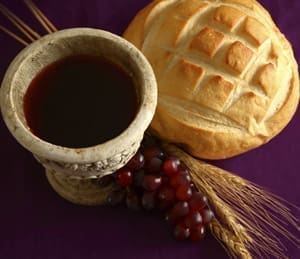
We Christians today live with our own mandate to remember. Jesus took the elements of a common meal and imbued them with meaning: “When you eat this bread and drink of this cup, do so in remembrance of me” (see 1 Corinthians 11:24, 25).
His body was given for us. His blood is his new covenant with us. Some have downplayed the need for the remembrance. But we live in a nation whose constant chatter prods us to forget Jesus and to make gods of anything and everything but God himself. Common sense reminds us that, just as families and nations need shared memories to create a common identity and a soul-stirring mission, the ritual of remembrance Jesus instituted helps every Christian remember who and whose we are.

Author: Mark A. Taylor
Mark A. Taylor, who served as Christian Standard editor from 2003 to 2017, retired in June 2017 after almost 41 years with Standard Publishing (Christian Standard Media).
Sponsored
For 160 years Christian Standard has served the churches of the Restoration Movement. Your gift keeps articles like this one free for every church leader.
Keep reading
More in Theology & Bible


From the archive
Christian Standard has covered this since 1866.